Clear Sky Science · en
A cross-population compendium of gene–environment interactions
Why our genes do not act alone
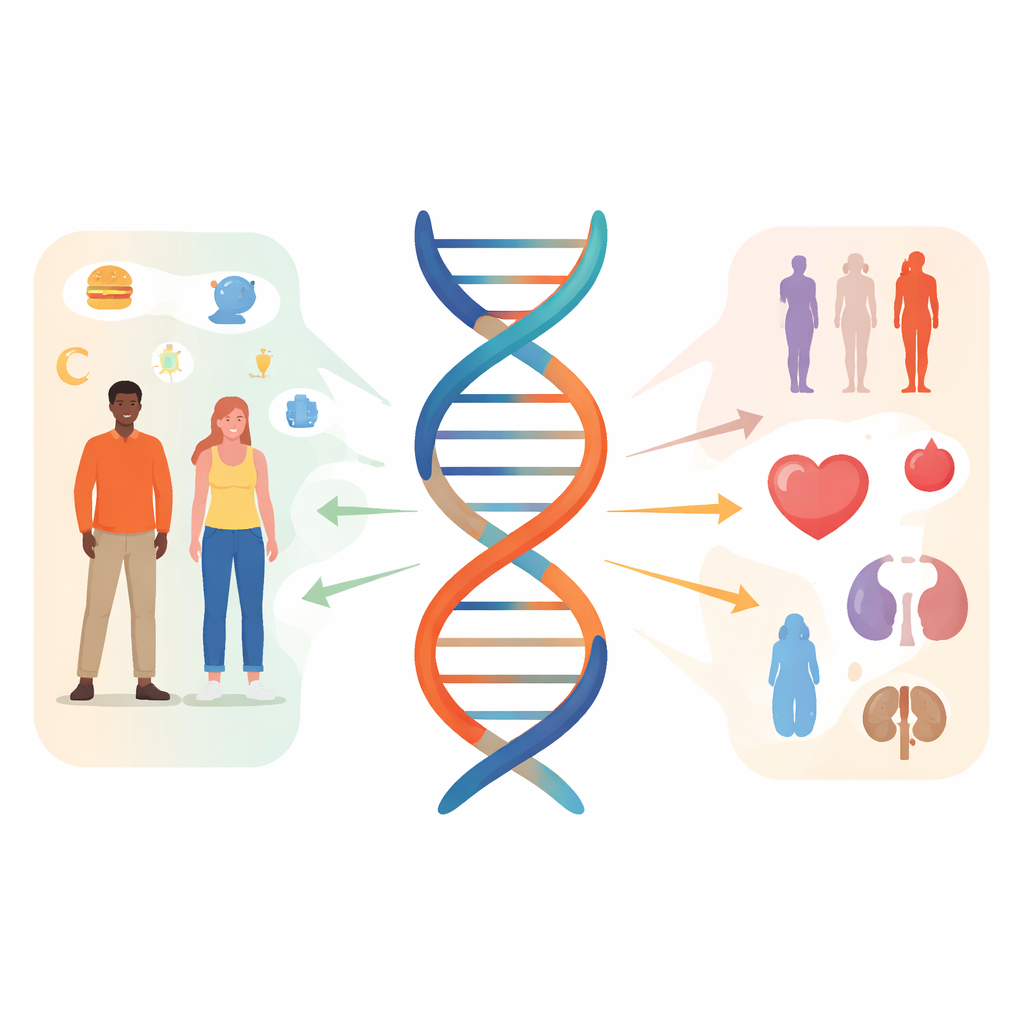
Why do some people stay healthy on a high-fat diet while others quickly develop high cholesterol or heart disease, even if they share similar genes? This study shows that our DNA does not operate in a vacuum: everyday factors such as age, sex, drinking, smoking, and diet can switch genetic effects up or down. By building a large “atlas” of how genes and environments work together across different populations, the authors reveal new clues to disease risk, explain why genetic predictions sometimes fail, and point toward more precise, context-aware medicine.
Looking at genes and lives around the world
The researchers combined data from more than 440,000 people in two major biobanks from the United Kingdom and Japan, and then checked their findings in nearly 540,000 additional volunteers from Europe, Africa, the Americas and Israel. For each person, they considered dozens of blood measurements and diseases alongside key aspects of everyday life, including age, sex, alcohol and tobacco use, and clustered patterns of diet and physical activity. Instead of asking only whether a genetic variant is linked to a trait, they asked whether its impact changes depending on these environmental factors, a phenomenon known as gene–environment interaction.
Many genetic effects depend on context
The atlas uncovered scores of places in the genome where the influence of a gene varied with lifestyle or demographic features. Some of these were well known, such as variants in the FTO gene whose effects on body weight are stronger in people who are less physically active, or a kidney gene (UMOD) whose impact shifts with age. Others were new, including several that appeared only in the Japanese cohort because they involve variants common in East Asia, such as a change in the ALDH2 gene that alters alcohol breakdown. At this site, the same genetic change interacts with drinking habits to affect a wide array of blood traits and diseases, from type 2 diabetes to overall survival, illustrating how one environment-sensitive gene can touch many aspects of health.
When disease changes behavior, not the other way around
One striking example showed that gene–environment patterns can be misleading if behavior changes after a diagnosis. At a heart rhythm gene near PITX2, the team initially saw an interaction with eating natto, a traditional fermented soybean food rich in vitamin K. But a closer look revealed that patients with a certain risky genetic profile who developed atrial fibrillation were more likely to be treated with warfarin, a blood thinner whose effect is reduced by vitamin K. Doctors advised these patients to avoid natto, so their lower intake was actually a consequence of disease and treatment, not a cause. When a newer class of drugs that is not affected by vitamin K became common, this pattern disappeared. This case study warns that not all gene–environment signals reflect true causes; some capture how illness reshapes habits.
Hidden heritability and shifting biology over the lifespan
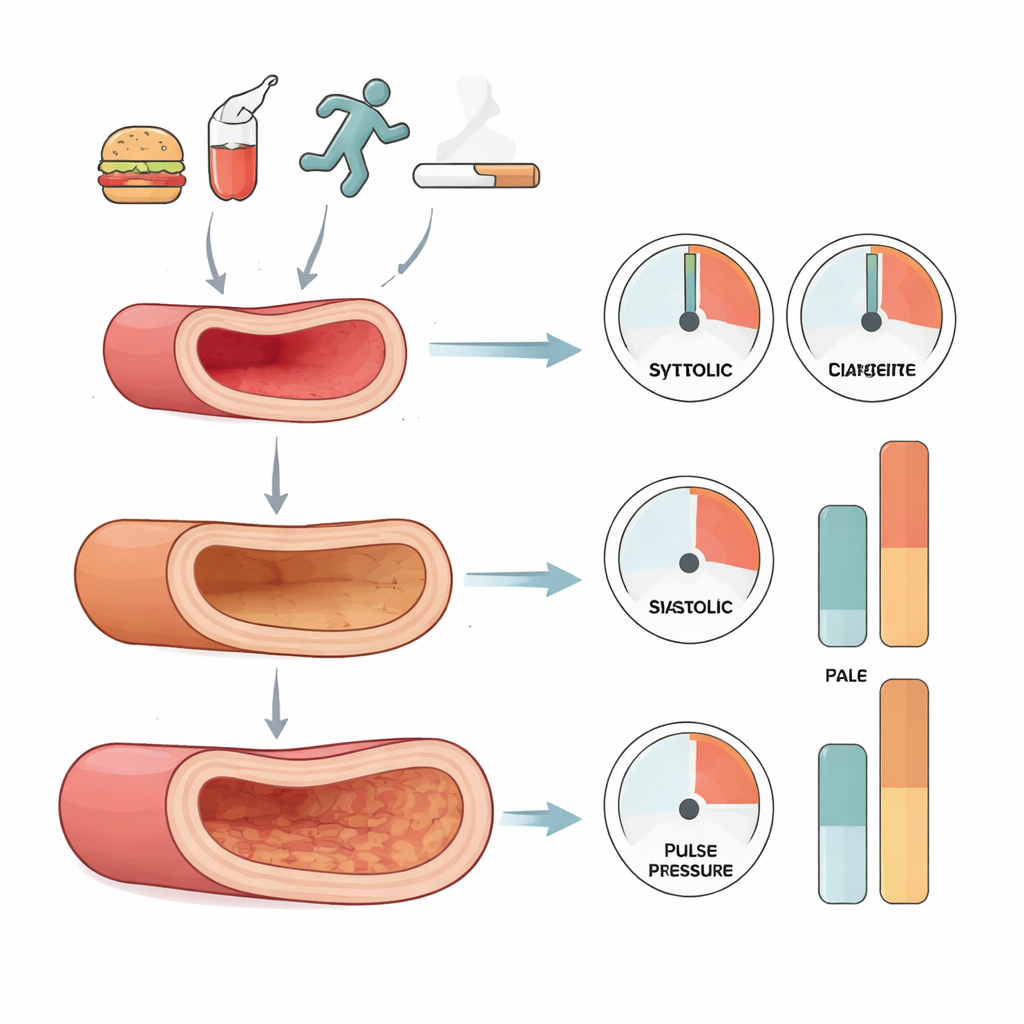
By looking across the whole genome, the authors estimated how much of the unexplained variation in traits is due to interactions rather than simple genetic effects. For height, these interactions play a modest role, but for body mass index and several blood measures they are substantial, and the overall contribution patterns are surprisingly similar between Japanese and European populations. The team also showed that gene–environment interactions can reshape which cell types matter most as we age. For pulse pressure—a measure related to stiffening arteries—genetic influences in younger adults were linked mainly to smooth muscle cells in blood vessel walls, whereas in older adults they shifted toward endothelial cells that line the vessels, echoing known biology of vascular aging.
Why environment-aware risk scores matter
Genetic risk scores, which sum up the small effects of many variants, are being explored as tools to predict disease risk. This study shows that their accuracy depends on the environment in which they are built and applied. Scores trained in smokers work best in smokers, for example, and may not transfer as well to non-smokers or to people with different lifestyles in another country. When the team explicitly modeled gene–environment interactions to build enhanced scores, they could better distinguish, for instance, how genetic background influences body weight differently in men and women. Such “two-dimensional” scores that combine genes and context modestly improved predictions today and could become more powerful as datasets grow.
Fine-grained chemistry and sex differences
To move closer to underlying mechanisms, the researchers examined thousands of blood proteins and metabolites. They found that many interaction signals seen for clinical traits, such as cholesterol, are mirrored at this molecular level. In particular, they uncovered several cases where the same genetic change pushes key fat-related molecules in opposite directions in men and women, especially at genes already targeted by cholesterol drugs. For a gene called CETP, which has been the focus of major drug development efforts, they showed that a specific fat component in “bad” cholesterol particles is linked to mortality and responds differently by sex to genetic variation. This kind of sex-discordant regulation may help explain why some promising cholesterol drugs have failed in late-stage trials.
What this means for personal health
Overall, the study paints a dynamic picture of genetic risk: the same DNA sequence can have very different consequences depending on who you are, how old you are, and how you live. By systematically mapping where and how genes and environments interact, across multiple populations and layers of biology, the authors provide a resource that can sharpen genetic prediction, flag when results may not generalize between groups, and guide safer, more tailored drug development. For patients, the message is both empowering and sobering: our genes matter, but so do our choices and circumstances—and their effects are deeply intertwined.
Citation: Namba, S., Sonehara, K., Koyanagi, Y.N. et al. A cross-population compendium of gene–environment interactions. Nature 651, 688–697 (2026). https://doi.org/10.1038/s41586-025-10054-6
Keywords: gene–environment interaction, human genetics, personalized medicine, polygenic risk scores, lipid metabolism