Clear Sky Science · en
Sleep-dependent clearance of brain lipids by peripheral blood cells
Why Your Brain Needs a Nightly Cleanup Crew
Most of us think of sleep as something that happens inside the brain alone. This study in fruit flies suggests a strikingly different picture: while we sleep, roaming blood cells travel to the brain and help haul away damaged fats that build up during the day. Understanding this hidden cleanup job could reshape how we think about sleep, brain health, memory, and even aging.
Night Shift Workers Around the Brain
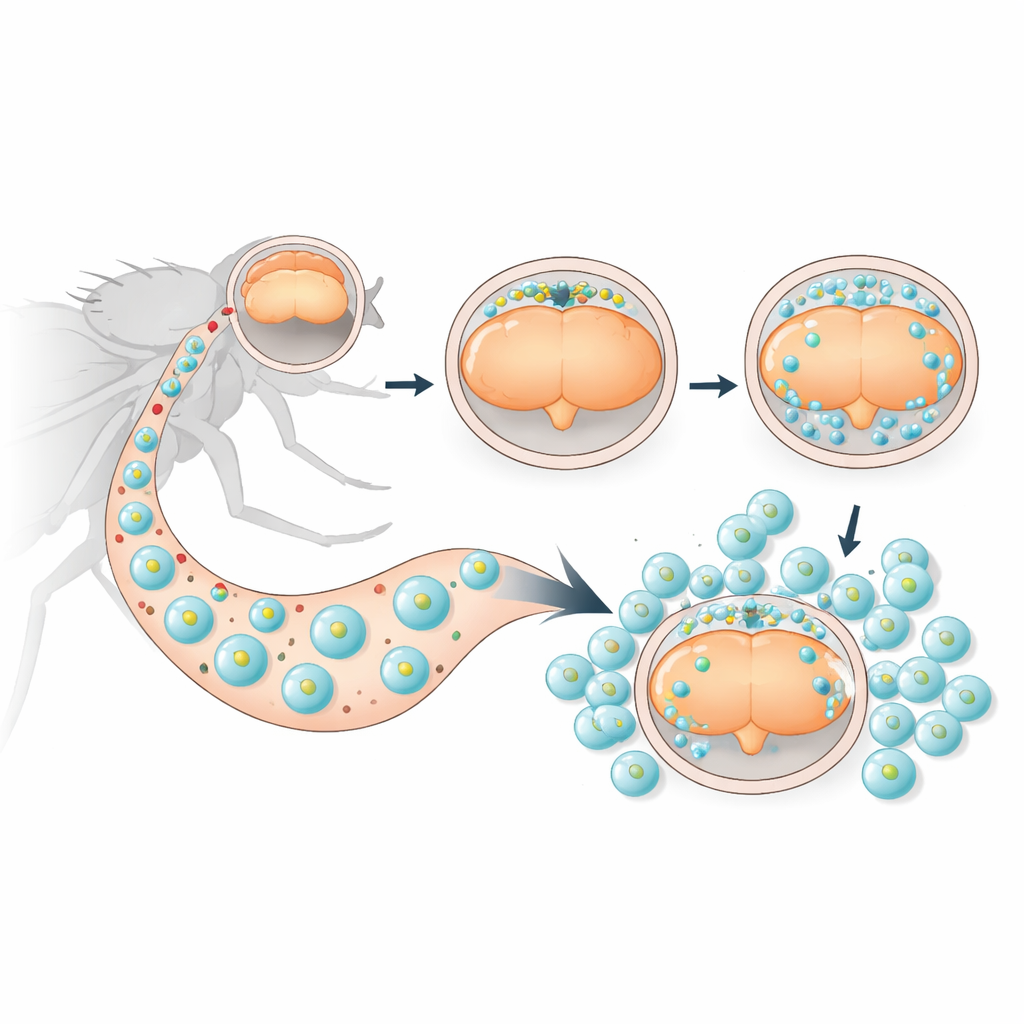
The researchers focused on Drosophila, the common fruit fly, a favorite model for studying sleep. They tracked immune-like blood cells called haemocytes, which normally patrol the body to fight infection and manage waste. Using whole-head imaging, they discovered that these cells are not evenly spread out. Instead, during periods when flies naturally sleep the most, haemocytes gather in the head and cluster near the outer surface of the brain, just beyond its protective barrier. When the flies were kept awake, fewer haemocytes appeared near the brain; when sleep was boosted with a sleep-inducing drug or by activating sleep-promoting neurons, more haemocytes arrived. This showed that the brain–blood cell meeting is tightly linked to sleep itself, not just time of day.
A Receptor That Keeps Flies Asleep
To find out which genes in haemocytes might control sleep, the team screened many candidates involved in immune defense, cell movement, and fat handling. One stood out: a gene called eater, which makes a surface receptor known to help these cells grab bacteria and fatty particles. When eater was removed or dialed down only in haemocytes, flies slept less and their sleep became fragmented, with many short bouts instead of long, restorative stretches. Importantly, basic movement and internal timekeeping rhythms stayed normal, meaning the change was specific to sleep. Reintroducing eater just in haemocytes restored normal sleep, and even transplanting healthy haemocytes from larvae into adult mutant flies partially rescued their sleep, proving that these circulating cells and their eater receptor are key players.
Taking Out the Fatty Trash
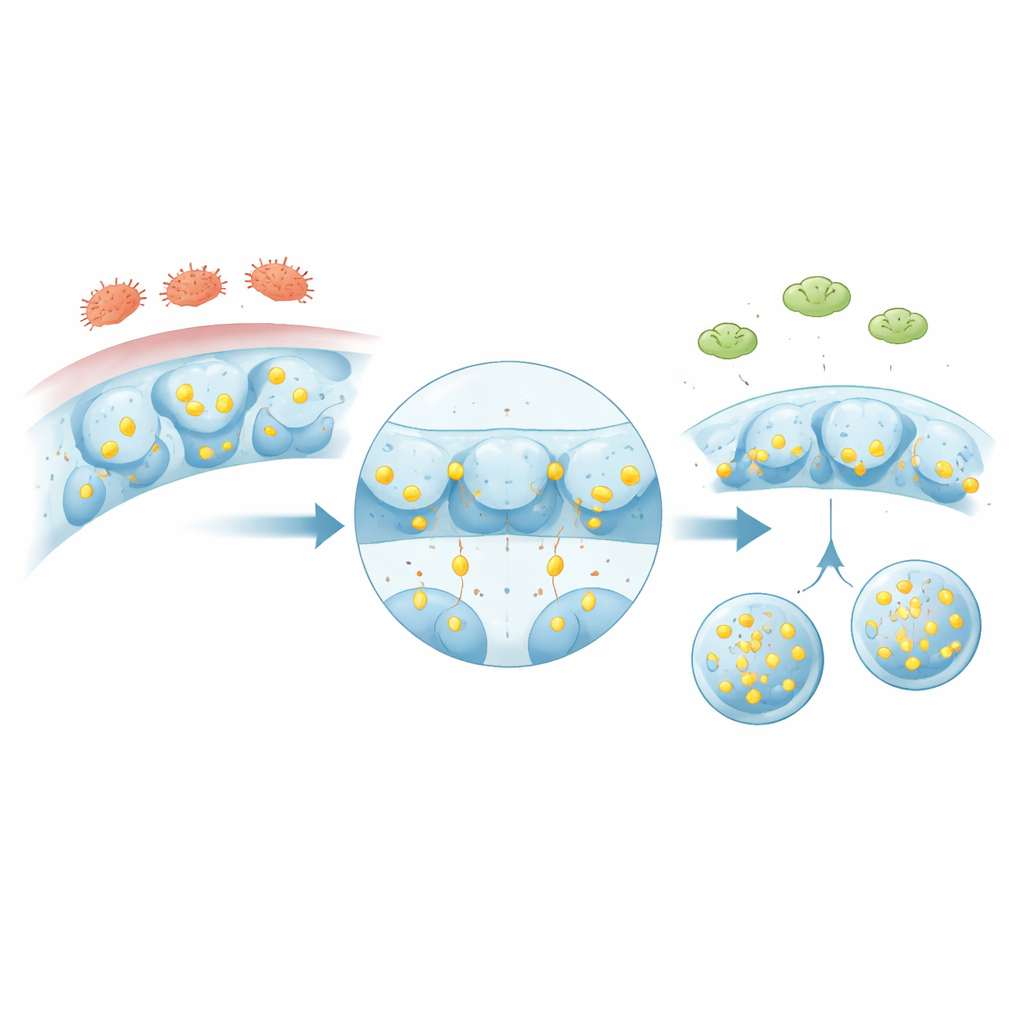
What exactly are these blood cells doing near the sleeping brain? Earlier work showed that during wakefulness, neurons pass some of their oxidative stress—damage linked to energy use—onto nearby helper cells called cortex glia by loading them with fatty droplets. In this new study, the authors found that haemocytes sitting near the brain contain many of these droplets, and that they physically touch glial cells. When eater was missing, haemocytes held far fewer fat droplets, while cortex glia and other brain support cells became overloaded with them. By tagging lipid droplets produced specifically in glia, the team demonstrated that a large fraction of the droplets found in haemocytes actually originated in cortex glia, and that this transfer dropped sharply without eater. Together, the data point to a sleep-dependent handoff: cortex glia pass damaged or modified fats to haemocytes, which then carry them away.
When the Cleanup Fails, the Brain Suffers
Failing to remove these fats has consequences. In flies lacking eater, the brain showed elevated levels of acetyl-CoA, a central fuel and building-block molecule. This rise went hand-in-hand with increased chemical “acetyl” tags on many proteins, including two that manage mitochondrial health—the cell’s power generators. Mitochondria in these mutant brains showed higher oxidative stress and reduced levels of NAD, a molecule essential for energy balance and for enzymes that strip acetyl tags back off proteins. Supplying the flies with nicotinamide, a vitamin that helps rebuild NAD, partly rescued their sleep, hinting that restoring energy chemistry can ease the burden. Behaviorally, the mutants not only slept poorly but also performed worse on memory tests and died earlier, suggesting that the nightly lipid-clearing job of haemocytes is vital for long-term brain function and lifespan.
What This Means for Human Brain Health
Although this work was done in fruit flies, it touches on themes relevant to humans. The fly haemocytes resemble a mix of our circulating immune cells and brain-resident microglia, which are heavily involved in cleaning up damaged fats and proteins, especially in neurodegenerative disease. The study shows that, even under everyday conditions—not just during illness—peripheral blood cells can support the brain’s metabolic housekeeping during sleep. If similar sleep-dependent lipid clearing pathways exist in people, they may help explain why chronic sleep loss is linked to memory problems, metabolic disorders, and age-related brain decline. In simple terms, a good night’s sleep may give your brain’s cleanup crew the time and access it needs to cart away harmful fats and keep your neural engines running smoothly.
Citation: Cho, B., Youngstrom, D.E., Killiany, S. et al. Sleep-dependent clearance of brain lipids by peripheral blood cells. Nature 651, 720–731 (2026). https://doi.org/10.1038/s41586-025-10050-w
Keywords: sleep and brain health, immune cells, lipid metabolism, Drosophila, memory and aging