Clear Sky Science · en
Systematic analyses of lipid mobilization by human lipid transfer proteins
How Cells Keep Their Fat in Order
Every cell in your body is wrapped in fat-rich membranes, and thousands of different fats help those membranes do everything from sending signals to powering energy use. But these fats are not randomly spread out: each internal compartment of a cell has its own special blend. This study asks a simple but far-reaching question: how do cells move the right fats to the right place at the right time, and what happens when that system goes wrong?
Proteins That Shuttle Fats
Cells rely on a large family of molecules called lipid transfer proteins, or LTPs, that can pluck a fat molecule out of one membrane, hide its oily body inside a protective pocket, and deliver it to another membrane. Many human LTPs are linked to diseases such as cancer and neurological disorders, yet for most of them we did not know which fats they actually carry. The authors set out to build a systematic map of which human LTPs bind which lipids, and how boosting the activity of these LTPs reshapes the full collection of fats inside a cell.
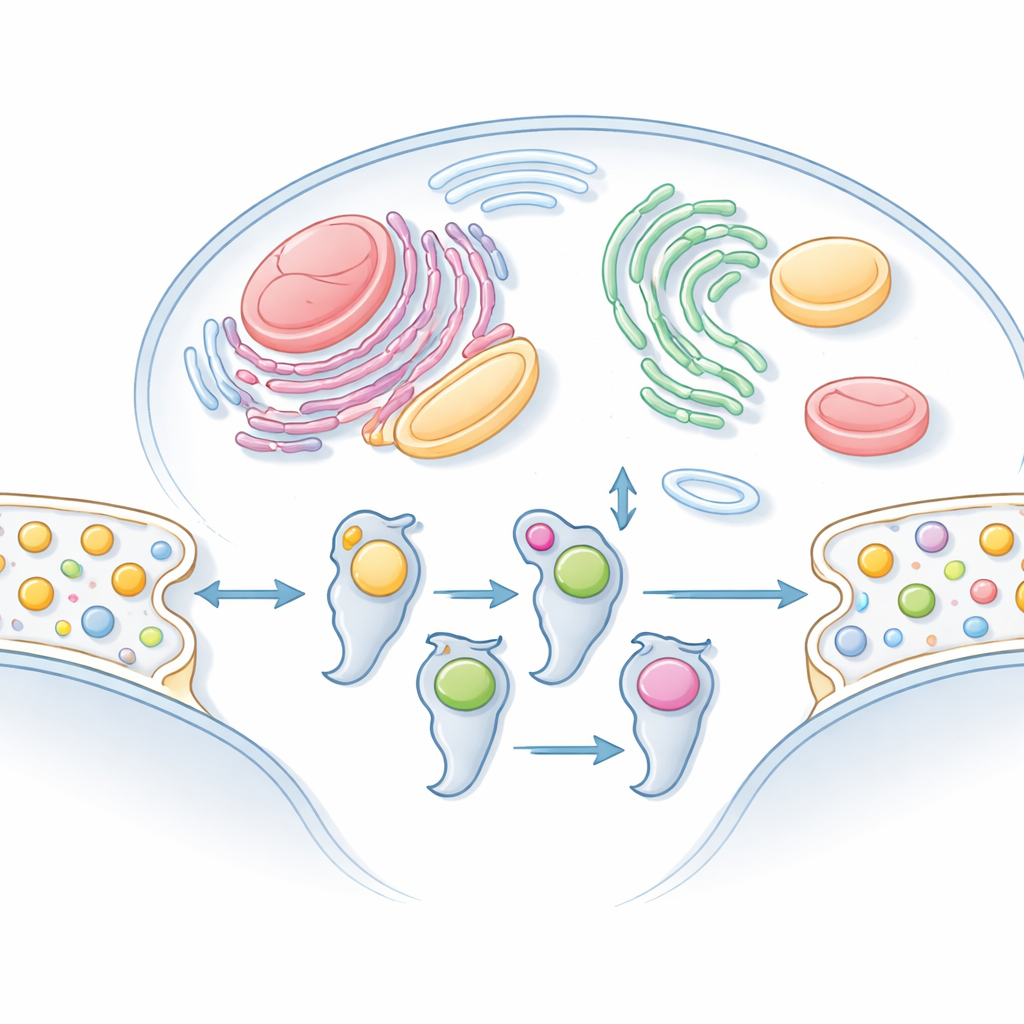
Building a Large-Scale Map of Lipid Shuttling
To do this, the team cloned 101 human LTPs and expressed them in two different settings. In human-derived cells, they allowed each LTP to assemble with whatever fats were naturally present. In a test-tube setting, they mixed purified LTPs with artificial membranes made from animal tissue extracts. They then purified more than 100 LTP–lipid complexes and identified the bound fats using sensitive mass spectrometry. By matching protein and lipid signals across many separation steps, they filtered out accidental hitchhikers and kept only lipids that reliably traveled with each LTP. The result was a catalogue of LTP partners covering nine major LTP families.
New Cargo and New Rules
This map confirmed known partners—such as vitamin A for its carrier proteins—but also uncovered new and sometimes surprising cargo. One LTP called HSDL2, linked to disorders of fat storage, was found to mobilize triacylglycerols, the same neutral fats that fill our fat cells. Other LTPs bound signaling fats like diacylglycerol, or a special group of "ether" lipids made by a distinct pathway. Many LTPs turned out to handle more than one class of lipid, suggesting they do double duty: they can move their main cargo while also handling helper lipids that drive the exchange process or tune metabolism. When the researchers forced cells to overproduce individual LTPs, the levels of both known and newly discovered lipid partners changed in predictable ways, showing that the newly mapped cargo are not laboratory artifacts but function in living cells.
Why Only Some Fats Are Mobile
Looking across the whole dataset, the authors noticed that LTPs did not treat all versions of a given lipid equally. They showed clear preferences for fats with shorter tails and with one or two chemical double bonds in those tails. Such fats create tiny defects in membranes that make them easier to pull out, while very stiff or highly kinked tails are harder to extract. Some LTPs went further and favored extremely specific tail patterns. For example, the ceramide transporter CERT preferred ceramides with certain chain lengths, including rare very long species that help form tightly packed membrane patches. Another group, the phosphatidylinositol transfer proteins, favored a species that carries an arachidonic acid tail, a building block for many hormone-like signals. Computer simulations of LTP structures revealed how clusters of particular amino acids inside the binding pockets create snug fits for these chosen tails.
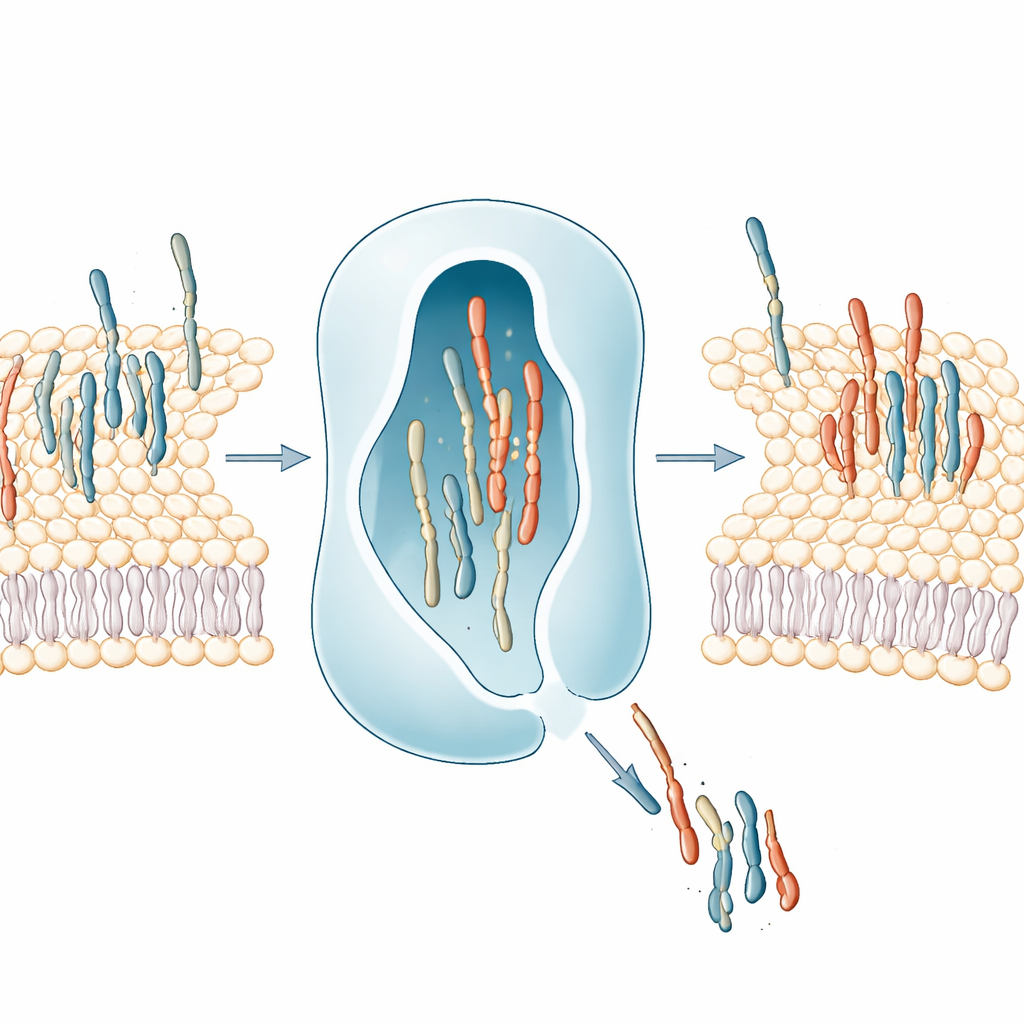
Linked Lipids and Coordinated Cell Behavior
The study also asked whether different lipids carried by the same LTP are related in the life of a cell. By comparing their map with large existing datasets, the authors found that lipids handled by the same LTP tend to rise and fall together when metabolism is disturbed and tend to appear in the same places inside cells and tissues. This suggests that LTPs help coordinate groups of lipids that work together, rather than moving isolated molecules. In other words, each LTP may define a small "network" of fats that travel and act as a unit.
Why This Matters for Health and Disease
For non-specialists, the key message is that cells do not just make the right fats; they must also move carefully selected fat species to the right membranes, and they do this with a surprisingly versatile toolkit of transfer proteins. This work delivers the first broad, experimentally grounded map of which human LTPs carry which lipids, and reveals simple rules—such as a bias toward certain tail lengths and degrees of unsaturation—that decide which members of the vast lipid pool are actually mobile. Because many LTPs and their lipid partners are tied to cancer, immune responses, and brain function, this resource offers a starting point for understanding how subtle changes in fat traffic can ripple out into disease, and for designing future therapies that nudge these microscopic shuttles onto healthier routes.
Citation: Titeca, K., Chiapparino, A., Hennrich, M.L. et al. Systematic analyses of lipid mobilization by human lipid transfer proteins. Nature 651, 511–520 (2026). https://doi.org/10.1038/s41586-025-10040-y
Keywords: lipid transfer proteins, cell membranes, lipidomics, membrane metabolism, ceramide transport