Clear Sky Science · en
Human and bacterial genetic variation shape oral microbiomes and health
Why the Mouth’s Invisible World Matters
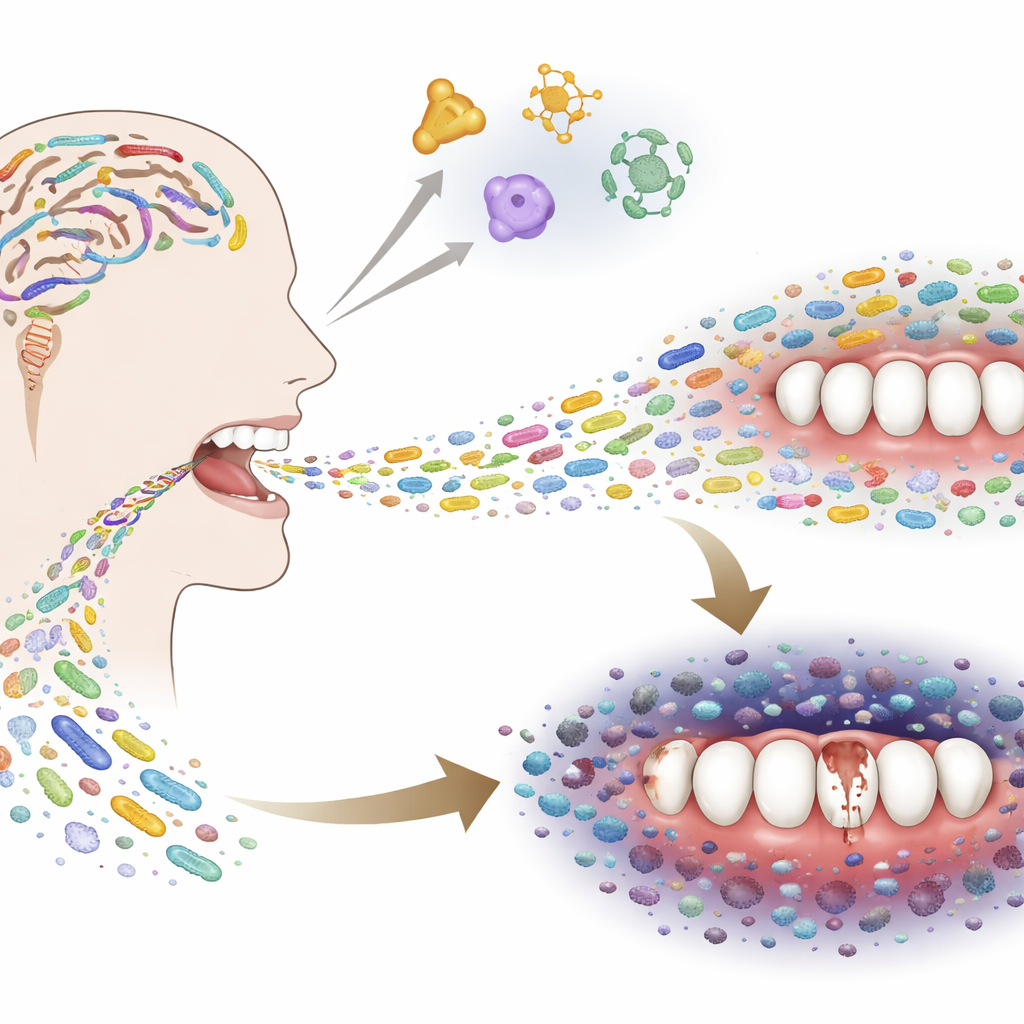
Your mouth is home to a bustling city of microbes that help break down food, protect against invaders and, when things go wrong, contribute to cavities and gum disease. This study asks a simple but far-reaching question: how much of that microscopic city is shaped by your own DNA, and how much by the microbes’ DNA? By reading both the human and bacterial genomes in saliva from more than 12,000 people, the authors show that inherited differences in saliva chemistry and surface sugars on our cells help decide which microbes thrive—and, in turn, who is more likely to lose teeth or need dentures.
A Big Look at Tiny Mouth Residents
The researchers re-used whole-genome sequencing data from saliva, not just to read human DNA but also to capture the stray reads that come from bacteria, fungi and other microbes. From 12,519 participants, they built the largest map to date of the oral microbiome, tracking 645 microbial species, 439 of which were common. They found that age is a major driver of how these communities change: diversity surges in early childhood as teeth erupt and diets expand, then gradually declines in later life. In contrast, sex, genetic ancestry and autism diagnosis had only modest effects on which species were present and in what amounts.
Gene Differences that Tune the Mouth’s Environment
To see how human genetics shapes this microscopic community, the team scanned millions of genetic variants for links to overall microbiome patterns. They discovered 11 key spots in the human genome where common variants were strongly tied to differences in oral microbes. Several fall in genes that control the chemistry of saliva. One, AMY1, encodes salivary amylase, the enzyme that starts digesting starch on the tongue; others encode abundant salivary proteins or gatekeepers of the immune response. Two additional genes, ABO and FUT2, control which complex sugars—related to blood groups—decorate the surfaces of mouth cells and secreted proteins. These sugars act as both food and docking sites for many microbes, so small DNA changes in these genes can tip the balance between different bacterial species.
From Saliva Chemistry to Tooth Loss
The most striking story centers on AMY1. People vary widely—from two to more than thirty copies—of this gene, and each extra copy roughly boosts the level of amylase in saliva. Higher copy numbers were linked to systematic shifts in dozens of bacterial species, creating stepwise changes in community makeup. Using data from the UK Biobank and the US All of Us program, the authors showed that more AMY1 copies also track with a higher chance of wearing dentures or having all teeth missing, but not with body weight. Two rare coding changes in AMY1 had especially strong ties to dentures, suggesting that subtle changes in how starch is broken down in the mouth can reshape local microbes in ways that slowly damage teeth over a lifetime.
Microbes Adapting to Our Sugars
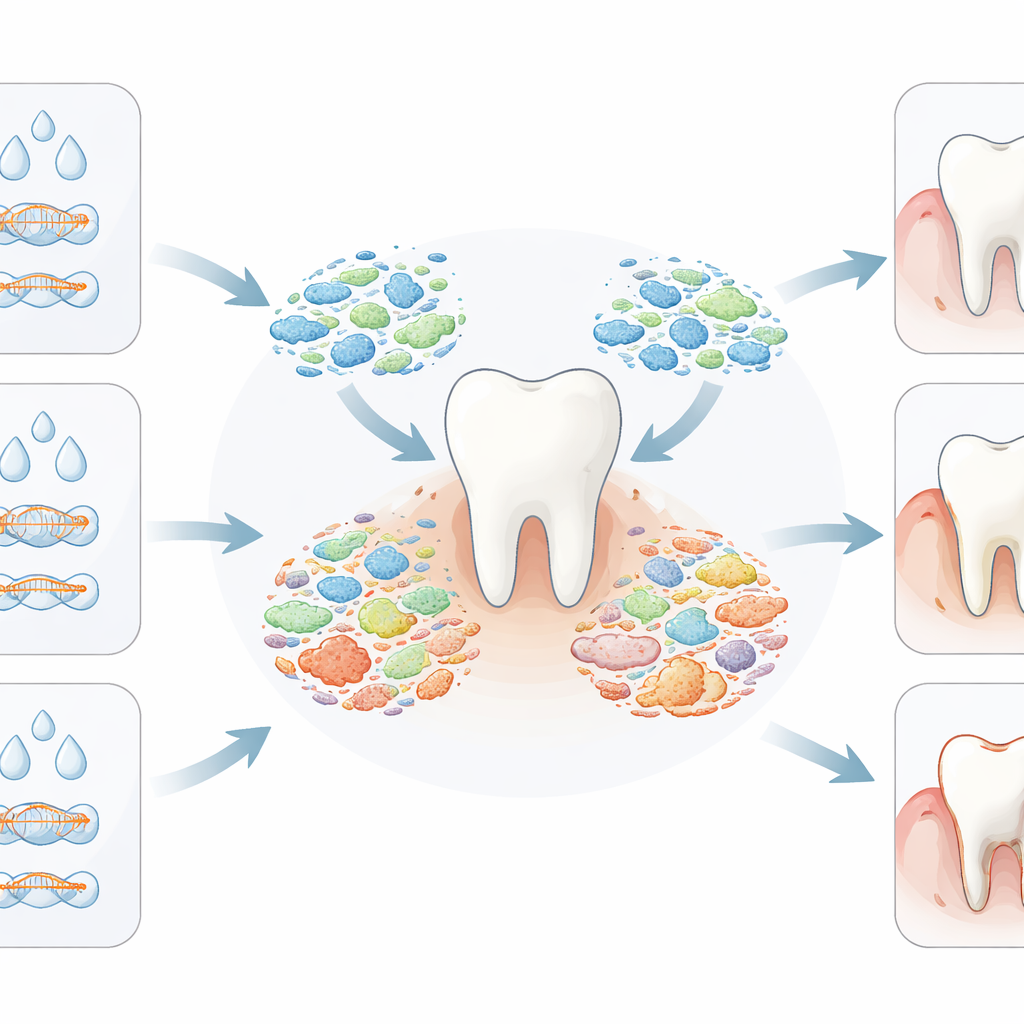
Human DNA is only half the story—the bacteria are evolving too. By examining how coverage of bacterial genes rose or fell with human variants, the team pinpointed 68 small regions in 18 microbial genomes that appear to be gained or lost depending on host genotype. One standout example is a glycoside hydrolase gene in certain Prevotella strains. People whose mouth cells display abundant A-type blood group sugars, and who can secrete these sugars into saliva, are much more likely to carry Prevotella with this enzyme, which seems tailored to clip and consume those A-type decorations. Other regions encode sticky surface proteins—adhesins—that help bacteria latch onto glycosylated host proteins. These adhesins are enriched in people who carry working copies of FUT2, the gene that enables secreted blood-group-like sugars, implying a tight co-adaptation between host sugar patterns and bacterial gripping tools.
What This Means for Everyday Oral Health
Put simply, this work reveals that our genes help set the table for microbes in the mouth—controlling which sugars and proteins they can feed on or cling to—and that microbes, in turn, fine-tune their own genomes to exploit those offerings. Certain combinations of human variants and microbial adaptations are linked to tooth decay and tooth loss, especially through the pathway that starts with salivary amylase. For a layperson, the message is that oral health is not just about brushing and diet; it is also about an inherited chemical landscape that favors some mouth bacteria over others. Understanding these gene–microbe partnerships could eventually guide more precise approaches to preventing cavities, from tailored probiotics to interventions that nudge the mouth’s ecosystem back toward a healthier balance.
Citation: Kamitaki, N., Handsaker, R.E., Hujoel, M.L.A. et al. Human and bacterial genetic variation shape oral microbiomes and health. Nature 651, 429–439 (2026). https://doi.org/10.1038/s41586-025-10037-7
Keywords: oral microbiome, human genetics, salivary amylase, tooth decay, host–microbe interaction