Clear Sky Science · en
Projected impacts of climate change on malaria in Africa
Why a Warmer World Matters for Malaria
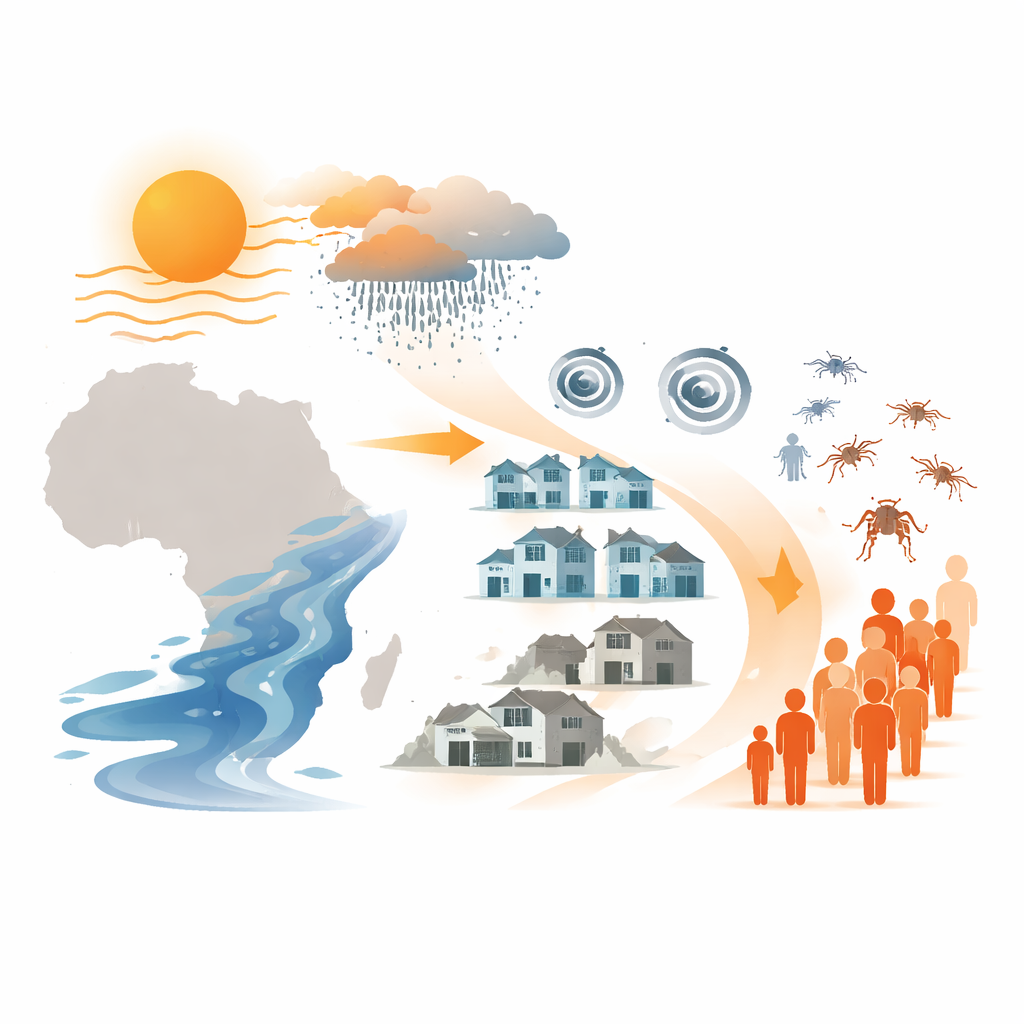
Malaria already kills hundreds of thousands of people in Africa each year, mostly young children. At the same time, the continent is on the front line of climate change, facing hotter temperatures and more destructive storms and floods. This study asks a pressing question with real human stakes: as the climate shifts over the next 25 years, will malaria become easier or harder to defeat? The answer, based on a rich blend of data and modelling, suggests that climate change could seriously slow or even reverse hard-won progress unless health systems and malaria control efforts become far more resilient.
Looking Beyond Heat and Mosquitoes
Most previous work on climate and malaria has focused on how temperature and rainfall affect mosquitoes and the parasite they carry. Warmer conditions can speed up mosquito breeding and parasite development, while heavy rains can create more breeding pools. But this view leaves out other powerful forces that shape malaria risk, such as better housing, insecticide-treated bed nets, effective medicines, and growing cities. The authors assembled 25 years of data across Africa, combining climate records, malaria maps, intervention coverage, housing quality, population change and economic indicators. They used these inputs in a large geotemporal model to tease apart the role of climate from the role of malaria control and social development.
Simulating Tomorrow’s Climate and Disease
To peer into the future, the team linked their malaria model to an ensemble of state-of-the-art climate simulations under a widely used “middle-of-the-road” scenario for greenhouse gas emissions and development (known as SSP2-4.5). For each 5-by-5 kilometre patch of Africa and each month from 2000 to 2050, they estimated two climate-related indices: one capturing how suitable temperatures are for malaria transmission, and another reflecting how rainfall, humidity and evaporation combine to create mosquito breeding habitat. They then compared a world where climate continues to change to a counterfactual world where climate conditions stay frozen at today’s levels, while assuming that current levels of malaria control and socioeconomic conditions do not improve or deteriorate overall.
Extreme Weather Emerges as the Main Villain
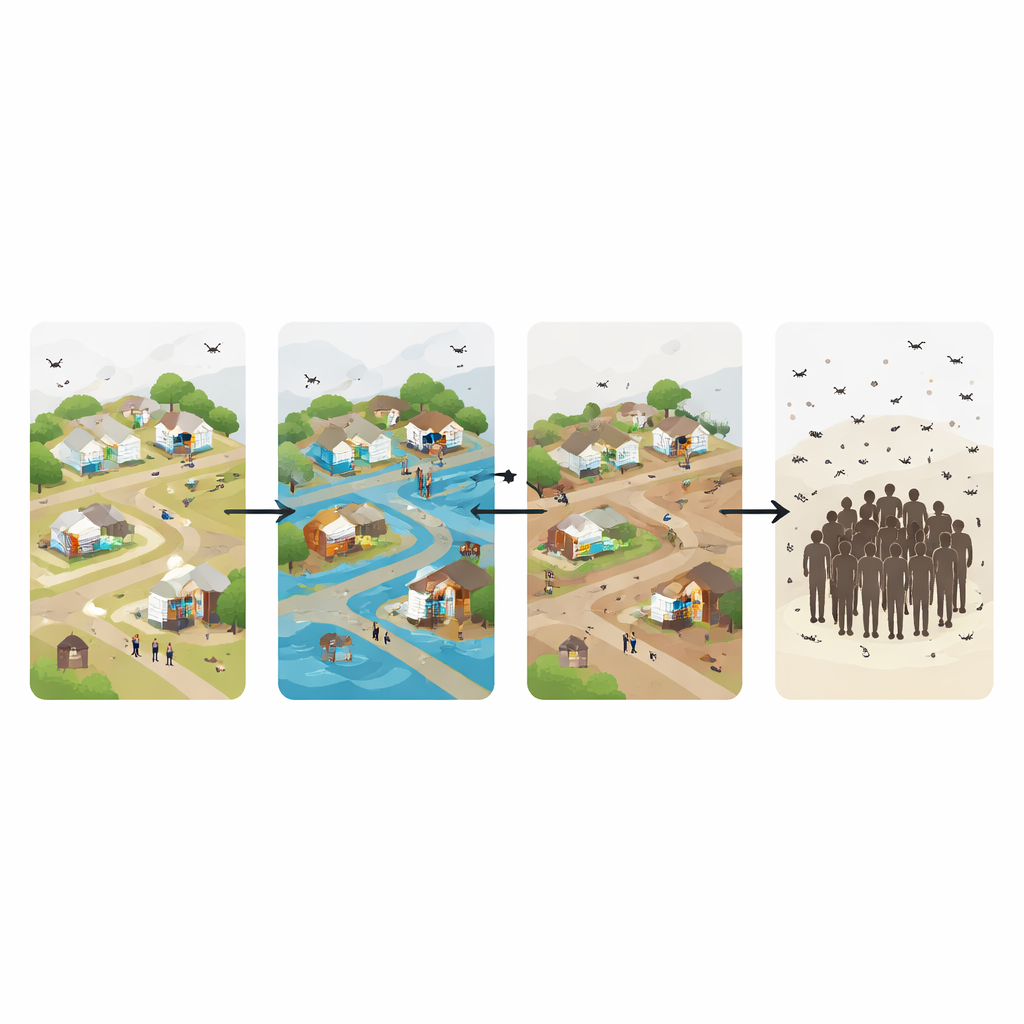
The most striking finding is that gradual shifts in temperature and rainfall, on their own, cause only modest continent-wide changes in malaria transmission by the 2040s. Some cooler highland and southern regions, such as parts of Ethiopia, Kenya, Rwanda and Angola, become more suitable for malaria, while extremely hot areas in the Sahel become less suitable. Overall, however, these ecological changes barely nudge the average infection rate. What truly drives the projected surge in malaria is not slow climate drift but the growing punch of extreme weather—especially floods and powerful cyclones. These events can wash away or damage homes, destroy bed nets, block roads, and shut down clinics, leaving people more exposed to mosquito bites and cutting them off from timely treatment.
How Disasters Translate into More Illness and Death
The researchers built statistical models of floods and cyclones based on decades of satellite and storm-track data, then used climate projections to generate thousands of plausible future events. Drawing on published reports and interviews with frontline health workers and emergency responders, they estimated how long it takes for housing, roads, and health facilities to recover after such events, and how much access to bed nets and medicines drops in the meantime. Feeding these disruptions into their malaria model revealed that extreme weather alone could account for about four-fifths of the additional malaria cases and more than nine-tenths of the extra deaths linked to climate change by 2050. Most of these added cases would not come from malaria spreading into brand-new areas, but from surges in places where transmission already exists, particularly densely populated regions of Nigeria and the African Great Lakes.
What This Means for Beating Malaria
All told, the study estimates that climate change could cause an extra 123 million malaria cases and over half a million additional deaths in Africa between 2024 and 2050 under current control efforts. To a lay reader, the core message is clear: climate change is less about shifting the map of malaria and more about knocking holes in the defences people rely on—safe housing, bed nets, clinics, and reliable roads. The authors argue that making progress towards malaria eradication will depend not just on better drugs and vaccines, but on climate-proof health systems and infrastructure that can withstand floods and storms. Investing in sturdier clinics, stronger supply chains, local emergency response, and housing that offers lasting protection could turn a future of escalating climate-driven outbreaks into one where malaria is still on a path to eventual elimination.
Citation: Symons, T.L., Moran, A., Balzarolo, A. et al. Projected impacts of climate change on malaria in Africa. Nature 651, 390–396 (2026). https://doi.org/10.1038/s41586-025-10015-z
Keywords: climate change, malaria, extreme weather, public health, Africa