Clear Sky Science · en
Ancestry and somatic profile indicate acral melanoma origin and prognosis
Why this skin cancer story matters
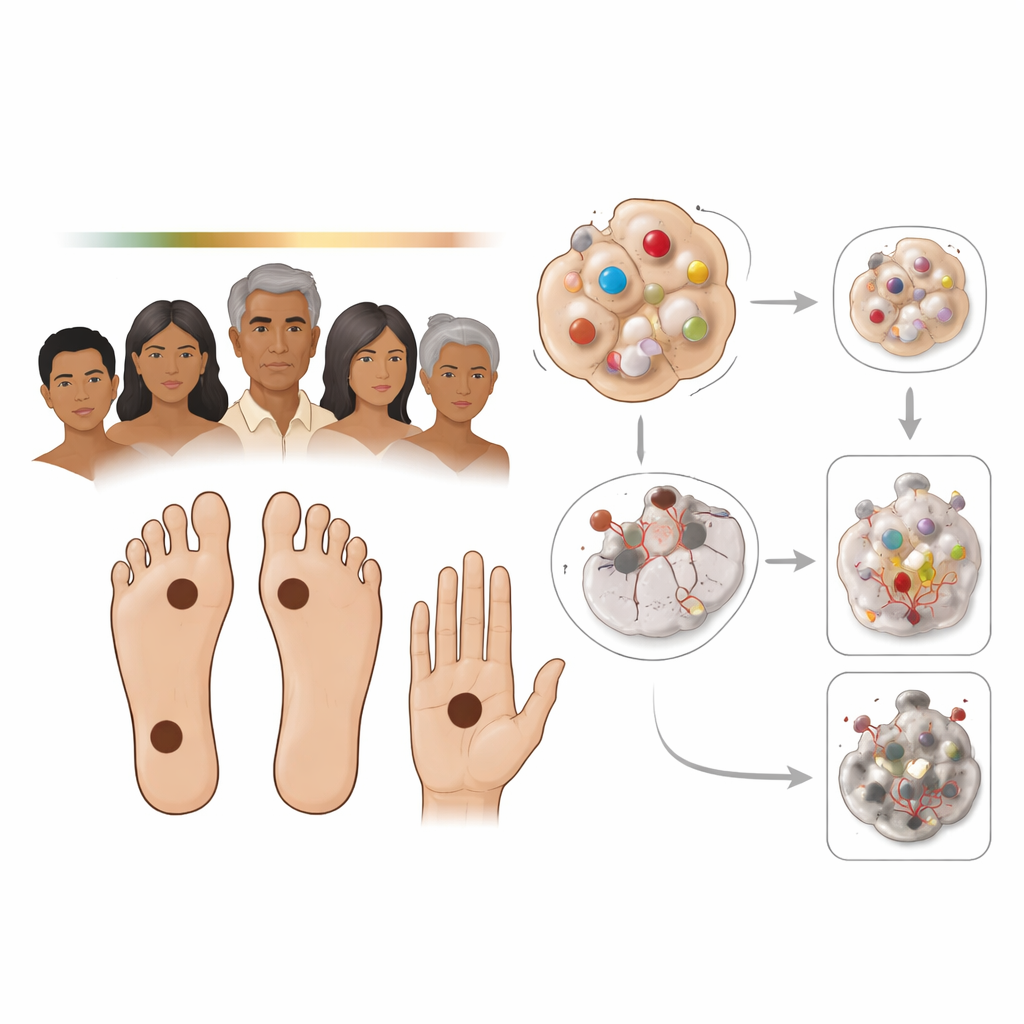
Acral melanoma is a deadly form of skin cancer that appears on the soles of the feet, palms of the hands and under the nails—places that see little sun. It is the most common melanoma subtype in many Latin American, African and Asian populations, yet almost all genetic research on melanoma has focused on people of European descent. This study looks closely at acral melanomas from Mexican patients, revealing how a person’s mixed ancestry, the tumour’s genetic makeup and its activity patterns can influence where the cancer comes from, how it behaves and how likely it is to return or shorten life.
Who gets this cancer and why ancestry counts
The researchers examined 123 tumours from 92 Mexican patients treated at a major cancer hospital. Most tumours started on the feet, often on the sole, and many were already thick and ulcerated by the time they were diagnosed, reflecting late detection and limited access to advanced treatments. Genetic testing showed that about 90% of patients had mostly Native American (Amerindian) ancestry, with smaller contributions from European and African ancestors. When the team compared this ancestry mix with the tumours’ DNA changes, they found that patients with a higher proportion of European ancestry were more likely to carry a specific mutation in a known cancer gene called BRAF. This link between inherited background and tumour genetics echoes similar findings in lung and other cancers, and highlights how ancestry can shape the molecular routes to disease.
How acral melanoma differs from sun-driven melanoma
Unlike the more familiar melanomas that form on sun-exposed skin, acral melanomas are not driven by ultraviolet (UV) light. Their DNA carries fewer single-letter mutations typical of UV damage but many large-scale gains and losses of chromosome segments. In this Mexican cohort, classic melanoma driver genes such as BRAF, NRAS and NF1 were altered in only about 40% of tumours, leaving most cases without the usual culprits and suggesting other, rarer drivers at work. The study also catalogued frequent amplifications and deletions of DNA regions containing genes that control cell division and survival, including TERT, CCND1 and CDKN2A/CDKN2B. These structural changes, together with a mutational “signature” not linked to UV light, reinforce that acral melanoma is a biologically distinct disease that cannot simply be treated as a sun-induced melanoma in a different place.
A surprising link to ordinary skin cells
The team then turned to RNA, the readout of which genes are active inside cells. They built a gene-expression score that distinguishes melanomas growing on glabrous skin (palms and soles) from those on ordinary haired skin. When they applied this score to acral tumours, an unexpected pattern emerged: tumours with activating BRAF mutations looked, at the level of gene activity, more like non-acral cutaneous melanomas than like other acral tumours. Follow-up tests suggested this was not just a side effect of BRAF signalling itself. Instead, the authors propose that some tumours arising on palms or soles may actually originate from a different kind of pigment cell—more similar to those on limbs than to the specialised pigment cells of the sole or palm. In other words, certain cancers that appear acral by location might be “cutaneous-like” by their cell of origin and genetic programme.
Three tumour “personalities” and patients’ outlook
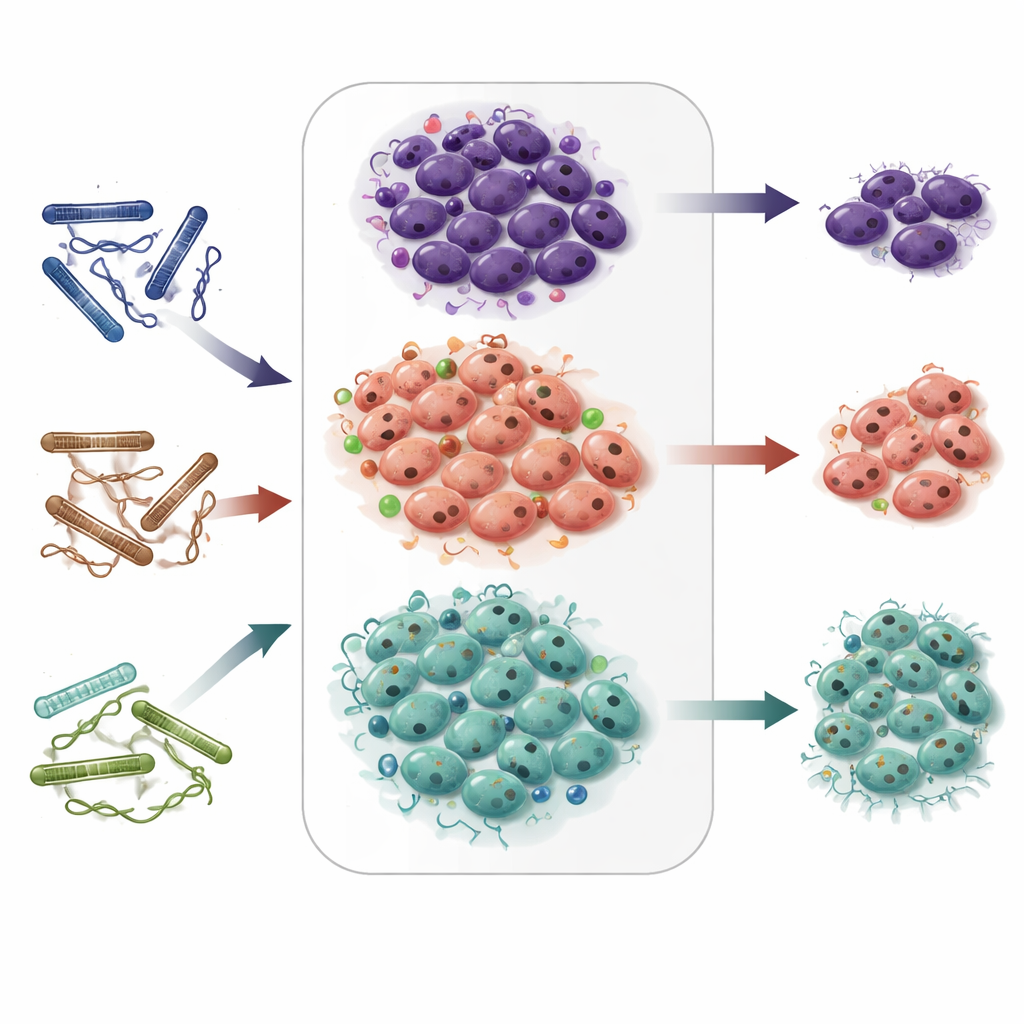
Among the primary tumours with high-quality RNA data, the researchers identified three main activity patterns, or expression clusters. One cluster showed features of the outer skin layer and wound healing, and contained more signs of specific immune and support cells in the tumour environment. These tumours tended to be thinner, at earlier stages and less aggressive, and patients in this group had fewer recurrences and no deaths during follow-up. A second, more dangerous cluster was dominated by genes involved in cell division and pigment production; patients whose tumours fell into this group had the highest rates of recurrence and death. A third cluster showed strong energy-production signatures and had outcomes between the other two. Across the entire cohort, tumours carrying any major driver mutation were more likely to recur than those without such mutations, hinting that these genetic changes mark biologically more aggressive disease.
What this means for patients and future care
This work, one of the largest studies of acral melanoma to date and the first focused on Mexican patients, makes clear that not all melanomas on palms and soles are the same. Ancestry can tilt the odds toward different genetic routes to cancer, some acral tumours appear to arise from cells more like those of ordinary skin, and the tumour’s gene-activity pattern carries clues to a patient’s risk of recurrence and survival. For patients, the message is twofold: unusual dark spots or streaks on the feet, hands or nails deserve prompt medical attention, and better-tailored treatments will require that research include diverse populations. For clinicians and researchers, the study argues for classifying and treating acral melanomas not only by where they appear on the body, but also by their genetic drivers, cell of origin and expression cluster, so that therapies and clinical trials can be matched more precisely to each patient’s tumour.
Citation: Basurto-Lozada, P., Vázquez-Cruz, M.E., Molina-Aguilar, C. et al. Ancestry and somatic profile indicate acral melanoma origin and prognosis. Nature 651, 221–230 (2026). https://doi.org/10.1038/s41586-025-09967-z
Keywords: acral melanoma, cancer genomics, genetic ancestry, BRAF mutation, tumor subtypes