Clear Sky Science · en
Heterogeneity in public attitudes and preferences for the deployment of aquifer thermal energy storage
Why underground heat matters to everyday life
Keeping our homes, schools and hospitals warm in winter and cool in summer uses a huge amount of energy and creates a large share of the United Kingdom’s climate‑warming emissions. One promising but little‑known option is aquifer thermal energy storage, or ATES, which stores heat underground in water‑bearing rocks. This study asks a simple but crucial question: how do ordinary people in the UK feel about putting such systems beneath their towns and cities, and what features would make them more willing to support and help pay for them?
A new way to use the ground beneath our feet
ATES systems work by pumping water into and out of natural underground layers known as aquifers. In summer, excess heat from buildings can be pushed down and stored; in winter, that warmth is brought back up to help with heating. The same system can also provide cooling. Because the ground acts as a giant rechargeable thermal battery, ATES can sharply cut the fossil fuels needed for heating and cooling. Studies suggest it could meet a large share of the UK’s demand in cities and reduce carbon emissions far more than familiar technologies like standard heat pumps. Yet, despite its promise and widespread use in countries such as the Netherlands and Sweden, ATES is still rare in the UK, in part because the public knows little about it and may worry about what lies beneath. 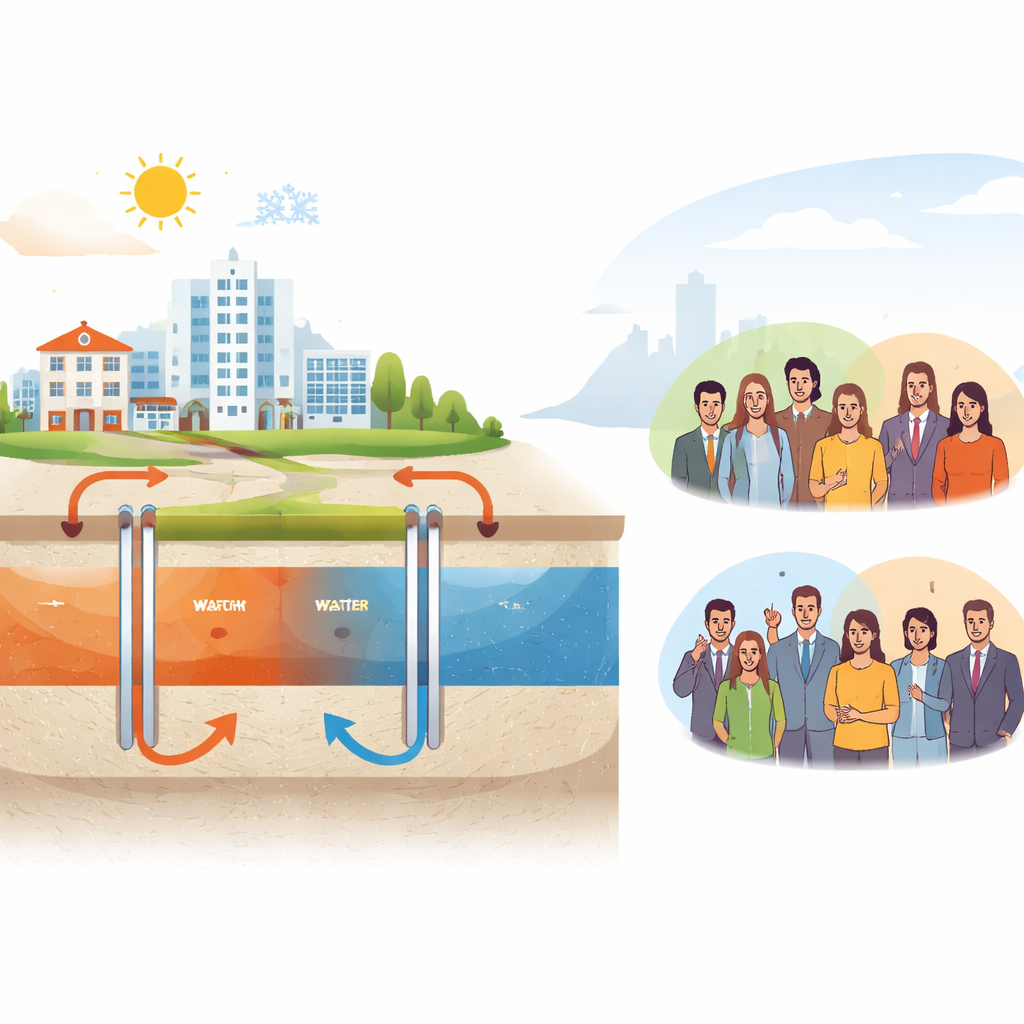
Listening to people’s hopes and worries
The researchers surveyed 1,758 adults in northwest England, a region well suited to ATES. Everyone first received plain‑language information about the UK’s climate goals and a short explanation of how ATES works. They were then asked about their views on several themes: whether they saw ATES as sustainable and reliable, whether they believed it would benefit their local area, how worried they were about safety and environmental risks such as groundwater contamination or ground movement, how important community engagement and education were to them, and whether they supported public funding and incentives for the technology. Using a statistical technique that groups people with similar answer patterns, the authors identified four distinct outlooks on ATES rather than one unified public opinion.
Four camps of opinion, from sceptics to champions
About a third of respondents fell into a “cautiously negative” camp. They did not reject ATES outright but were doubtful about its long‑term performance and uneasy about possible risks, wanting strong environmental checks and local consultation. The largest group, covering just over two fifths of the sample, were “indifferent or undecided”: they leaned mildly positive but lacked strong feelings or confidence. Around one fifth were clear “enthusiasts”, convinced that ATES is a key tool for sustainable energy, eager to see it in their own communities, willing to pay towards it and keen to take part in discussions. A small but important minority, roughly 6%, were firmly “doubtful”, seeing more danger than benefit and preferring other energy options. Age and education mattered: younger and more highly educated people were more likely to be enthusiasts, while older respondents were more likely to be in the doubtful group.
What people value in real‑world projects
The survey also asked people to choose between different imagined local ATES projects. Each option varied in how long it would take to build, how much carbon pollution it would cut, whether nearby households could connect for their own heating and cooling, how close the nearest installation would be, and what one‑off extra council tax payment would be required. By analysing these choices, the authors estimated how much, on average, people were willing to pay for each project feature. Respondents valued the chance for private households to hook up to the system and put a clear price on cutting emissions: they were willing to pay more for projects that removed larger amounts of carbon each year and for quicker roll‑out. There was some preference for having installations further away from homes, but this effect was weaker and less consistent. People’s hidden attitudes—such as how strongly they believed in community engagement, or how worried they were about safety—shaped these preferences, especially their decision to back a project at all versus sticking with the status quo. 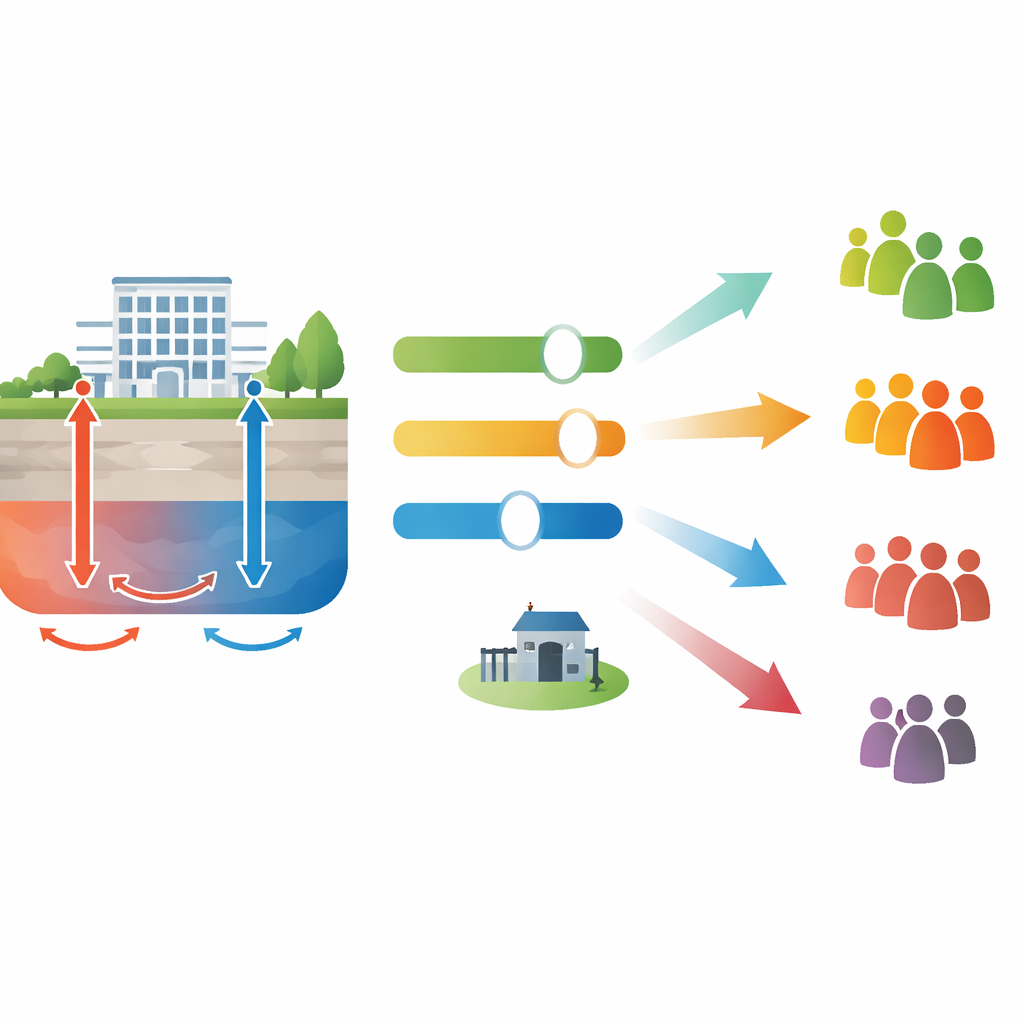
What this means for cleaner heating and cooling
To a lay reader, the study’s bottom line is that underground heat storage can be attractive to the public, but support is far from guaranteed. Many people are unsure or concerned about safety and want more information and involvement before giving a green light. At the same time, there is real willingness to pay for ATES projects that move quickly, cut substantial carbon emissions and offer practical benefits to households, such as access to low‑carbon heating. The authors suggest that tailored communication, clear safeguards and designs that share both environmental and everyday benefits with local residents could turn this unfamiliar technology into an accepted part of the UK’s path to net‑zero, rather than another contested energy project.
Citation: Liu, T., Hanna, R. & Kountouris, Y. Heterogeneity in public attitudes and preferences for the deployment of aquifer thermal energy storage. Nat Energy 11, 479–489 (2026). https://doi.org/10.1038/s41560-026-01977-z
Keywords: aquifer thermal energy storage, public acceptance, low-carbon heating, renewable energy preferences, UK energy transition