Clear Sky Science · en
Emotional responses to state repression predict collective climate action intentions
Why this matters for everyday citizens
Across the world, people worried about climate change are taking to the streets—and increasingly finding themselves met with new laws, police crackdowns and even jail time. This study asks a simple but crucial question: when governments try to shut climate protests down, do people back off, or does it push them toward even bolder action? By looking inside activists’ emotional responses, the researchers show how fear, anger and contempt can steer people toward either conventional marches and petitions or more disruptive tactics such as roadblocks.
How the study was carried out
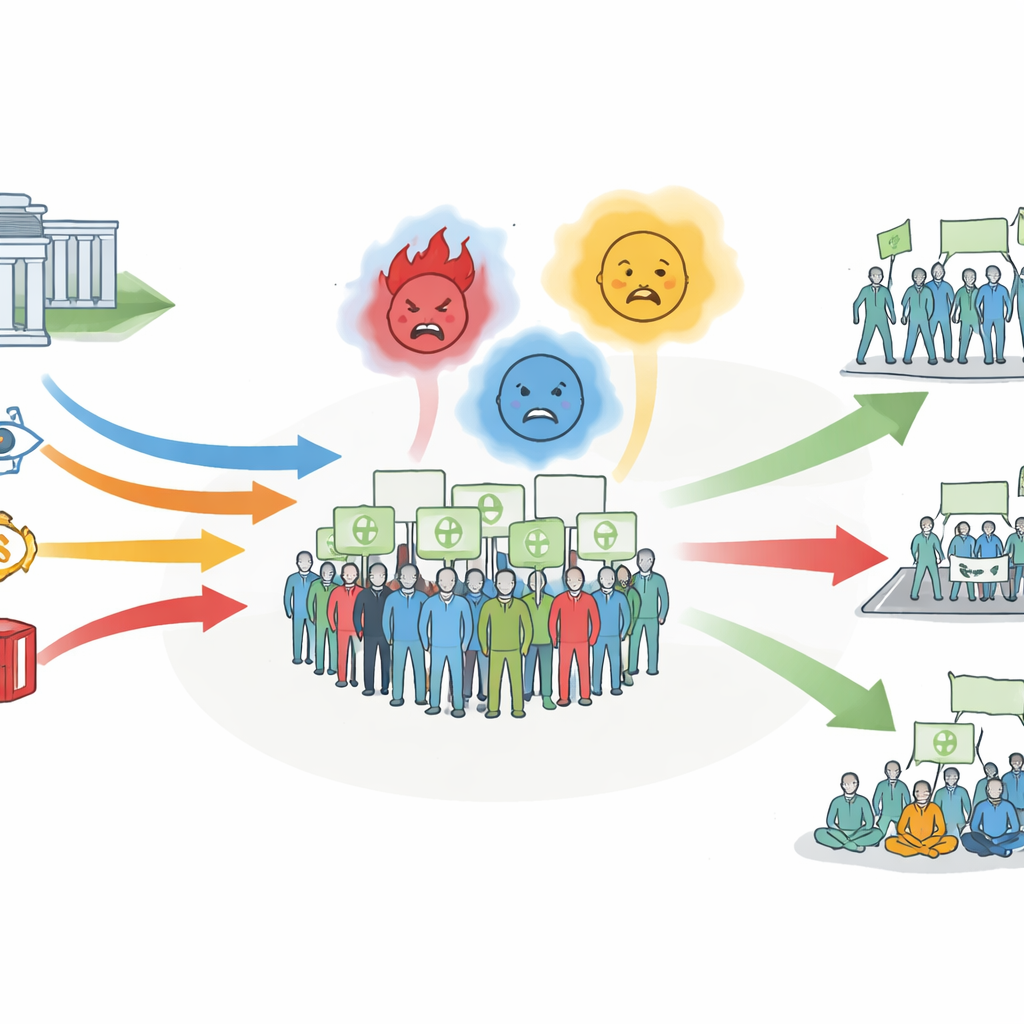
The researchers surveyed 1,375 people on the email list of Extinction Rebellion UK, one of the country’s best-known climate protest groups. Participants reported how involved they had been in past climate actions, how strongly they identified with the broader climate movement and how effective they felt protests were at changing politics or strengthening the movement. Crucially, they were also asked two kinds of questions about repression: how likely they thought climate protesters in general were to face surveillance, arrest, fines or jail, and whether they personally had already experienced those things. Finally, they rated how angry, fearful or contemptuous they felt about how the justice system treats climate protesters, and how willing they were to join different kinds of future actions, from signing petitions to taking part in disruptive, rule-breaking protests.
Two kinds of protest, two sets of motives
The team distinguished between “normative” actions that follow social rules—such as legal marches, petitions and peaceful rallies—and “non-normative” actions that deliberately break those rules, such as blocking roads, occupying buildings or taking part in high-risk stunts likely to lead to arrest. Using statistical models, they first looked at what usually predicts these two types of action. As expected, people who felt more connected to the climate movement, believed that protests help strengthen that movement and thought their own participation mattered were more willing to act. Yet the belief that protests can actually force governments to change policy did not clearly predict intentions, echoing other research suggesting that activists in highly restrictive settings may keep going even when they doubt politicians will listen.
What repression does to protest plans
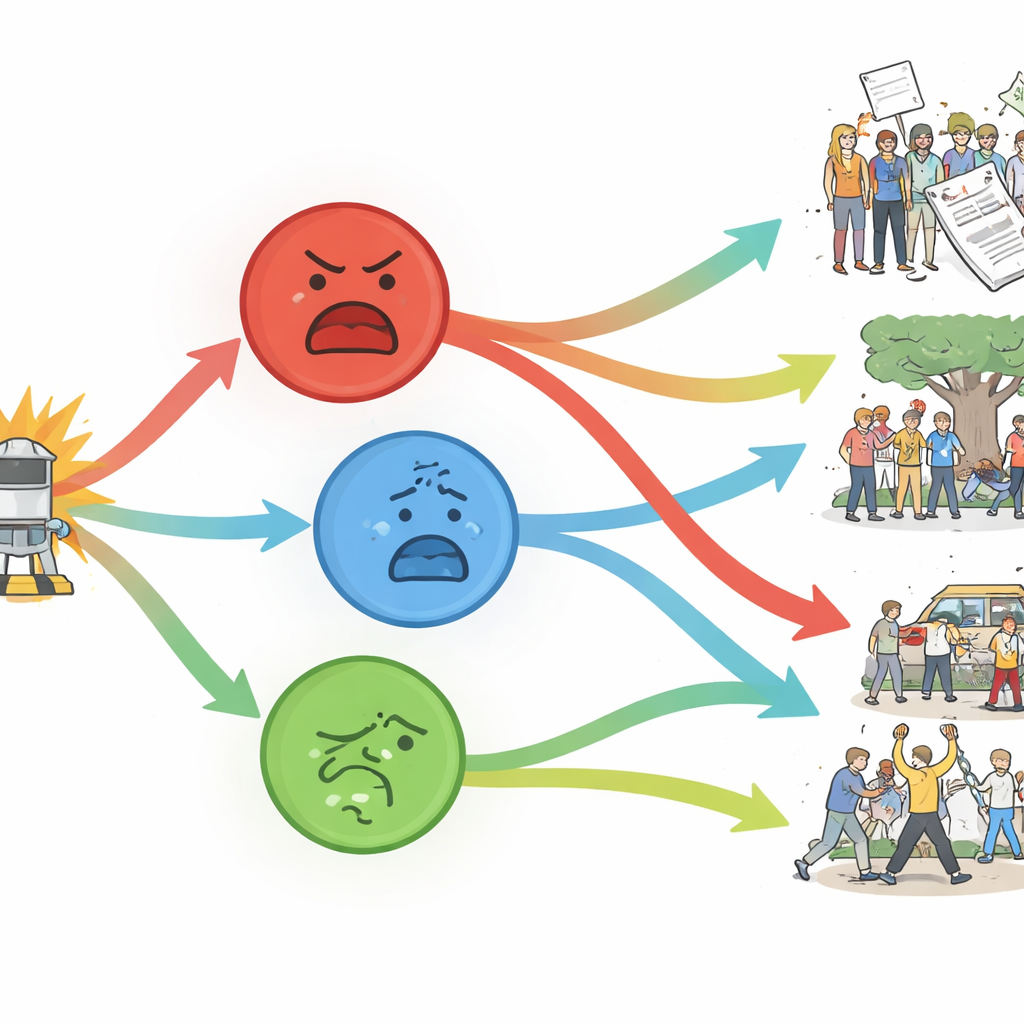
The researchers then examined the role of repression. Simply expecting repression—believing that climate protesters are likely to be watched, arrested or punished—did not directly change people’s intentions to protest. In contrast, having personally been surveilled, arrested, fined or jailed was linked to a clear increase in willingness to take part in disruptive, rule-breaking actions. Any tendency for such experiences to reduce interest in more conventional actions was weak and unstable across checks. In other words, among this already-committed group of activists, lived repression seemed less to scare people off protesting altogether than to nudge them away from low-risk, within-the-rules activities toward higher-risk, disruptive ones.
How feelings turn crackdowns into action
A central contribution of the study is showing that emotions act as the bridge between repression and future behaviour. When people anticipated repression, this tended to spark anger and, for some, contempt toward authorities. Anger in particular was linked to greater willingness to join both conventional and disruptive actions, while contempt was especially associated with non-normative tactics that challenge the established order. At the same time, anticipating repression also raised fear, which dampened intentions to engage in disruptive actions. For those who had already experienced repression, fear again played a key role: paradoxically, in this group, repression was tied to lower fear and higher willingness to consider disruptive protest. Overall, emotions explained much of why the same pressures can push some people toward the streets and others away.
What this means for laws, policing and movements
The findings suggest that efforts to clamp down on climate protests in countries like the UK may backfire, at least among committed activists. Tougher laws and policing can fuel anger and contempt that make disruptive tactics more appealing, while lived experiences of repression may reduce the fear that would otherwise hold people back. For policy-makers hoping to reduce disruption, this raises a warning: criminalizing peaceful protest may create conditions that foster more extreme forms of action and deepen polarization around climate issues. For climate movements, the work highlights the importance of building a sense of shared identity and personal impact, while also actively addressing fear among supporters. For the wider public, the study underscores that how societies respond to dissent can shape not only whether people protest, but what forms that protest takes.
Citation: Davies-Rommetveit, S., Douch, J., Gardner, P. et al. Emotional responses to state repression predict collective climate action intentions. Nat. Clim. Chang. 16, 281–287 (2026). https://doi.org/10.1038/s41558-026-02570-8
Keywords: climate activism, protest repression, collective action, political emotions, social movements