Clear Sky Science · en
A weighting framework to improve the use of emissions scenario ensembles of opportunity
Why smarter climate pathways matter
When scientists and policymakers plan how to tackle climate change, they rely on computer-made stories of the future called scenarios. These scenarios explore different mixes of technology, lifestyle change and policy to see how the world might cut greenhouse gas emissions. But the pool of scenarios used by the Intergovernmental Panel on Climate Change (IPCC) is not a carefully designed experiment; it is a grab bag of studies produced over many years, with some models and projects contributing far more than others. This paper proposes a clear, systematic way to rebalance that grab bag so that climate guidance rests on fairer, more diverse evidence.
From grab bag to organized toolkit
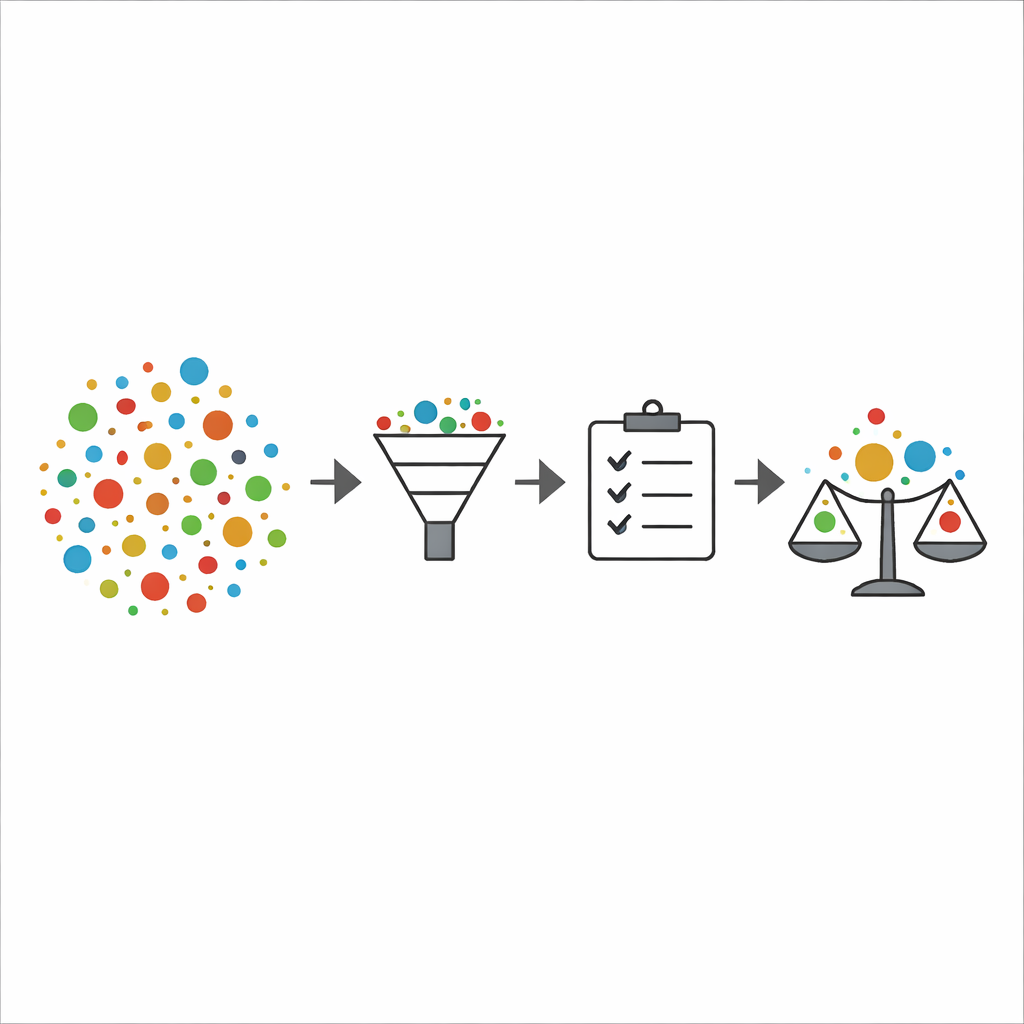
The authors look at the large collections of scenarios generated by integrated assessment models—tools that link the economy, energy use and the climate system. These collections, used extensively in IPCC reports and national planning, are called “ensembles of opportunity” because they are assembled from whatever studies happen to be available. As a result, some modeling teams or coordinated projects may dominate, and many scenarios may be near-duplicates of each other. If every scenario is treated as equally important, this imbalance can quietly skew headline results such as typical emission levels in 2050 or the year the world is projected to reach net-zero greenhouse gas emissions.
Three questions to judge each future
To tackle this, the paper introduces a simple weighting framework that gives each scenario a score between zero and one. The score is built from three ingredients. First is relevance: does a scenario actually address the question at hand, for example whether it keeps warming below 1.5 °C or 2 °C? Second is quality: does it meet basic standards, such as using realistic historical data and plausible trends for the near future? Third is diversity: how unique is the scenario compared with others in the collection? Scenarios that are off-target, of poor quality or extremely similar to many others receive lower weights and count less in summary statistics.
Putting the method to the test
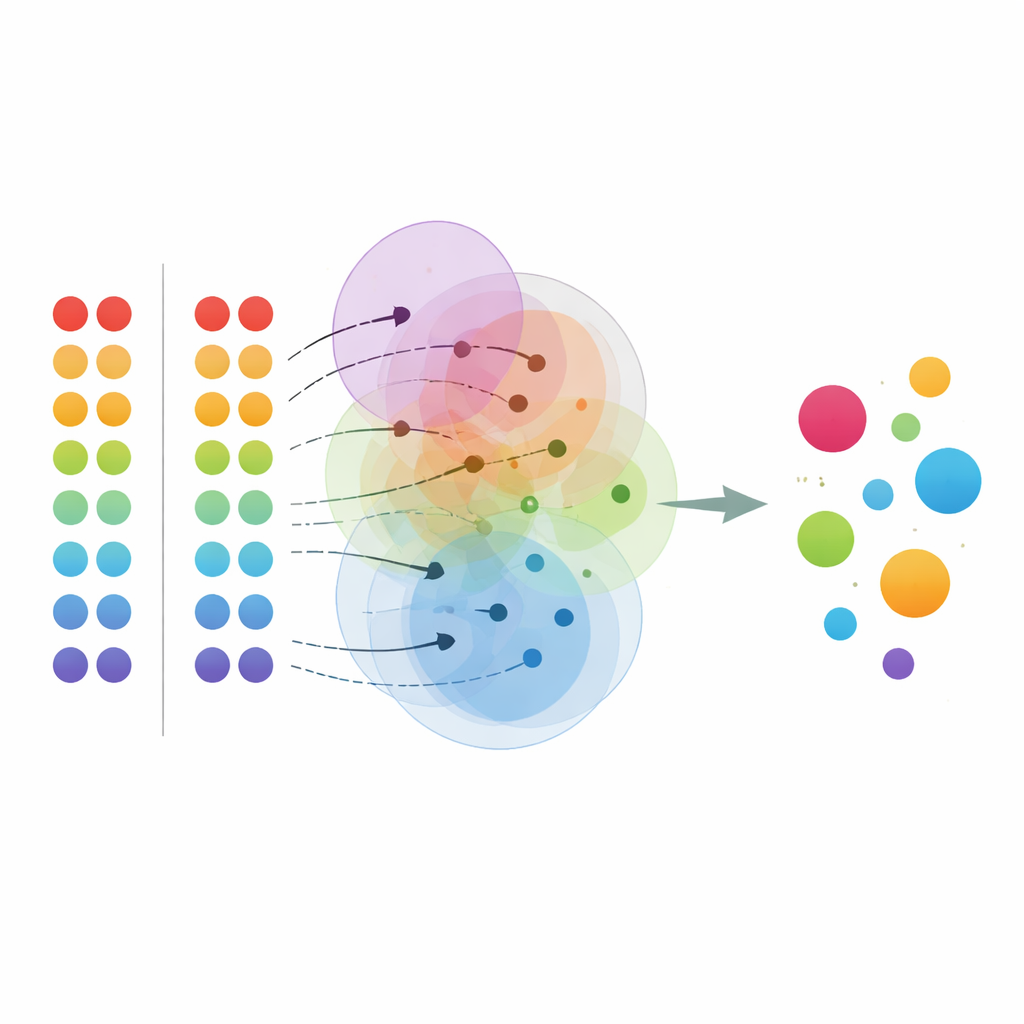
The researchers apply their approach to the IPCC’s Sixth Assessment Report scenario database, focusing on pathways that limit warming to around 1.5 °C, with and without temporary overshoot. They calculate diversity using 15 variables that describe emissions, energy use, economic activity and mitigation measures such as carbon prices and carbon capture and storage. By comparing how similar scenarios are across these variables over time, they detect clusters of nearly redundant futures and reduce their influence. They also explore a refined version that accounts for correlations among variables, ensuring that highly related measures do not get counted multiple times.
What changes when weights are applied
After reweighting, the overall ranges of key quantities like 2050 carbon dioxide emissions and peak warming change only modestly, but the details shift in meaningful ways. For 1.5 °C pathways, the median year when global greenhouse gas emissions fall to net zero moves about a decade earlier when diversity-based weights are used, suggesting that earlier action than previously reported may be consistent with the underlying evidence. Some technologies, such as carbon capture and storage and nuclear power, show noticeable differences in their typical future roles, revealing where current scenario collections are especially uneven. The method also reduces the dominance of a few heavily represented models and projects, leading to a more balanced mix of contributors when statistics are calculated.
Benefits and limits of a fairer balance
The authors stress that their framework is not a magic fix but a transparent tool. It makes explicit the kinds of judgment calls that were previously handled informally—such as dropping clearly flawed scenarios or choosing which ones best match a new research question. The same ideas could be applied to national or sector-specific pathways, or used to highlight how sustainable development concerns and feasibility limits are reflected in climate futures. At the same time, reweighting cannot fill gaps where few or no scenarios exist, and if used carelessly it could be abused to support preferred stories. Used responsibly, though, this approach helps ensure that influential climate statistics reflect a more representative, clearly documented picture of the possible paths ahead.
Citation: Beath, H., Smith, C., Kikstra, J.S. et al. A weighting framework to improve the use of emissions scenario ensembles of opportunity. Nat. Clim. Chang. 16, 305–312 (2026). https://doi.org/10.1038/s41558-026-02565-5
Keywords: climate mitigation scenarios, IPCC pathways, scenario weighting, net-zero emissions, integrated assessment models