Clear Sky Science · en
Discrepancies in national inventories reveal a large emissions gap in the wastewater sector
Why Dirty Water Matters for the Climate
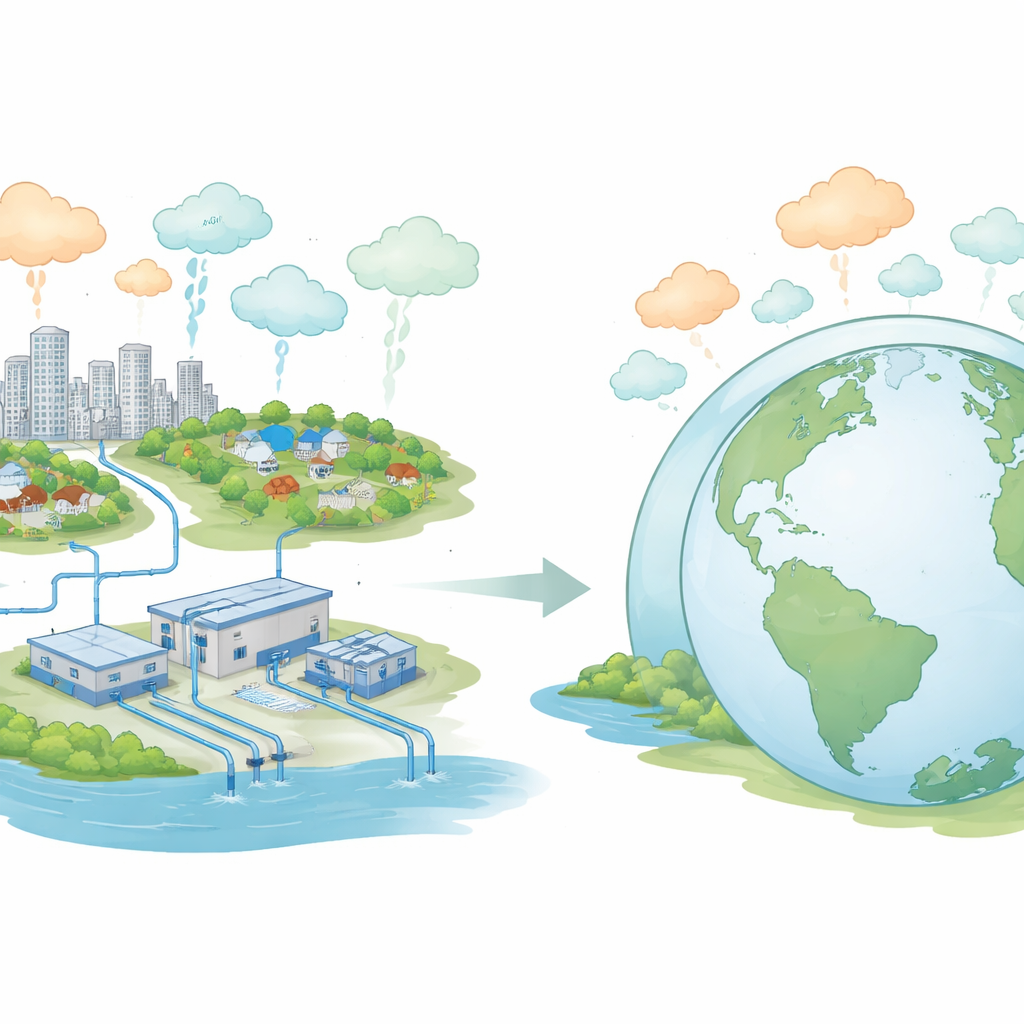
Most people think of climate change in terms of smokestacks and tailpipes, but the water that disappears down our sinks and toilets is also quietly heating the planet. This study shows that greenhouse gases from wastewater systems around the world are being seriously undercounted in official national reports, leaving a large and largely hidden gap in our picture of global emissions.
Hidden Gases from Everyday Wastewater
Wastewater treatment is energy hungry and produces powerful greenhouse gases such as methane and nitrous oxide. Together, these gases from toilets, drains and sewers account for an estimated 5–6.5% of global non‑CO2 climate pollution. Methane speeds up the formation of harmful ground‑level ozone, while nitrous oxide also worsens water quality. As the world slowly reins in carbon dioxide from power plants and cars, these other gases will matter more, so tracking them accurately becomes critical for honest climate planning.
A Patchwork of Incomplete Accounting
Countries report their emissions to the United Nations through National Inventory Reports, following guidance from the Intergovernmental Panel on Climate Change (IPCC). The authors examined reports from 38 nations that together represent a large share of global wastewater pollution. They found a striking patchwork: some countries use updated 2019 IPCC methods, others rely on older 2006 rules, and many omit entire pieces of the wastewater system. For methane, national reports typically count septic tanks and big treatment plants, but often skip latrines and untreated discharges. For nitrous oxide, most attention goes to the final treated water, while emissions from septic systems and basic toilets are almost always ignored.
Where the Numbers Go Wrong
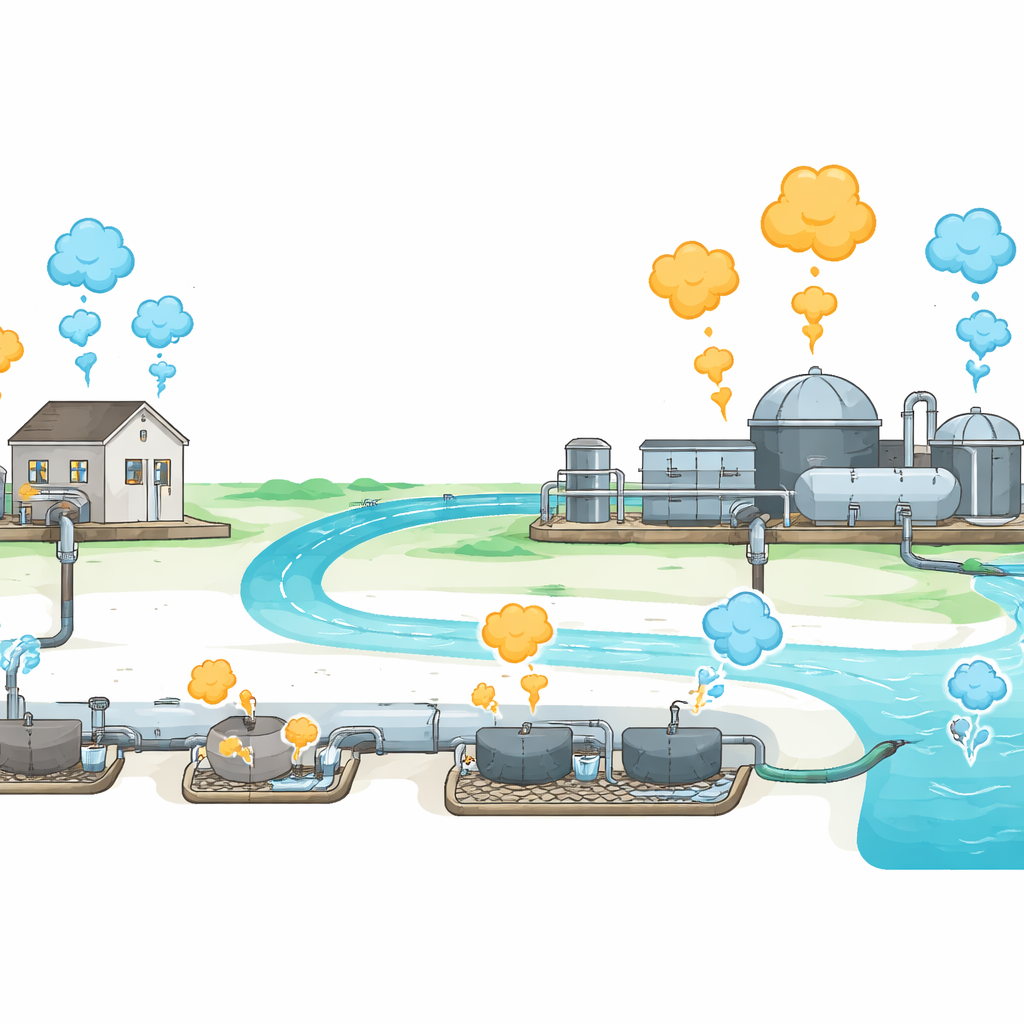
The problems are not only about what is left out, but also about how what is included is estimated. Many countries lean on generic “emission factors” derived from a small set of measurements, even though studies show actual emissions can vary by orders of magnitude depending on climate, technology and day‑to‑day operations. Some nations, such as Switzerland and Japan, have carried out extensive field campaigns and developed their own, more realistic factors that distinguish among types of treatment plants and sludge handling. Others still assume, per older guidance, that well‑run aerobic treatment plants release no methane at all—a claim now known to be false. As a result, two countries with similar wastewater systems can report very different climate footprints simply because they chose different methods.
The Size of the Missing Slice
To estimate how much is slipping through the cracks, the researchers recalculated emissions using the latest science on each major pathway: latrines, septic tanks, centralized treatment plants, discharge of treated water and releases of untreated sewage. For the 38 countries studied, they found that official reports underestimate wastewater emissions by 52–73 million metric tons of carbon‑dioxide equivalent per year—about a quarter more than currently declared. Most of this gap comes from nitrous oxide and from emerging and developing economies, where simple toilets, septic tanks and untreated discharges are more common and less likely to be reported. When scaled to the globe, the undercount could reach roughly 94–150 million metric tons per year, though exact figures remain uncertain due to limited data.
How to Fix the Blind Spots
The study also highlights examples of better practice. Switzerland now includes every major wastewater pathway, even though onsite toilets serve only a small share of its people; surprisingly, these neglected systems still account for about 7% of its wastewater climate impact. Japan has invested in detailed measurements and divides treatment plants into categories with different emission profiles, leading to more realistic national numbers. The authors argue that future IPCC guidelines should move in this direction by updating default emission factors, giving clearer instructions for overlooked pieces such as sludge treatment and leakage, and encouraging countries to share measured data through common databases.
What This Means for Climate Action
For a layperson, the key message is that our current climate ledgers are missing a noticeable chunk of pollution from wastewater. This does not mean that wastewater suddenly rivals power plants, but it does mean that governments are planning climate strategies using numbers that are 20–30% too low for this sector. By fully counting emissions from toilets, sewers and treatment plants—and by harmonizing how countries do this—the world can set more realistic climate targets, identify low‑cost fixes such as better management of septic tanks and sludge, and make progress toward truly net‑zero systems for the water we use every day.
Citation: Song, C., Ponder, D., Peng, W. et al. Discrepancies in national inventories reveal a large emissions gap in the wastewater sector. Nat. Clim. Chang. 16, 313–321 (2026). https://doi.org/10.1038/s41558-025-02540-6
Keywords: wastewater emissions, methane, nitrous oxide, greenhouse gas accounting, IPCC guidelines