Clear Sky Science · en
Tumour acidosis remodels the glycocalyx to control lipid scavenging and ferroptosis
Why Tumor Chemistry Matters
Cancer cells do not grow in ordinary tissue; they inhabit a harsh neighborhood starved of oxygen and bathed in acid. In brain cancers such as glioblastoma, this sour, low-oxygen setting forces cells to rewire how they eat and store fats. The study summarized here shows that brain tumor cells build a sugary protective coat that reshapes how they handle lipids—fat-like molecules—so they can dodge a form of cell death called ferroptosis. Understanding this hidden armor could reveal new ways to make aggressive tumors self-destruct.
A Hidden Sugar Coat Around Cancer Cells
Our cells are wrapped in a soft, sugary mesh called the glycocalyx. In aggressive brain tumors and metastases, the authors found that this coat becomes unusually rich in a sugar chain known as chondroitin sulfate. Using patient samples, 3D cultures that mimic tumors, and spatial gene maps of glioblastomas, they saw that tumor regions under the most stress—starved of oxygen, acidic, and packed with fat droplets—were also the ones with the thickest chondroitin sulfate layer. This sugar-rich shell surrounded tumor cells like a capsule and was especially prominent in areas near dead tissue and distorted blood vessels, hallmarks of aggressive disease. 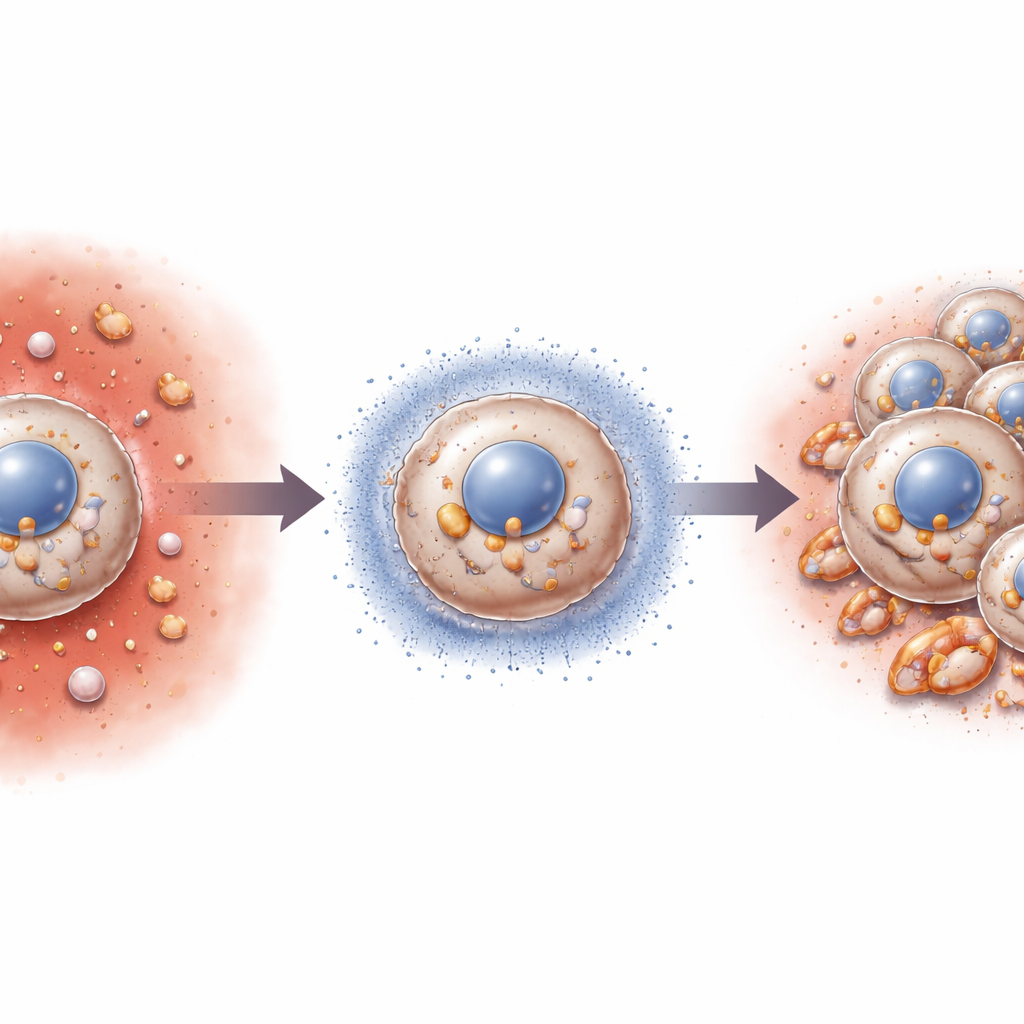
Acidic Stress Reprograms the Cell Surface
To understand how this special coat forms, the researchers forced cancer cells to live long term in acidic conditions similar to those inside tumors. Over weeks, these “acidosis-adapted” cells built up large lipid droplets inside and greatly strengthened their chondroitin-rich outer layer. Detailed genetic analysis showed that acidity switched on a set of enzymes that start and elongate chondroitin sulfate chains, especially a key enzyme called CSGALNACT1. At the same time, signaling pathways driven by hypoxia-inducible factors (which sense low oxygen) and the growth factor TGF-β converged on the genes that control this sugar remodeling, binding to their regulatory regions and turning them on. In effect, the tumor’s acidic chemistry rewired the cell’s sugar-building machinery to favor chondroitin sulfate over other surface sugars.
Controlling Fat Intake to Avoid Toxic Overload
Lipids are double-edged: they fuel growth, but in excess or in unstable forms they become toxic, driving oxidative damage and ferroptosis. Tumor cells cope by forming lipid droplets that act as internal “sinks” to safely tuck lipids away. The team discovered that the outer chondroitin coat works as a matching external “shield.” Under acidic conditions, cells increasingly relied on fats from the environment—such as lipoprotein particles and tiny membrane packets called extracellular vesicles—but the chondroitin-rich glycocalyx physically limited how much of these particles could bind and enter. When the researchers thinned or blocked this coat genetically, with enzymes, or with small molecules, lipid particles were able to bind more readily and flood into the cells, especially in acidic conditions.
A Sugar Switch That Disarms a Lipid Transporter
Digging deeper, the authors focused on syndecan-1, a well-known surface protein that normally carries a different sugar, heparan sulfate, and helps cells pull in lipid-rich particles. In acid-adapted tumor cells, syndecan-1 was still present but had lost most of its heparan sulfate chains and instead carried chondroitin sulfate. This “glycan switch” undermined its ability to act as a fat importer. As a result, lipid particles that would usually be efficiently captured and internalized were instead kept at arm’s length by the altered coat or taken up sluggishly by less selective pathways. This two-pronged mechanism—building a thick sugar barrier and sabotaging a key lipid transporter—allowed cancer cells to tightly ration incoming lipids when the environment was both acidic and lipid-rich. 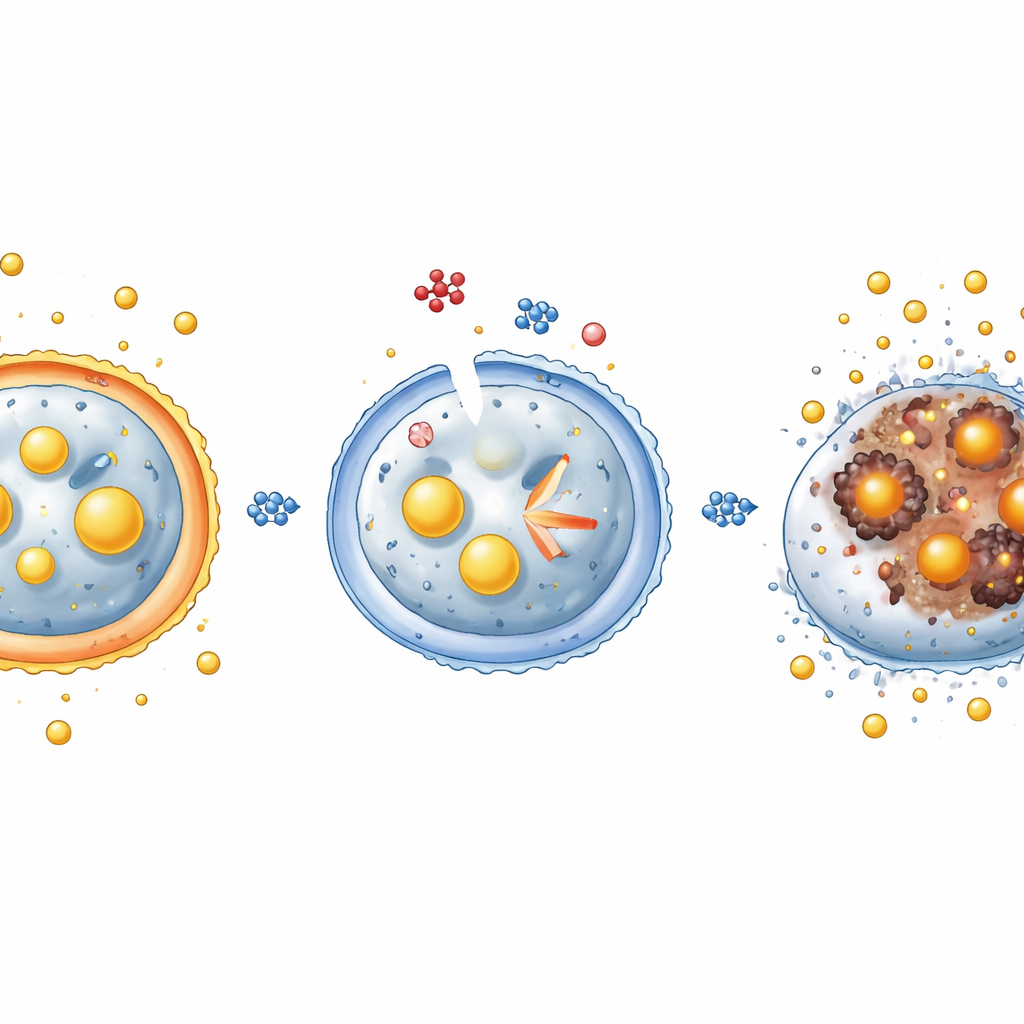
Forcing Tumors Into Lethal Lipid Damage
If the chondroitin shield and lipid droplets cooperate to keep lipids under control, could removing both safety nets be catastrophic for tumor cells? The researchers tested this by combining a compound that blocks chondroitin sulfate attachment to proteins with an inhibitor of DGAT1, an enzyme needed to build lipid droplets. Under acidic, lipid-rich conditions, this dual attack caused massive lipid peroxidation—chemical “rusting” of fats—along with mitochondrial damage and cell death that could be stopped by ferroptosis-blocking drugs. In 3D tumor cultures and in mouse brain tumor models, the combination treatment shrank tumors, increased cell death, and prolonged survival, while mainly sparing cells in more neutral conditions.
What This Means for Future Cancer Treatment
To a non-specialist, this work reveals that cancer cells survive in harsh environments by doing more than mutating their genes—they also rebuild their sugary outer shell to manage what gets in and out. In acidic brain tumors, a chondroitin sulfate–rich glycocalyx teams up with internal fat droplets to tune lipid uptake and avoid a destructive, fat-driven form of cell death. By simultaneously disabling this outer shield and the inner storage system, researchers can push tumor cells into lethal lipid overload and ferroptosis. Although translating this strategy to patients will require drugs that can safely reach the brain, the study positions the tumor glycocalyx as a vulnerable control hub for metabolism and a promising new target to weaken some of the most treatment-resistant cancers.
Citation: Bång-Rudenstam, A., Cerezo-Magaña, M., Horvath, M. et al. Tumour acidosis remodels the glycocalyx to control lipid scavenging and ferroptosis. Nat Cell Biol 28, 567–580 (2026). https://doi.org/10.1038/s41556-026-01879-y
Keywords: glioblastoma, tumor microenvironment, lipid metabolism, glycocalyx, ferroptosis