Clear Sky Science · en
Agricultural water use efficiency and land-use intensity dominate the water-food-ecology nexus coupling coordination in the Lake Victoria Basin
Why this matters for people and nature
In East Africa’s Lake Victoria Basin, nearly 50 million people rely on the same lakes, rivers, and landscapes for drinking water, crops, and wildlife. When farmers pull more water for irrigation or when forests are cleared, those choices ripple through the entire region. This study asks a simple but urgent question: are water supplies, food production, and the natural environment evolving in step with one another, or are they drifting out of balance in ways that threaten long-term wellbeing?
Three life-support systems under pressure
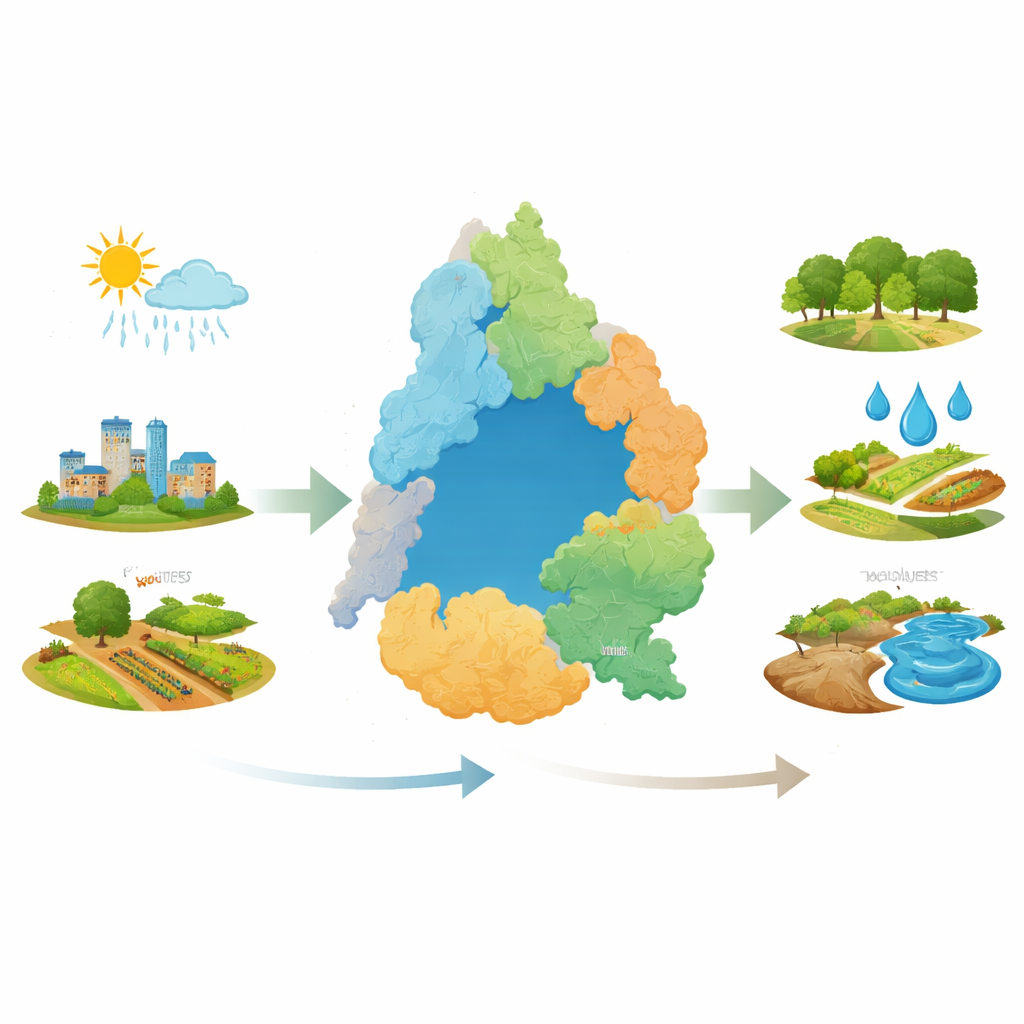
The researchers focus on what they call the water–food–ecology nexus: the tight knot of interactions between freshwater, agriculture, and ecosystems. Using indicators aligned with the United Nations Sustainable Development Goals, they built separate scores for each of these three subsystems across the Lake Victoria Basin for the years 2000 and 2023. Water performance combined how much water the land can yield with how heavily it is being withdrawn. Food performance drew on crop yields and the share of land under cultivation. Ecology performance captured the extent of protected areas and the productivity of vegetation. Together, these indicators show not just how much of each resource exists, but whether it is being used in a way that can last.
Gains on farms and forests, strain on water
Over two decades, the picture that emerged was mixed. On average, the food index jumped by about half, and the ecology index rose by roughly a third, meaning that crops became more productive and ecosystems generally stronger or better protected across most of the basin. By contrast, the water index slipped slightly and became more uneven from place to place. Expanding irrigation and ecological restoration helped feed people and support nature, but they also increased pressure on limited freshwater. Inequality in how these benefits and burdens were spread also shifted: in 2000 the biggest imbalance lay in food production, but by 2023 the most unevenly distributed element was water, underscoring a growing challenge of fair water sharing between communities and countries.
How well the system holds together
To see whether water, food, and ecology were evolving in harmony rather than at cross-purposes, the authors used a “coupling coordination” score that measures how smoothly the three subsystems move together. Across the basin, this score improved from a state the authors describe as moderate mismatch to a basic level of coordination. More than three-quarters of the area saw improvements, and just over half of the basin reached at least a coordinated state by 2023. Yet no part of the basin achieved a truly high level of balance, and some sub-basins, especially in the southeast and parts of the west, actually slid backwards into more severe mismatch. Statistical mapping showed clear clusters: northeastern sub-basins in Kenya, with better irrigation and planning, consistently formed “bright spots” of higher coordination, while problem areas gradually shifted westward into drier or more heavily stressed regions.
People’s choices matter most
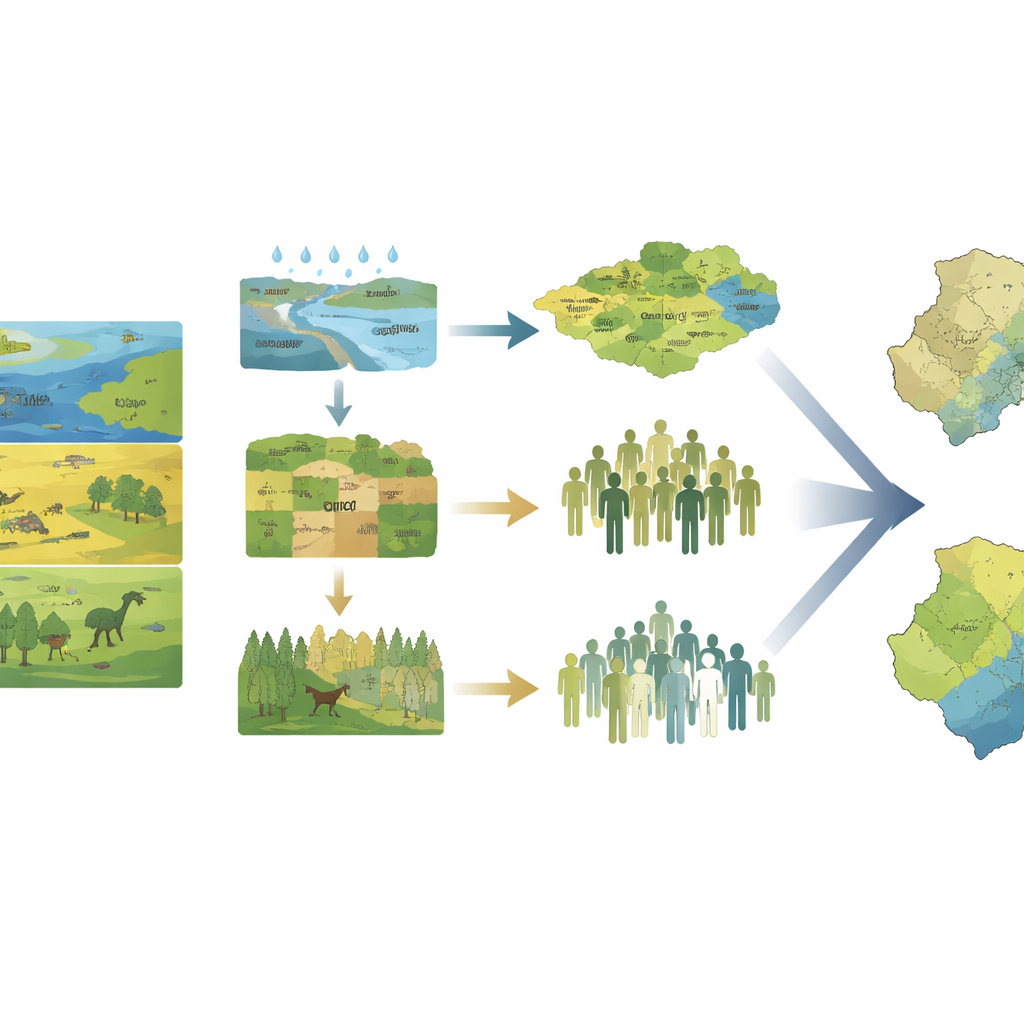
Digging deeper, the team asked which forces were most responsible for these patterns. They turned to a machine-learning method that can tease out which factors matter most for the overall coordination score. Social drivers dominated. Across different parts of the basin, two variables rose again and again to the top: how efficiently farms use water, and how intensely land is used or transformed. Where irrigation systems were modernized and land was managed more carefully, coordination between water, food, and ecology tended to improve and remain stable. Where population density, rapid urban growth, mining, and overgrazing surged without careful planning, coordination weakened, even when rainfall or vegetation conditions were similar. This means that policy choices, investment in water-saving technologies, and land-use rules can decisively tilt the balance toward either resilience or degradation.
Guiding smarter action across borders
Because Lake Victoria spans five countries, the authors argue that the basin needs not just better local projects but coordinated action built on shared evidence. Their framework, which translates global sustainability goals into fine-grained maps of how water, food, and ecology interact, shows where conditions are improving, where they are deteriorating, and which levers are most effective. For a layperson, the core message is that smarter farming, fairer water use, and thoughtful land planning can allow the basin to grow more food and protect nature without exhausting its lifeblood—freshwater. If countries cooperate to boost water efficiency and curb damaging land uses, the Lake Victoria Basin can move from fragile, patchy progress to a well-balanced system that supports both people and the environment over the long term.
Citation: Wang, T., Shu, J., Mugabowindekwe, M. et al. Agricultural water use efficiency and land-use intensity dominate the water-food-ecology nexus coupling coordination in the Lake Victoria Basin. npj Clean Water 9, 34 (2026). https://doi.org/10.1038/s41545-026-00563-w
Keywords: Lake Victoria Basin, water-food-ecology nexus, irrigation efficiency, land-use change, sustainable development