Clear Sky Science · en
A two-stage distributionally robust optimization framework for water quality management in uncertain reservoirs network
Cleaning Up Shared Water for Everyone
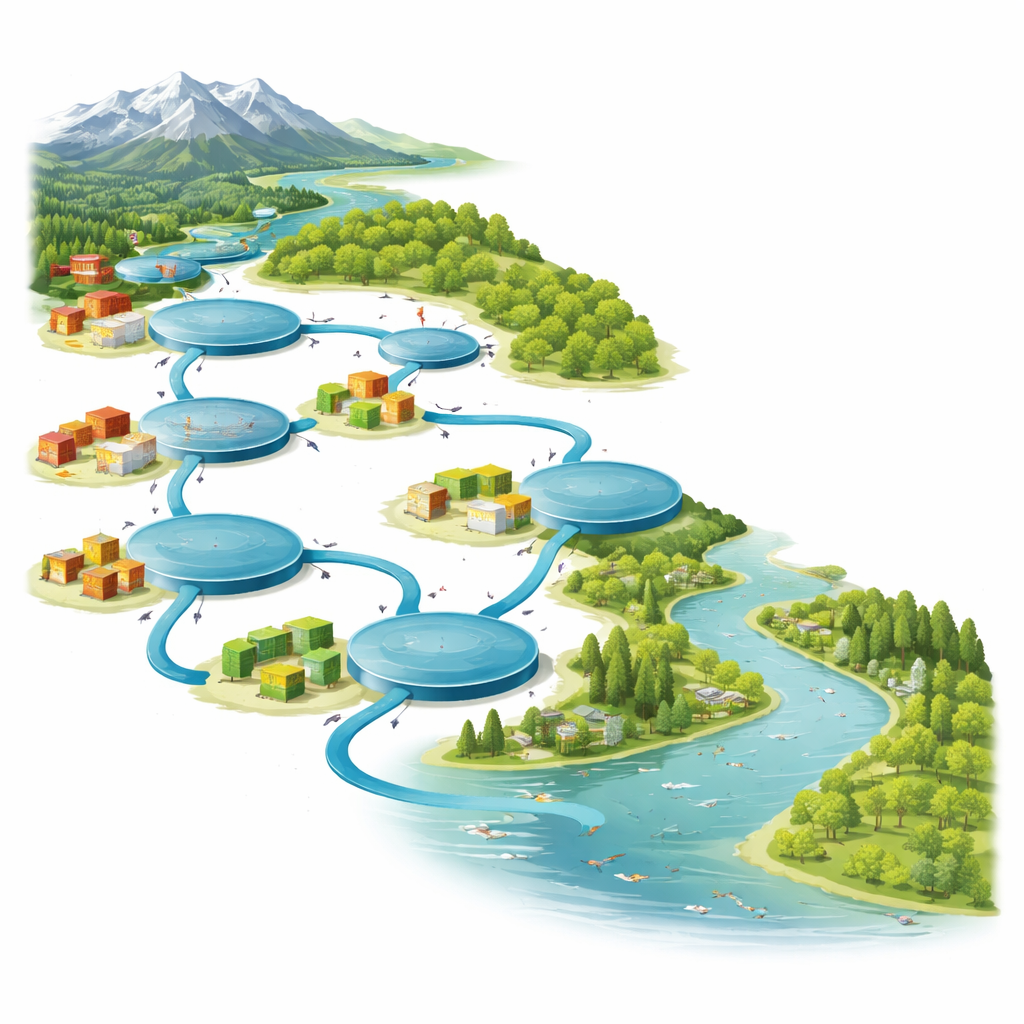
Across much of the world, chains of reservoirs provide drinking water, power, irrigation, and flood control for millions of people. But when pollution spills into one reservoir, it can quickly spread through the entire connected system. This paper introduces a new way to plan long‑term investments and day‑to‑day operations in such reservoir networks so that communities can cut pollution dramatically, stay prepared for rare disasters, and still spend money wisely.
From One-Time Builds to Everyday Choices
The authors view water pollution control as a two-step decision problem. First come big, mostly irreversible choices: where to build treatment plants, which technologies to install, how dense the monitoring network should be, and how much emergency capacity to prepare. These projects are expensive and built years before anyone knows exactly how future floods, droughts, or accidents will unfold. Second come the flexible, ongoing decisions made once conditions are observed: when to turn treatment units on or off, how to route water through the network, where to focus monitoring, and how to respond to emergencies. The new framework links these long-term and short-term choices, ensuring that upfront investments create the right “room to maneuver” for operators down the line.
Planning for Uncertain and Extreme Events
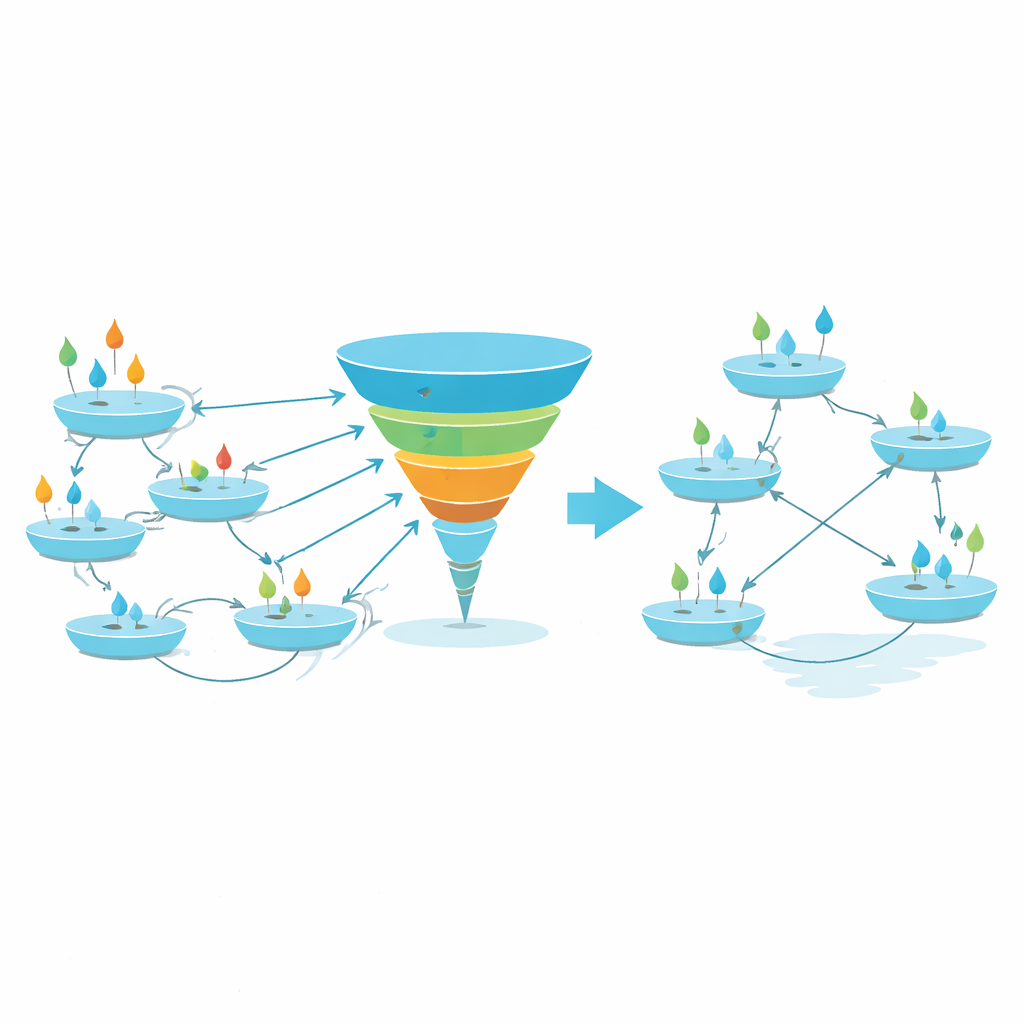
Reservoir networks face many kinds of uncertainty at once: pollution loads spike after storms or industrial mishaps, treatment plants work better in some seasons than others, and sensors never measure water quality perfectly. Traditional planning tools either assume that the future will look like the past or, at the other extreme, guard against the single worst possible outcome, which can be so conservative that it becomes unaffordable. This study instead uses a middle-ground strategy called distributionally robust optimization. In simple terms, it treats the future as a cloud of plausible scenarios built from real monitoring data and then searches for plans that perform well even if nature behaves a bit differently than the historical record suggests. This approach lets managers hedge against rare but severe pollution events without overbuilding everywhere.
Testing the Idea on a Realistic River Network
To see how their framework works in practice, the researchers applied it to a detailed model of a 28‑reservoir system in China’s Yangtze River Basin. They allowed six major pollutants to move through the network, from upstream mining and agriculture down to urban areas and wetlands. The method identified just five key locations where building treatment capacity and monitoring would control pollution for the whole network. By placing stronger defenses at upstream sources and crucial junctions, each unit of treatment created a cascade of benefits downstream. Over the planning horizon, the optimized strategy cut overall pollution loads by about 38 percent on average, pushed water quality into much safer regulatory categories, and helped restore wetlands and aquatic life.
Balancing Safety, Cost, and Fairness
The authors compared their robust planning method to two common alternatives. A purely data‑driven, average‑case strategy had the lowest expected cost but failed to protect water quality in many future scenarios, especially during extreme events. A strict worst‑case strategy met quality standards almost everywhere but required much higher spending. The new framework landed between these extremes, achieving close to 90 percent reliability at a moderate cost premium, and kept the most severe disaster costs nearly as low as the worst‑case plan. The analysis also quantified how investments in upstream regions benefit downstream communities, showing that each unit of money spent upstream can generate almost twice as much pollution reduction benefit downstream. This makes it possible to design compensation schemes so that jurisdictions sharing a river can cooperate rather than compete.
What This Means for People and Policy
In everyday terms, this work shows that it is possible to design reservoir systems that remain safe under surprise shocks—like industrial spills or severe droughts—without wasting scarce public funds. By carefully choosing a few strategic locations for treatment and monitoring, and by explicitly planning for uncertainty rather than ignoring it, water managers can protect ecosystems, drinking water, and fisheries more effectively. The study’s tools also give governments a transparent way to measure how much different regions gain from working together, supporting fair cost‑sharing agreements. While the mathematics behind the method is advanced, the message is simple: smarter, cooperative planning can make cleaner water and more resilient river systems a realistic goal.
Citation: Zhou, L., Yao, L. & Su, Z. A two-stage distributionally robust optimization framework for water quality management in uncertain reservoirs network. npj Clean Water 9, 28 (2026). https://doi.org/10.1038/s41545-026-00559-6
Keywords: reservoir water quality, robust optimization, pollution control, river basin management, environmental planning