Clear Sky Science · en
Building-integrated solar water disinfection system for reliable year-round drinking water safety
Turning Sunshine into Safe Drinking Water
For billions of people, getting a glass of safe water still means risk, expense, or hours of daily labor. This study explores a new way to turn the sun-drenched surfaces of ordinary homes—specifically, their roofs—into quiet workhorses that clean and heat water all year long. By weaving smart solar channels into the building itself, the researchers aim to give households a steady supply of safe drinking water and hot water without relying on firewood, gas, or fragile city pipes.
Why Current Home Water Fixes Fall Short
Many families already treat water at home using filters, boiling, or by leaving clear bottles in the sun. Each method helps, but each has serious gaps. Simple ceramic filters often miss viruses, some chemical treatments can leave harmful by-products, and boiling demands large amounts of fuel or electricity that many households cannot reliably afford. Sun-powered bottle disinfection can work, but it uses only a small slice of the sun’s energy and may need more than a day of strong sunlight to reliably knock out viruses. These limits are especially acute in informal settlements and low-income neighborhoods, where people live with uncertain water supplies, crowded housing, and little spare time or money.
A Roof That Cleans and Heats Water
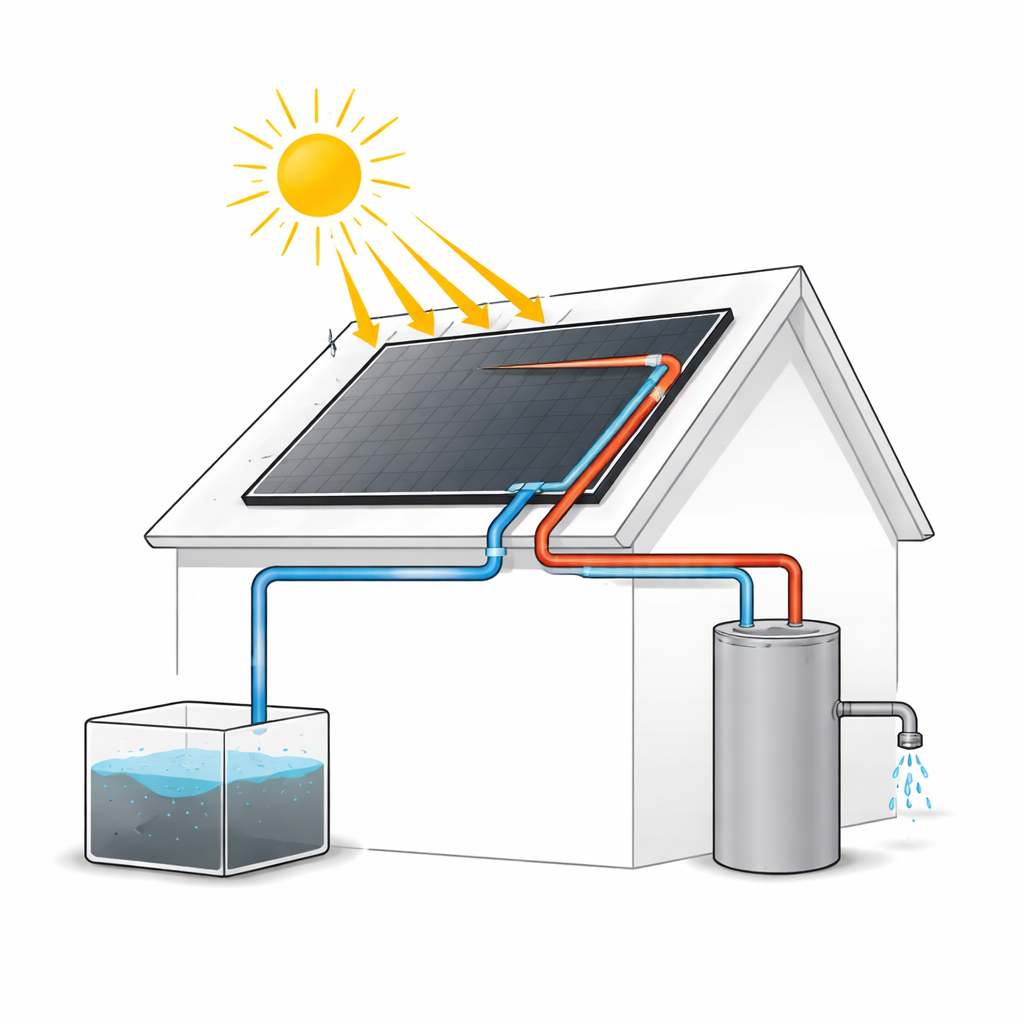
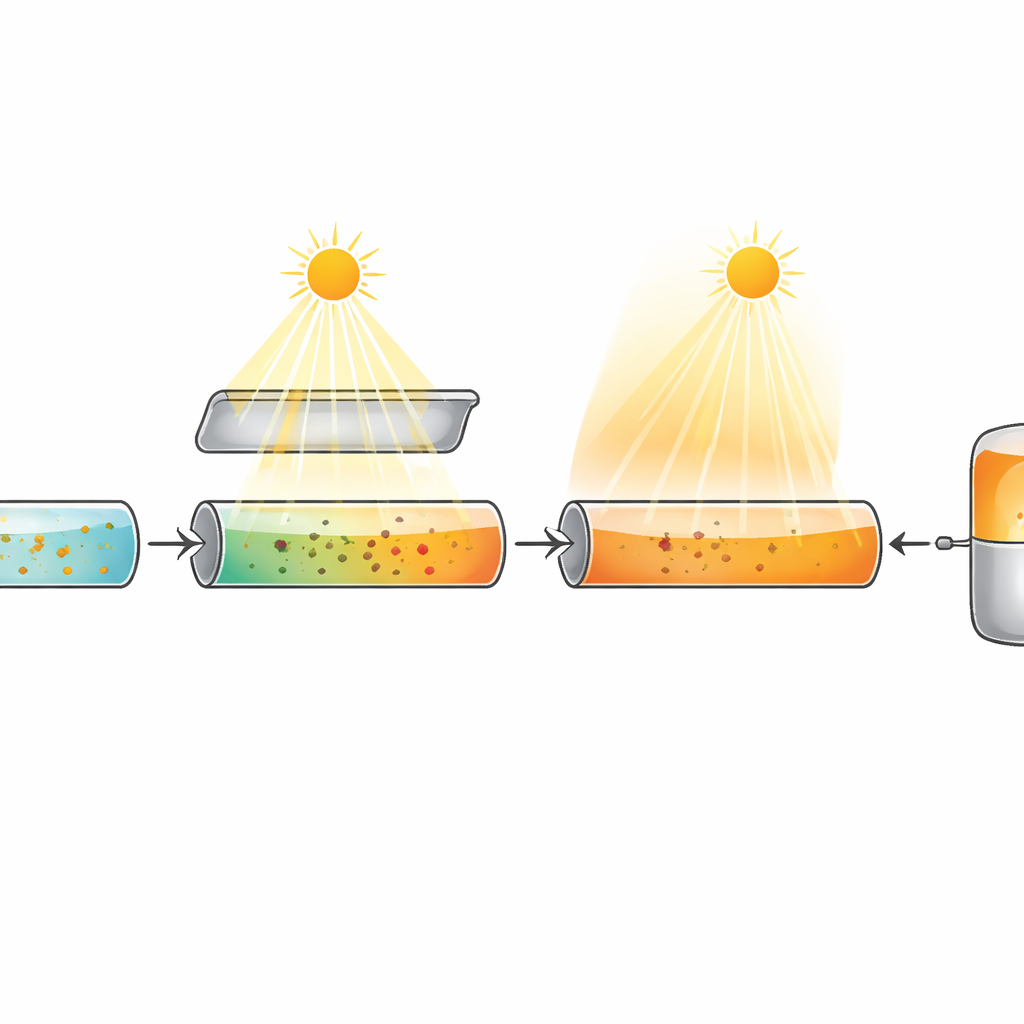
The team developed a building-integrated system called the Solar Enclosure for Water Reuse, or SEWR, that turns part of a roof or skylight into a solar water treatment unit. Inside the roof panel, clear glass tubes sit at the focus of reflective surfaces that concentrate sunlight onto a thin sheet of flowing water. The design combines three sun-driven tools at once: gentle solar disinfection, heat-based pasteurization, and a plant-derived "helper" dye that produces powerful, short-lived reactive species when lit. Together, these processes damage bacteria and viruses faster than any one method can alone, while the captured heat also raises water temperature for kitchen and bathroom use.
Putting the Roof System to the Test
To see how this roof behaves in the real world, the researchers installed a prototype in Sololá, Guatemala, and ran it outdoors under natural weather. Using water spiked with high levels of E. coli bacteria, they showed that full sun could drive the outflow temperature above the pasteurization range and cut bacterial counts to undetectable levels—more than a million-fold reduction—within less than an hour once the system warmed up. Under cloudier, lower-sun conditions, heating slowed but still achieved strong disinfection, especially when the flow of water was adjusted so that it lingered longer in the warm, sunlit tubes. For viruses, which are smaller and tougher to kill, direct field tests were not possible, so the team relied on a well-studied edible dye that loses color in lockstep with virus inactivation. Outdoor trials of this dye showed that, in the combined configuration, the system could reach the virus-killing benchmark in under an hour of sun.
Year-Round Performance in Different Climates
Field experiments alone cannot capture a full year of changing clouds, seasons, and temperatures, so the researchers built a computer model tuned with their outdoor data. They simulated performance for homes in three very different cities: rainy, highland Sololá; sunny desert Phoenix in the United States; and coastal Cape Town in South Africa, where drought and water restrictions are frequent. In all three places, the multi-mechanism roof consistently outperformed single-method systems. For a one-square-meter section of roof, the combined design was projected to treat roughly 60–80 liters of water per day on average, enough to cover the United Nations’ minimum daily drinking-water need of 15 liters per person with a comfortable margin. Adding a simple prefilter that removes bacteria further boosted output, especially during long rainy seasons when sunlight is weakest.
Cutting Energy Bills with Solar Hot Water
Because the same panel that cleans water also captures heat, the system doubles as a compact solar water heater. Modeling for a four-person household with a four-square-meter roof unit indicated that, in Phoenix, the setup could meet hot-water needs more than 90 percent of days in a year; in Sololá and Cape Town, it could do so for about 85–90 percent of days, even without prefiltration. In places where families rely heavily on firewood, bottled gas, or electric heaters, this could trim energy use for water heating by roughly one-fifth to one-half of the household’s current burden, easing both costs and pressure on local forests and power grids.
What This Means for Everyday Households
In plain terms, the study shows that a well-designed solar roof module can turn variable, sometimes weak sunlight into a dependable stream of safe drinking water and hot water without burning fuel. By stacking several disinfection tricks inside a single piece of the building, SEWR dramatically shortens the time needed to neutralize viruses—by up to two orders of magnitude compared with standard bottle-in-the-sun approaches—and keeps working through cloudy spells that would cripple simpler systems. While more work is needed on low-cost plant-based dyes, long-term durability, and real-world user acceptance, this research points toward homes that do more than shelter: they quietly harvest light to protect families from waterborne disease and energy insecurity all year round.
Citation: Pretorius, M., Jeon, I., Martínez-Fausto, M.M. et al. Building-integrated solar water disinfection system for reliable year-round drinking water safety. npj Clean Water 9, 27 (2026). https://doi.org/10.1038/s41545-025-00539-2
Keywords: solar water disinfection, household water treatment, building-integrated systems, safe drinking water, domestic solar hot water