Clear Sky Science · en
A randomised trial of a bioreactor-produced EV-A71 vaccine for endemic control in children
Why this matters for parents
Hand-foot-mouth disease may sound harmless, but in parts of Asia a virus called enterovirus A71 can turn this common childhood illness into a life-threatening emergency. This study tested a new vaccine, EnVAX-A71, designed specifically to protect babies and young children from the most dangerous form of the virus. Parents and caregivers may want to know: can this shot really stop severe outbreaks, and is it safe for very young children?
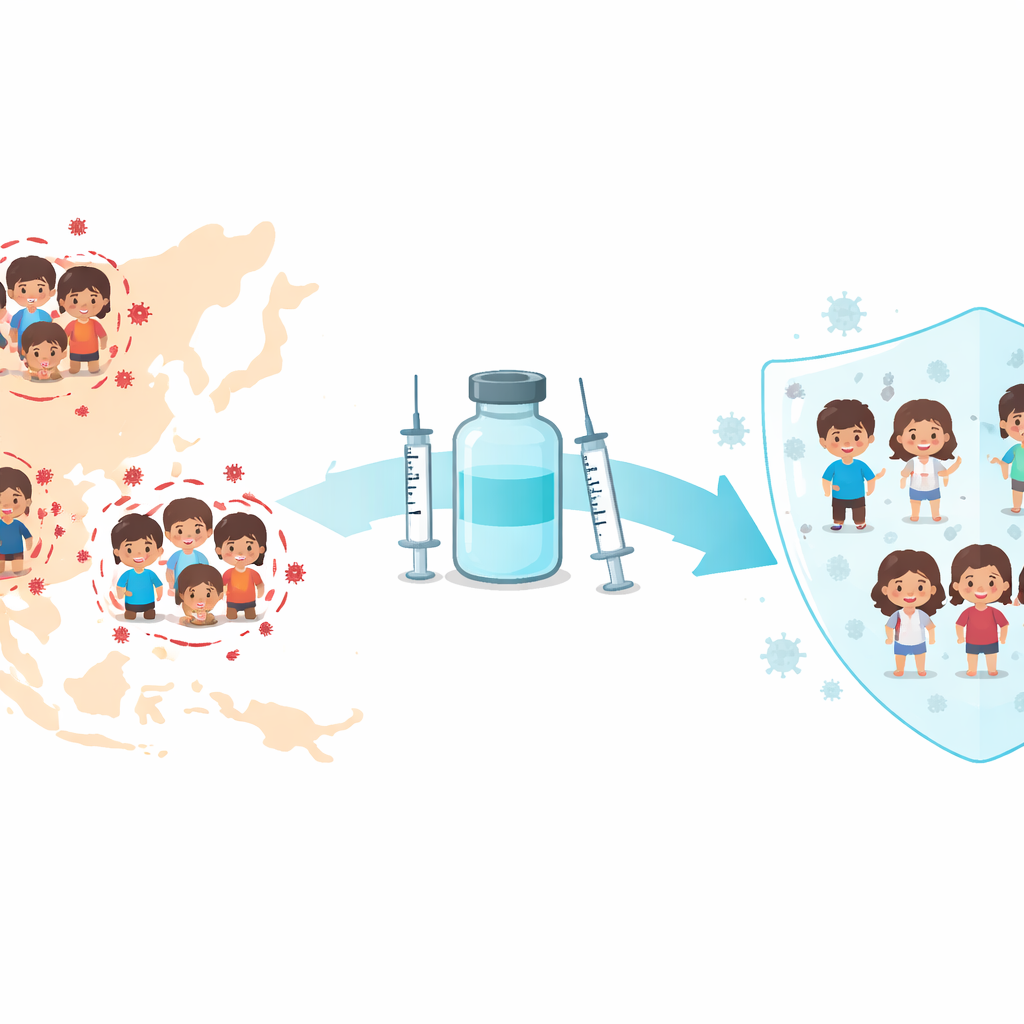
The childhood illness behind the headlines
Enterovirus A71 is a major cause of hand-foot-mouth disease and a throat infection called herpangina. Most cases are mild, but in some children the virus can invade the brain and lungs, leading to paralysis, breathing failure, or death. Countries across the Asia–Pacific region, including Taiwan, Vietnam, China, Malaysia, and Singapore, see large waves of this virus every few years, mostly in children under six. These recurring outbreaks strain hospitals and frighten families, underscoring the need for reliable protection in the earliest years of life.
A new way to make a targeted vaccine
Existing vaccines against this virus are available only in a few places and are often made using older manufacturing methods that are hard to scale quickly. EnVAX-A71 takes a different approach. It uses whole virus particles that have been inactivated so they cannot cause disease, mixed with an aluminum-based ingredient that boosts the immune response. The virus is grown in modern bioreactors—essentially controlled stainless-steel tanks—allowing consistent, large-scale production. Laboratory studies suggested that the strain chosen for this vaccine can block several closely related versions of the virus that dominate outbreaks in the region.
How the study was done in real children
To see if the vaccine really works, researchers ran a large, carefully blinded clinical trial in Taiwan and Vietnam. Over four thousand healthy children, from 2 months up to just under 6 years old, were randomly assigned to receive either two doses of EnVAX-A71 or a placebo containing only the aluminum ingredient, given four weeks apart. Families and doctors did not know who got which. The children were then followed for about one to two years, during which any suspected hand-foot-mouth or related illness was tested in the lab to confirm whether enterovirus A71 was the cause.
Protection that held up through an outbreak
The result was striking. Among nearly 3,800 children who completed both doses and follow-up, only one vaccinated child developed a confirmed infection tied to enterovirus A71, compared with 70 children in the placebo group. This translates to about 99% protection against the disease the vaccine targets. No vaccinated child needed hospital care for this virus, while 19 unvaccinated children did. Blood tests in a smaller subgroup showed that, by two months after the second dose, almost all vaccinated children had high levels of protective antibodies, and these strong responses lasted at least a year. Older toddlers and preschoolers did especially well, but even infants vaccinated as young as two months developed robust immune defenses.
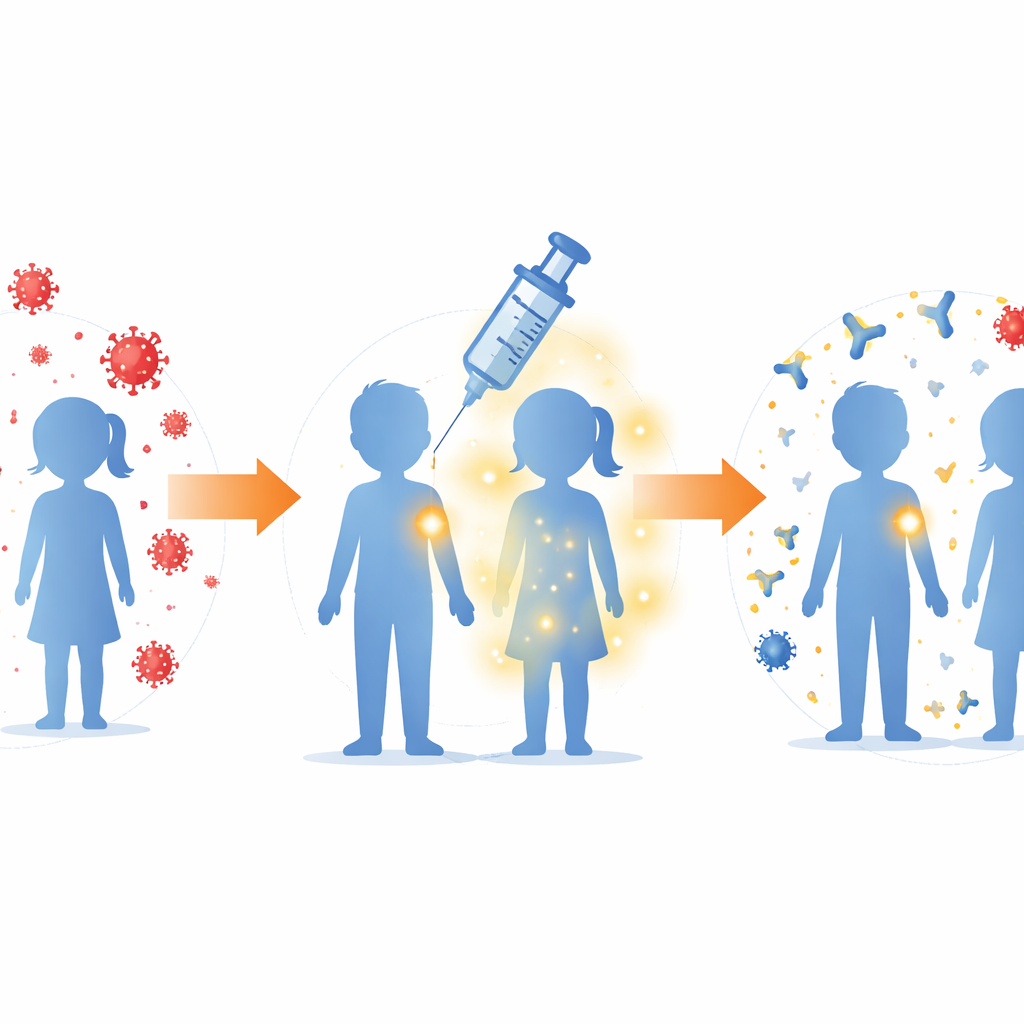
Safety and comfort for families
Parents are right to worry about side effects, especially in very young children. In this trial, short-lived reactions such as pain at the injection site, tenderness, mild fever, or tiredness occurred at similar rates in both the vaccine and placebo groups, and most were mild. Serious health problems were actually less common in vaccinated children, largely because they were protected from hand-foot-mouth disease during a real outbreak in Vietnam. Only a tiny number of serious events were judged possibly related to the shot, and one death in the vaccine group was due to a traffic accident, not to vaccination.
What this means for everyday life
The study shows that two doses of EnVAX-A71 can almost completely prevent severe enterovirus A71 disease and related hospitalizations in young children, with a safety profile comparable to a standard aluminum-containing shot. Because the vaccine can be made consistently in modern bioreactors, it could be produced quickly and at scale for countries that face recurring outbreaks. For families in affected regions, this work points toward a future in which hand-foot-mouth season is less about fear of sudden neurological complications and more about a routine, preventable childhood infection.
Citation: Hwang, KP., Luong, Q.C., Huang, YC. et al. A randomised trial of a bioreactor-produced EV-A71 vaccine for endemic control in children. npj Vaccines 11, 65 (2026). https://doi.org/10.1038/s41541-026-01396-x
Keywords: enterovirus A71, hand-foot-mouth disease, pediatric vaccine, immunization trial, Asia-Pacific outbreaks