Clear Sky Science · en
Intranasal S-2P and lentinan formulation confers broad protection against SARS-CoV-2 VOCs via IFN-γ-dominant mechanisms
Why a Nose Spray Vaccine Matters
As COVID-19 variants continue to emerge, many people still become infected and spread the virus even after traditional shots in the arm. One big reason is that standard vaccines do not build a strong immune shield in the nose and lungs, where the virus first enters. This study explores a nose-delivered vaccine made from the coronavirus spike protein and a naturally derived booster called lentinan, asking whether this simple combination can stop both the original virus and newer Omicron variants right at the gate.
Turning the Nose Into the First Line of Defense
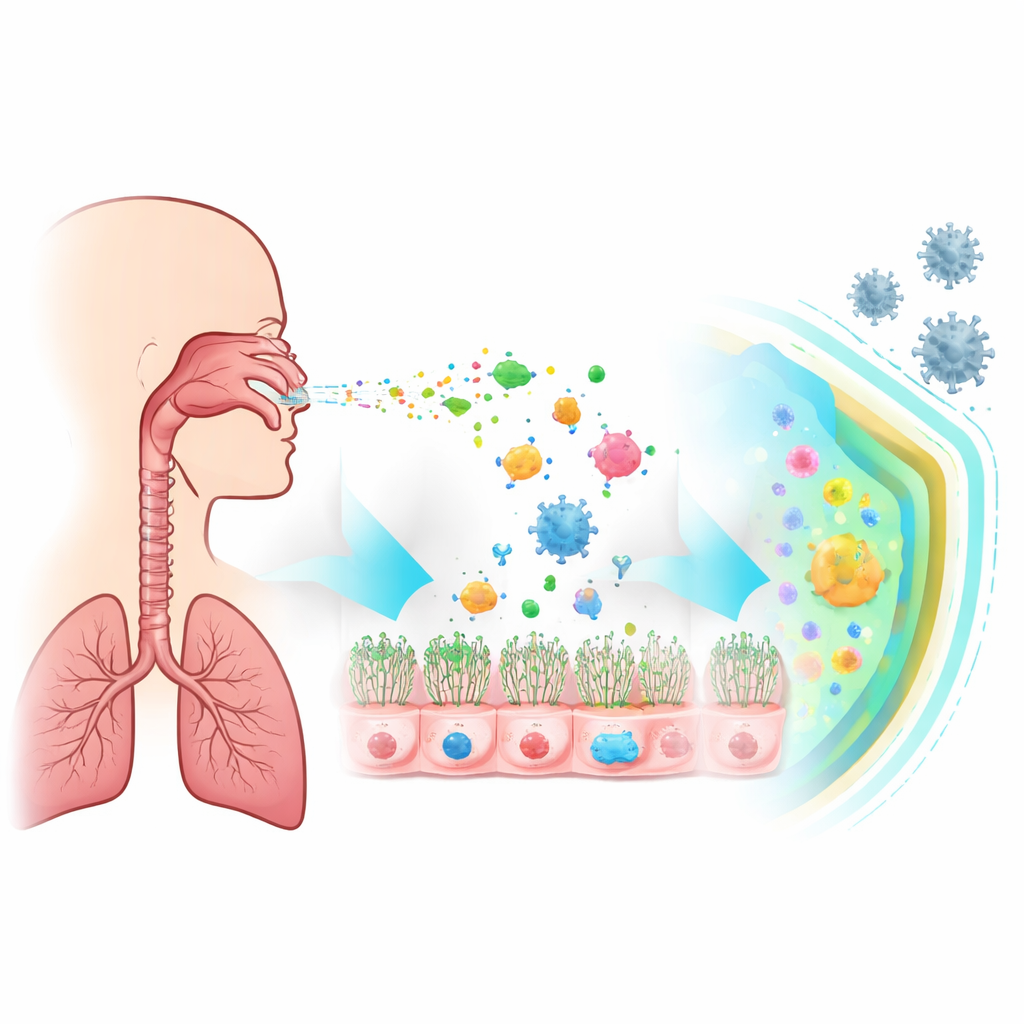
The researchers focused on the spike protein from the original strain of SARS-CoV-2, using a stabilized form called S-2P. Instead of injecting it into muscle, they dripped it into the noses of mice. They found that this nose route did more than match the usual shots: it produced higher levels of protective antibodies in the blood and, crucially, triggered strong IgA antibodies in the airways themselves—something muscle shots largely fail to do. The team compared spike to another common viral surface protein, influenza hemagglutinin, and showed that the flu protein alone could not provoke a similar response when given through the nose, highlighting that spike has unusual, built‑in ability to wake up the immune system.
From Lab Bench to Protection Against Deadly Infection
Building on these immune measurements, the scientists asked whether the nose-delivered spike vaccine could actually save animals from lethal disease. In genetically engineered mice that are highly vulnerable to SARS‑CoV‑2, two intranasal doses of S‑2P completely protected against deadly challenge with the original virus: vaccinated animals did not lose weight, survived infection, and had sharply reduced virus levels in both the nose and lungs. In contrast, mice that received the same protein as a standard muscle shot, even with a common aluminum booster, were only partly protected and still showed heavy lung damage. When the team tested newer Omicron variants such as BA.5 and EG.5, the nose vaccine alone gave partial survival benefits, and greatly reduced lung injury and virus amounts compared with unvaccinated animals.
Boosting the Shield With a Mushroom-Derived Helper
To strengthen and broaden this protection, the authors added lentinan, a purified molecule from shiitake mushrooms that is already used clinically as an immune helper. Given into the nose alongside spike, lentinan amplified antibody levels, slowed their decline over time, and further boosted the special IgA antibodies that coat airway surfaces. Most strikingly, when mice immunized with the spike–lentinan mix were exposed to Omicron BA.5 or EG.5, they were fully protected: all survived, maintained their weight, showed minimal signs of lung inflammation, and carried far less virus in respiratory tissues. Tissue exams confirmed that lungs from these animals looked nearly normal compared with the extensive damage seen in unvaccinated controls.
How the Nose Vaccine Talks to the Immune System
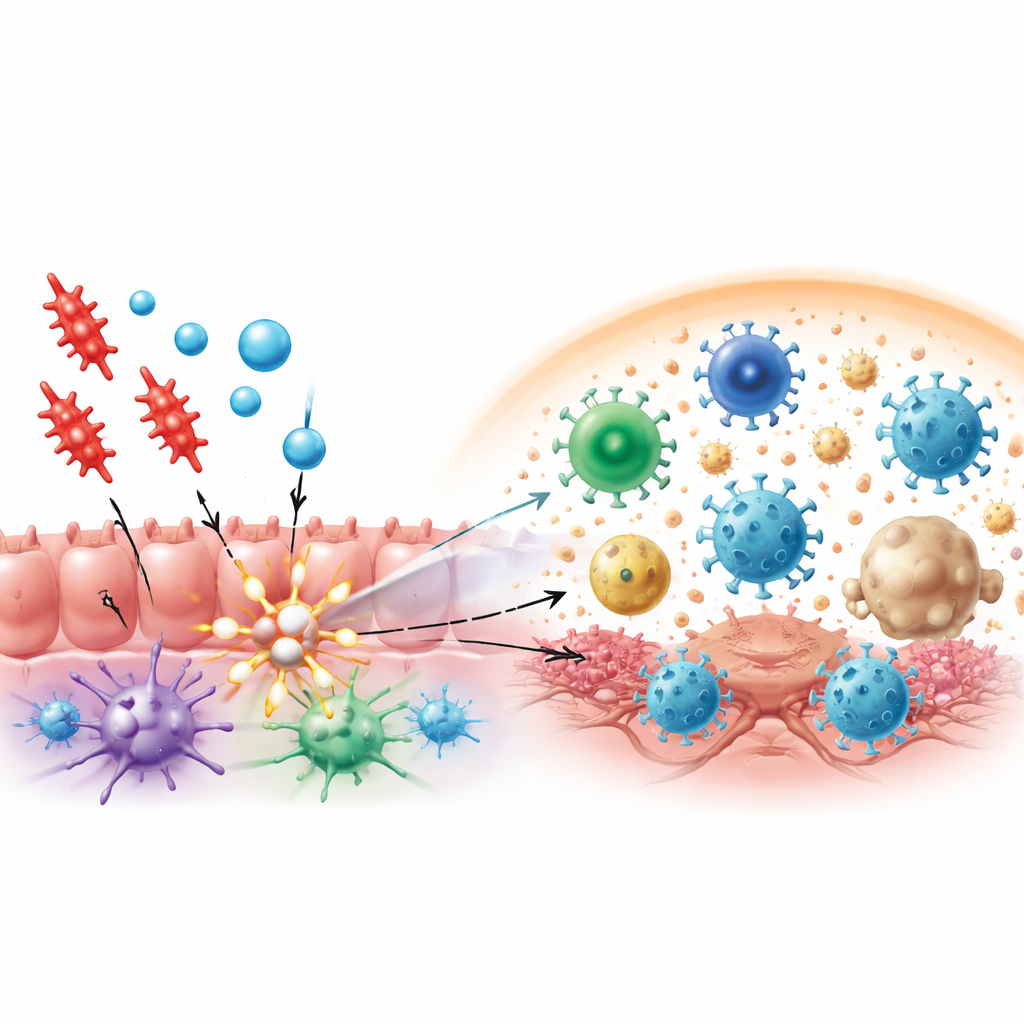
The study also probed how this vaccine works under the hood. The spike protein given through the nose acted as its own “built‑in adjuvant,” switching on early alarm pathways in airway immune cells. This depended in part on integrins—surface structures that help shuttle molecules across the mucosal barrier—and on the STING pathway, a sensor of danger inside cells. Mice lacking STING made far fewer antibodies after nasal spike vaccination. When the team blocked specific types of immune cells and molecules during Omicron challenge, they found that protection from spike alone depended heavily on IFN‑γ, a key antiviral signal, and on killer T cells (CD8+). With lentinan added, protection still required IFN‑γ but no longer relied solely on those killer T cells, suggesting that additional innate cells, such as trained natural killer cells and macrophages, were now engaged.
What This Could Mean for Future COVID-19 Vaccines
For a general reader, the main message is that a simple nose-delivered vaccine based on the original coronavirus spike protein, especially when paired with a mushroom-derived helper, can build a powerful immune shield directly in the airways. This shield does not depend only on antibodies that neutralize the virus, but also on cells and signals that rapidly clear infected cells and block severe disease, even when dealing with immune‑evading variants like Omicron. While these results are in mice and will need careful testing in humans, they point toward a future in which a safe nasal spray could complement or boost existing shots, helping to cut both illness and transmission as the virus continues to evolve.
Citation: Pan, Z., Zheng, X., Jiang, L. et al. Intranasal S-2P and lentinan formulation confers broad protection against SARS-CoV-2 VOCs via IFN-γ-dominant mechanisms. npj Vaccines 11, 60 (2026). https://doi.org/10.1038/s41541-026-01383-2
Keywords: intranasal vaccine, SARS-CoV-2 variants, mucosal immunity, spike protein, lentinan adjuvant