Clear Sky Science · en
Immunogenicity and protection of octavalent influenza vaccine candidates using adjuvanted proteins or mRNA-LNPs in naïve mice
Why a better flu shot matters
Seasonal flu vaccines save many lives, but their protection can vary widely from year to year. One reason is that current shots mainly train the immune system to recognize a single viral protein, leaving other useful targets underused. This study in mice explores next‑generation flu vaccines that teach the immune system to recognize two key viral proteins at once and compares a traditional protein‑based approach with a newer mRNA technology similar to that used in recent COVID‑19 vaccines.
Two targets instead of one
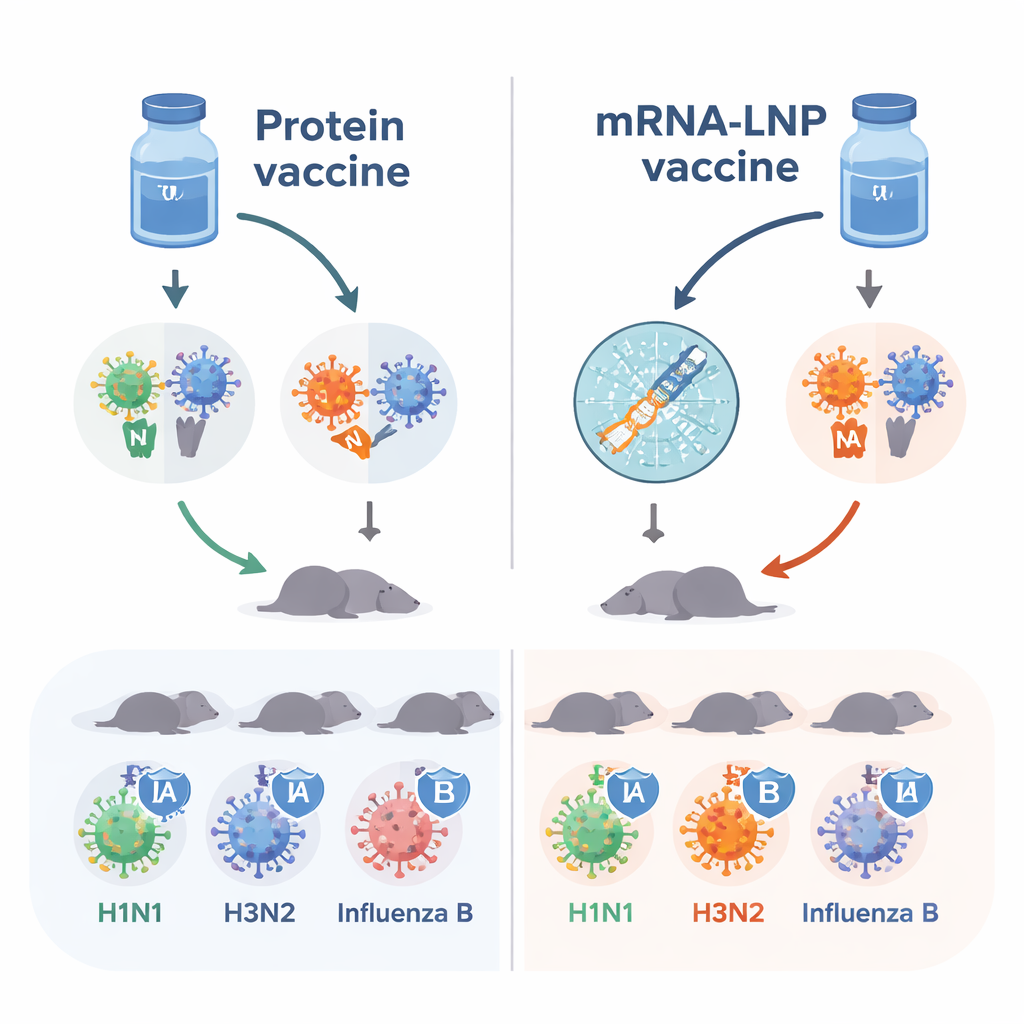
Today’s flu shots mostly focus on hemagglutinin, or HA, a protein that helps the virus attach to our cells. The researchers added a second viral protein, neuraminidase, or NA, which helps the virus escape from infected cells and spread. By combining four versions of HA and four versions of NA from the 2018–2019 seasonal strains, they built an “octavalent” vaccine meant to cover two types of influenza A and two lineages of influenza B. They then packaged these eight components in two different ways: as purified proteins mixed with an immune‑boosting ingredient, and as mRNA wrapped in tiny lipid bubbles (mRNA‑LNPs) that prompt the body’s own cells to make the viral proteins.
Stronger antibody responses with mRNA
Naïve mice—animals that had never seen flu viruses or vaccines—received two doses of either the protein vaccine or the mRNA‑LNP version. The team measured antibodies that recognize HA and NA in the blood. Both vaccines generated useful responses, but the mRNA‑LNP shots consistently produced higher levels of antibodies against most HA and NA components. In particular, antibodies that block NA’s activity, which are known to contribute independently to protection, were generally stronger after mRNA‑LNP vaccination. These findings suggest that, at least in this animal model, the mRNA platform makes the same viral targets more visible to the immune system.
Protection against matched and current strains
The real test was whether these vaccines could save mice from severe disease. At doses scaled to be similar to a human flu shot, both vaccine formats fully protected animals from lethal infection with H1N1 and influenza B viruses that closely matched the vaccine components, as well as from engineered H3N2‑like viruses used when standard human strains do not make mice sick. Vaccinated mice maintained their body weight and survived, while unvaccinated animals lost weight and often died. For these closely related strains, the traditional protein vaccines and the mRNA‑LNP vaccines performed similarly in terms of survival, even though antibody details differed.
Edge against older, mismatched flu viruses
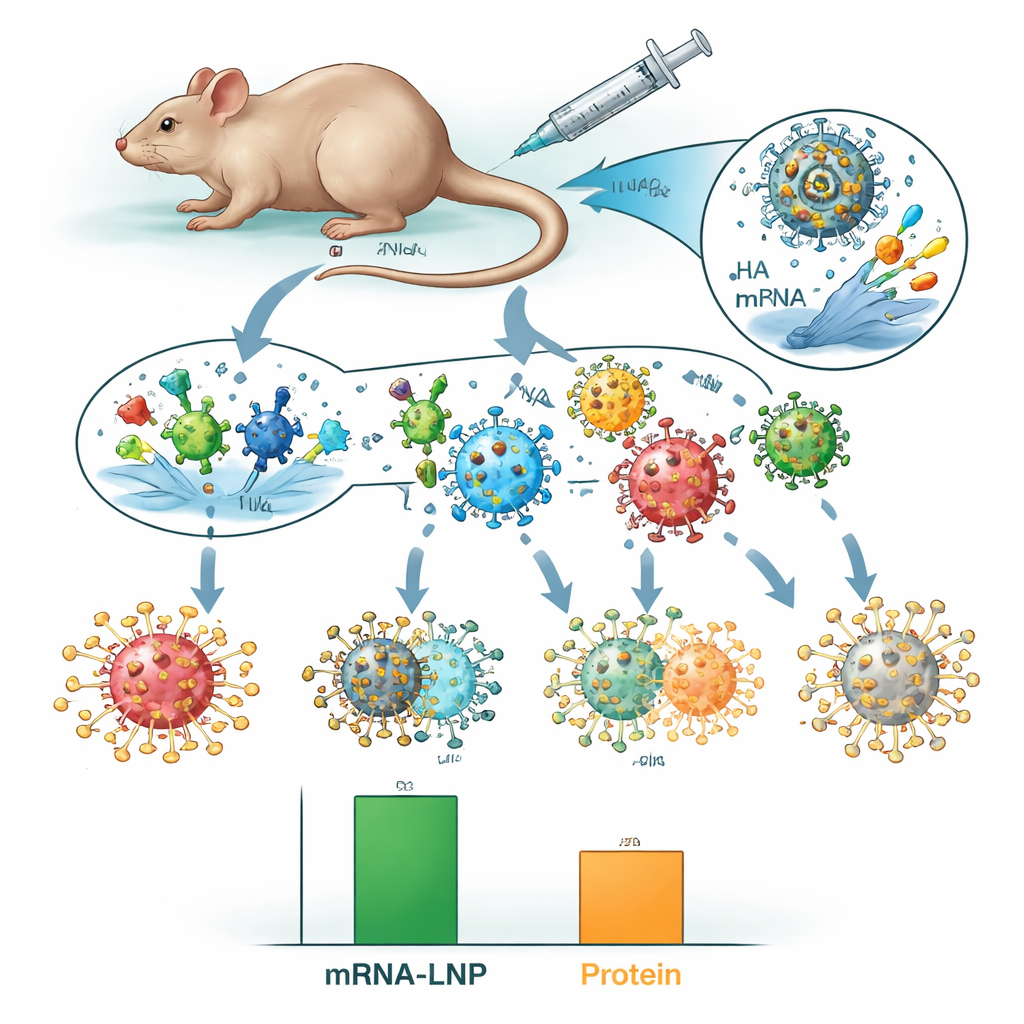
Where the mRNA‑LNP approach stood out was in tougher “mismatch” tests. The researchers challenged vaccinated mice with historical H3N2 strains from 1968, 1975, and 1982—viruses that differ from modern strains the vaccine was built to mimic. All unvaccinated mice and most animals given protein vaccines died, but every mouse that had received the octavalent mRNA‑LNP vaccine survived, even though they still showed signs of illness. This survival advantage persisted nearly a year after vaccination, indicating long‑lasting protection. When the team transferred blood serum from vaccinated animals into unvaccinated mice, only serum containing antibodies raised by mRNA‑LNP vaccines against HA protected against death from a mismatched virus, pointing to cross‑reactive HA antibodies as a key factor.
What this means for future flu shots
To a non‑specialist, the message is that both vaccine styles protected mice from the kinds of flu strains they were designed to match, but the mRNA‑LNP version also offered broader and longer‑lasting protection against older, out‑of‑date viruses. By including both major flu surface proteins and using mRNA to present them to the immune system, this strategy may help close the gap between good and bad flu seasons. While mouse results do not guarantee success in people, and stronger additives might still improve protein vaccines, the work supports the idea that multicomponent mRNA flu vaccines could one day provide more reliable protection across a wider range of circulating and emerging influenza strains.
Citation: Catani, J.P.P., Smet, A., Ysenbaert, T. et al. Immunogenicity and protection of octavalent influenza vaccine candidates using adjuvanted proteins or mRNA-LNPs in naïve mice. npj Vaccines 11, 57 (2026). https://doi.org/10.1038/s41541-026-01378-z
Keywords: influenza vaccine, mRNA-LNP, hemagglutinin, neuraminidase, cross-protection