Clear Sky Science · en
Maternal safety outcomes of respiratory syncytial vaccination during pregnancy with a large-scale database
Why this matters for new parents
For expecting parents, the idea of getting a new vaccine while pregnant can be both reassuring and worrying. On one hand, respiratory syncytial virus (RSV) is a major cause of serious lung infections in very young babies. On the other, parents naturally wonder whether a vaccine given in late pregnancy might harm the mother or baby. This study asks a straightforward question with big practical consequences: when pregnant people receive the new RSV vaccine, do they face higher risks of pregnancy complications compared with those who are not vaccinated?
Protecting newborns before they take their first breath
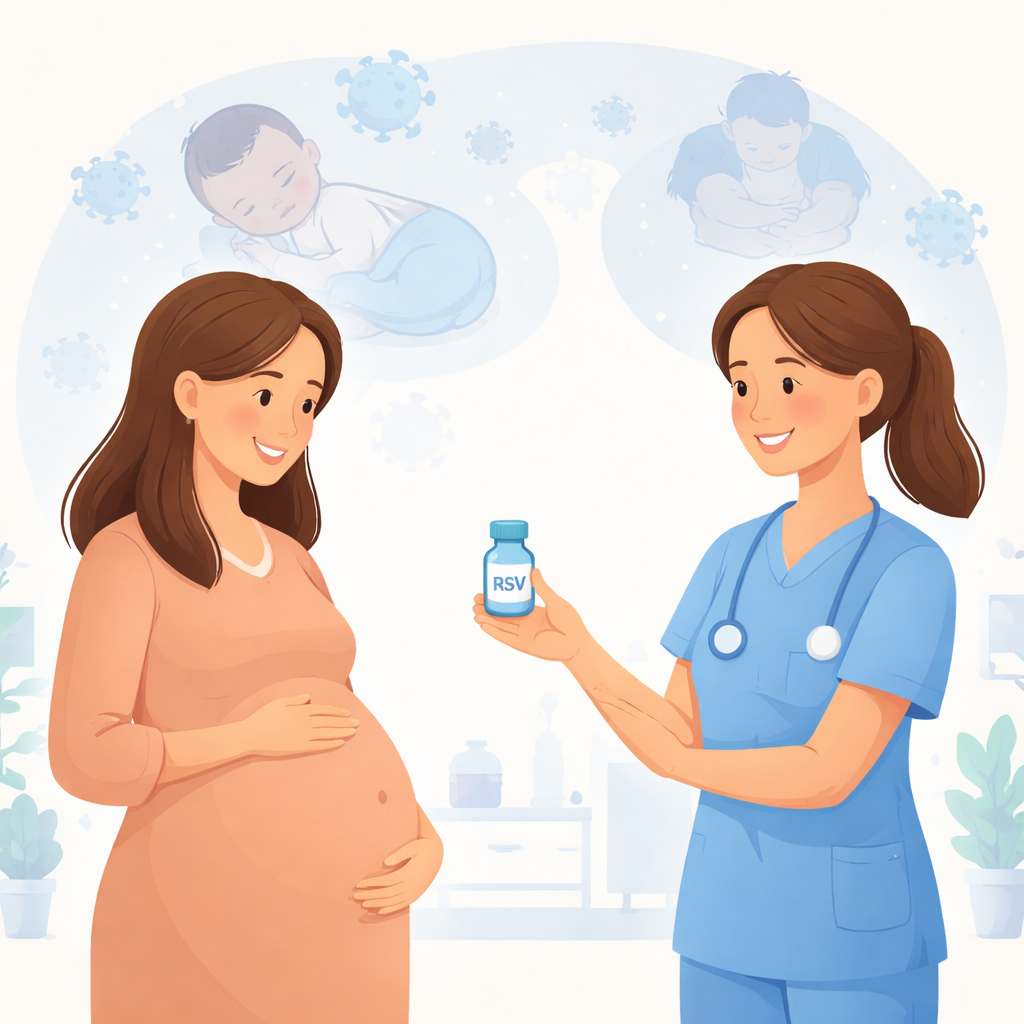
RSV is a common virus that can cause severe breathing problems, especially in infants under six months of age. To shield babies during this vulnerable period, two main strategies are now available in high-income countries: a single-dose antibody shot given directly to infants, and a vaccine given to pregnant women so they pass protective antibodies to their babies before birth. The specific shot studied here is a non-adjuvanted “prefusion F protein” RSV vaccine, recommended in the United States between 32 and 36 weeks of pregnancy. Earlier clinical trials suggested this vaccine can protect infants, but raised questions about slightly higher rates of preterm birth and high blood pressure disorders in pregnancy. Because such problems are relatively rare, the authors turned to a very large, real-world database to look more closely at safety.
Using big data to compare similar pregnancies
The researchers used TriNetX, an international network that aggregates anonymous electronic health records from over 180 million patients, with the United States providing most of the pregnancy data. They identified more than 370,000 pregnant women who visited a participating health system between 32 and 36 weeks of gestation. Among them, 11,265 had received the RSV vaccine during that window, while over 360,000 had not. Because vaccinated women differed in many ways from unvaccinated women—such as age, race, obesity, and prior pregnancy problems—the team used a technique called propensity score matching. This method pairs each vaccinated person with a very similar unvaccinated person, balancing dozens of medical and demographic factors so that any differences in outcomes are more likely to be due to vaccination rather than background risk.
What the study saw in real-world pregnancies
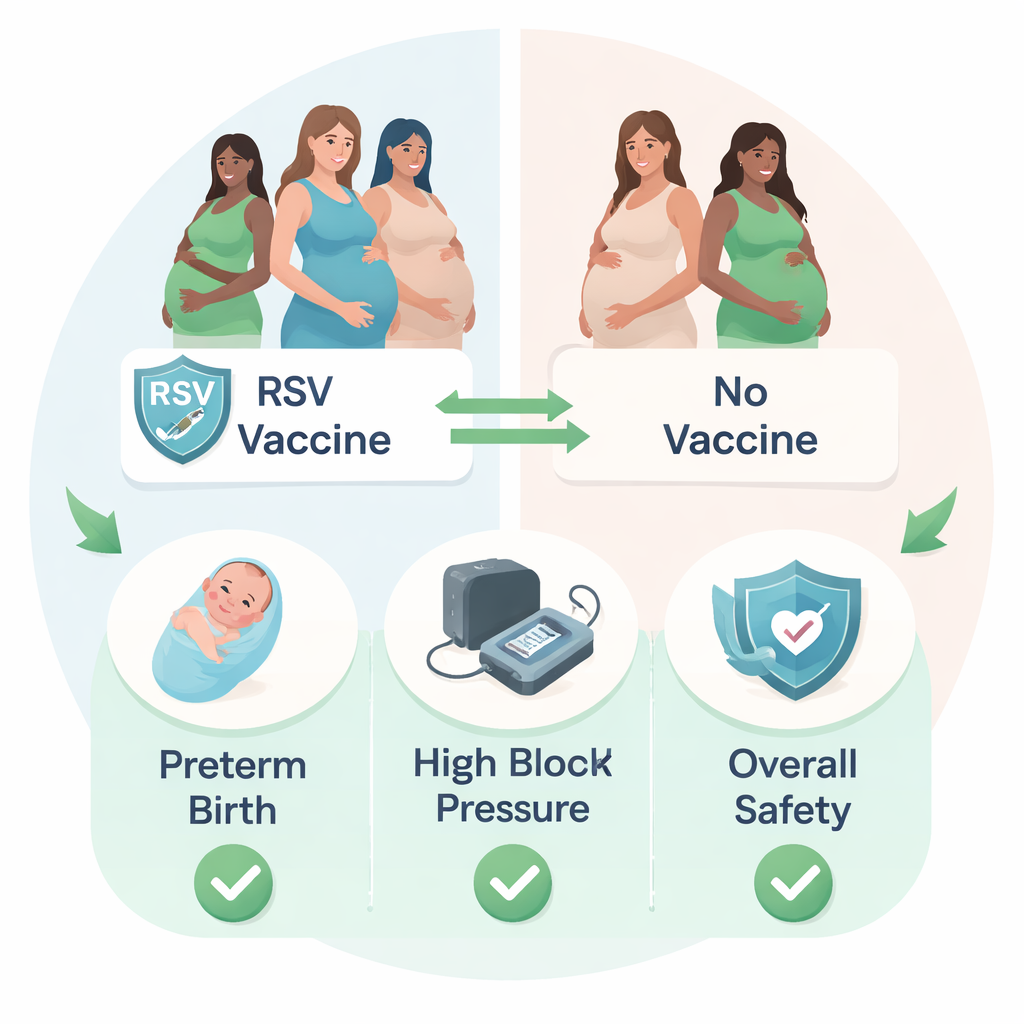
After matching, there were 11,265 women in each group, with closely comparable health profiles. The team then tracked a range of pregnancy-related outcomes for up to 120 days after the “index” visit or vaccination. They focused on serious events that worry clinicians and parents alike: preterm birth, high blood pressure disorders of pregnancy (including preeclampsia), gestational diabetes, low amniotic fluid, placental abruption, poor fetal growth, and fetal death. They also checked for rarer non-obstetric problems such as neurological diseases, certain immune conditions, heart inflammation, blood clots, and maternal death or severe allergic reaction where numbers allowed. Overall, the RSV-vaccinated group did not show higher rates of preterm birth, gestational diabetes, growth restriction, fetal death, or most other complications compared with the matched unvaccinated group. In fact, low amniotic fluid was modestly less common in vaccinated pregnancies, though this might reflect unmeasured differences in care or health rather than a direct benefit of the vaccine itself.
A closer look at blood pressure concerns
The results around high blood pressure in pregnancy were more nuanced. In the main analysis, the overall rate of hypertensive disorders—including gestational hypertension and preeclampsia—was essentially the same in vaccinated and unvaccinated women. When the researchers repeated the analysis under different assumptions (for example, slightly changing the gestational age window, limiting the time period, or using a narrower definition of who counted as vaccinated), some of these “what-if” scenarios showed a small increase in high blood pressure disorders among vaccinated women. Because the study used pre-existing medical records and could not account for every factor—such as type of health insurance, hospital site, or socioeconomic status—the authors caution that these modest signals could reflect remaining differences between groups rather than a true effect of the vaccine.
What this means for pregnant people and policy
For families and health systems deciding how best to protect newborns from RSV, this large real-world study offers reassuring news: in typical U.S. practice, the RSV vaccine given in late pregnancy was not linked to an overall rise in key maternal complications, and any possible increase in high blood pressure problems appears small and uncertain. At the same time, very rare events and subtle risks require even larger datasets and continued monitoring, especially in low- and middle-income countries where conditions differ. Taken together with previous trials and smaller observational studies, these findings support the safety of using the RSV vaccine during pregnancy as part of strategies to guard infants against dangerous respiratory infections, while underscoring the importance of ongoing surveillance and research.
Citation: Kitano, T., Sado, T., Tsuzuki, S. et al. Maternal safety outcomes of respiratory syncytial vaccination during pregnancy with a large-scale database. npj Vaccines 11, 53 (2026). https://doi.org/10.1038/s41541-026-01373-4
Keywords: RSV in pregnancy, maternal RSV vaccine, preterm birth risk, hypertensive disorders of pregnancy, infant respiratory infection prevention