Clear Sky Science · en
Navigating the landscape of direct cellular reprogramming with DiReG
Turning One Cell Type into Another
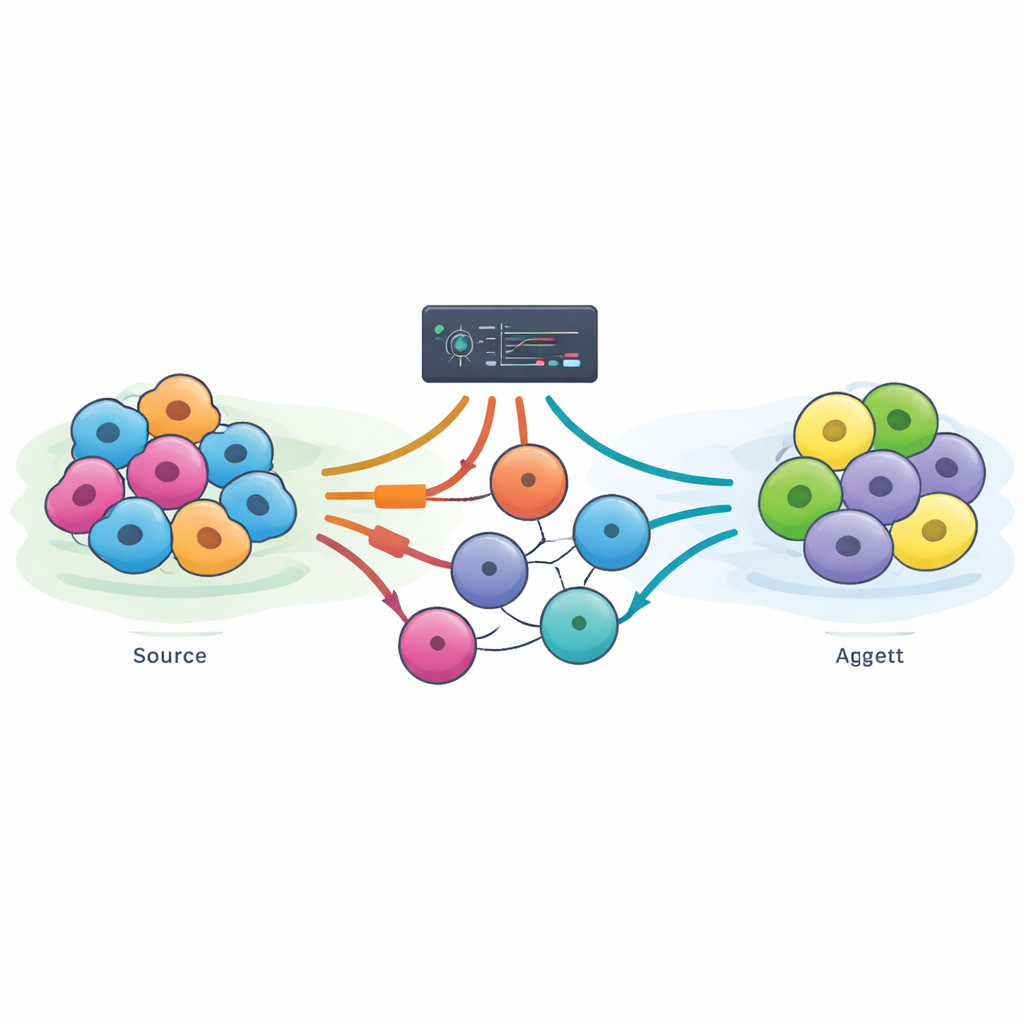
Imagine being able to turn a skin cell into a heart cell or a liver cell on demand. This kind of direct shape‑shifting, called cellular reprogramming, could let doctors grow replacement tissues, model diseases in the lab, and test drugs more safely. But finding the right molecular “switches” to flip inside a cell is like guessing a safe’s combination: there are thousands of possibilities, and testing them one by one is slow and expensive. This paper explains how scientists are trying to use computers to narrow down the options and introduces a new online guide, DiReG, that helps researchers design and check reprogramming recipes more intelligently.
From Serendipity to Systematic Design
The story of cell reprogramming began when researchers discovered that forcing a single gene, MyoD1, into connective tissue cells could turn them into muscle cells. Later, other combinations were found that could make neurons or insulin‑producing cells, and four “Yamanaka factors” that rewind adult cells back to a stem‑like state. These breakthroughs showed what was possible, but the way they were found relied heavily on expert guesswork and lengthy lab work. Direct reprogramming—jumping straight from one mature cell type to another—remains especially difficult because many attempts stall halfway, produce unstable “hybrid” cells, or fail to fully erase the cell’s previous identity.
Computers as Recipe Finders
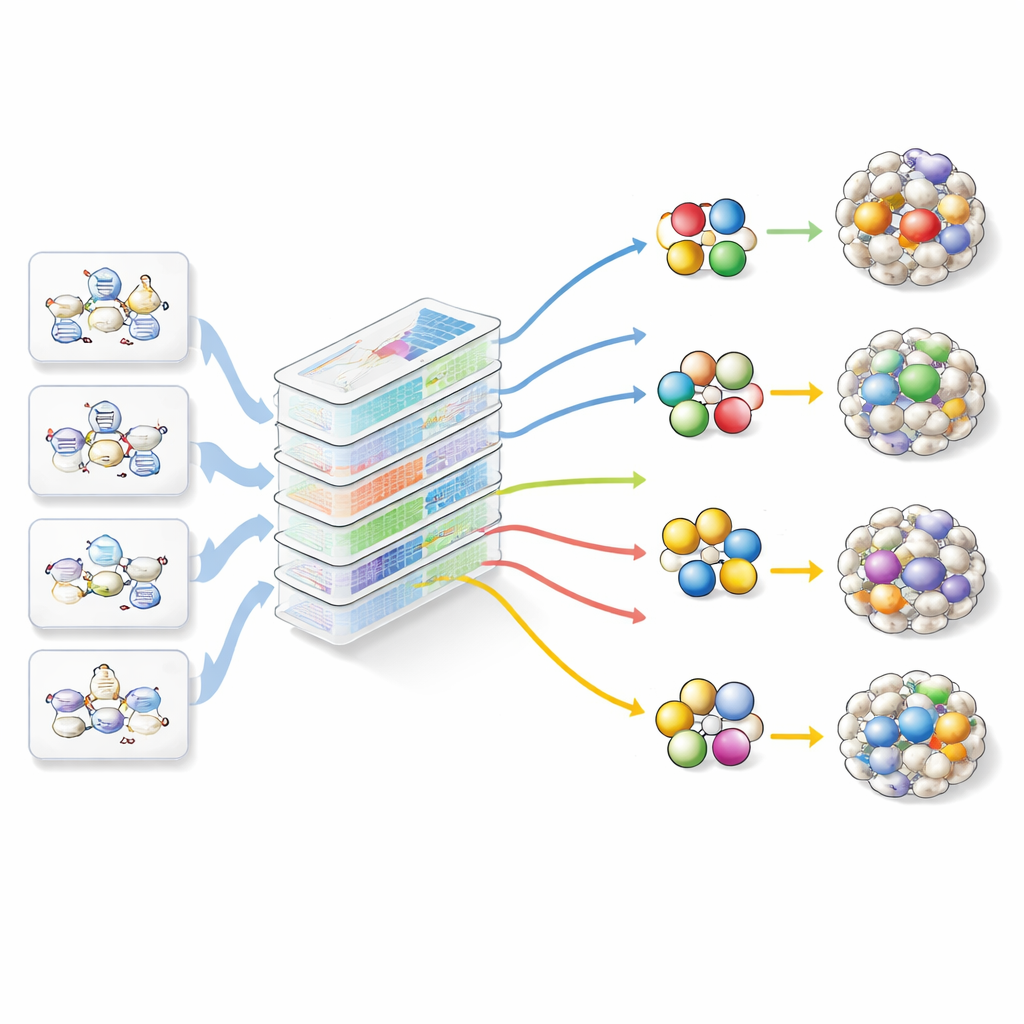
Over the last decade, several computational tools have been created to help pick promising sets of transcription factors—the genes that act as master switches for cell identity. The paper reviews six leading methods that sift through large datasets of gene activity and DNA regulation to suggest which factors might drive a change from one cell type to another. Some focus mainly on which genes are turned on or off, others build wiring‑diagram‑like regulatory networks, and newer ones fold in DNA accessibility and enhancer information, where many control switches reside. Each step forward adds useful detail, but none of the methods has emerged as a clear winner, partly because they have been tested on different datasets and under different conditions, making fair comparisons impossible.
Hidden Complexities Inside the Cell
The authors point out that all current tools overlook several layers of biological nuance. A single “gene” can exist in many slightly different protein versions (isoforms) that behave differently, and today’s models usually treat them as one. Chemical tags on DNA, such as methylation, can block or attract control proteins, yet most algorithms ignore whether a target site is even usable. Many crucial helpers—protein partners, competitive family members that fight for the same binding spots, and tiny regulatory RNAs that silence unwanted messages—are also left out. On top of that, most methods rely on average signals from mixed‑cell samples and on RNA levels, which only roughly track the true protein activities that actually drive change.
A New Guide to Navigate the Options
To make progress despite these gaps, the authors built DiReG (Direct Reprogramming Guide), a web application that acts less like a new all‑knowing algorithm and more like a control center. DiReG gathers predictions from major existing tools, adds a simple motif‑based method that works directly from open‑chromatin data, and connects all of this to a curated library of hundreds of reprogramming papers. Using built‑in question‑answering systems, researchers can quickly find protocols, factor combinations, and experimental details in the literature. They can then move candidate factor sets into an analysis space where DiReG draws their regulatory networks, tests whether the affected genes look like those in the desired tissue, checks where the factors are naturally active, and highlights known interaction partners and isoforms that might boost or hinder conversion.
A Step Toward Smarter Cell Conversion
For non‑specialists, the key message is that this work does not yet deliver a push‑button recipe for turning any cell into any other. Instead, it offers a centralized, interactive map of what is known, what has been tried, and which genetic switches are most likely to work together. By helping researchers quickly combine computer predictions with biological context, DiReG aims to reduce dead‑end experiments and make protocol design more rational. The authors also outline what is still missing—richer data on protein forms, chemical marks, cell‑to‑cell interactions, and true protein activity. As emerging technologies fill in these layers, future tools built on ideas showcased here could make direct cellular reprogramming more reliable, safer, and closer to real‑world medical use.
Citation: Lauber, M., List, M. Navigating the landscape of direct cellular reprogramming with DiReG. npj Syst Biol Appl 12, 35 (2026). https://doi.org/10.1038/s41540-026-00652-z
Keywords: cellular reprogramming, transcription factors, computational biology, gene regulatory networks, regenerative medicine