Clear Sky Science · en
Shared effects of one’s own and others’ experiences during reinforcement learning on episodic memory
Why watching and doing both matter for memory
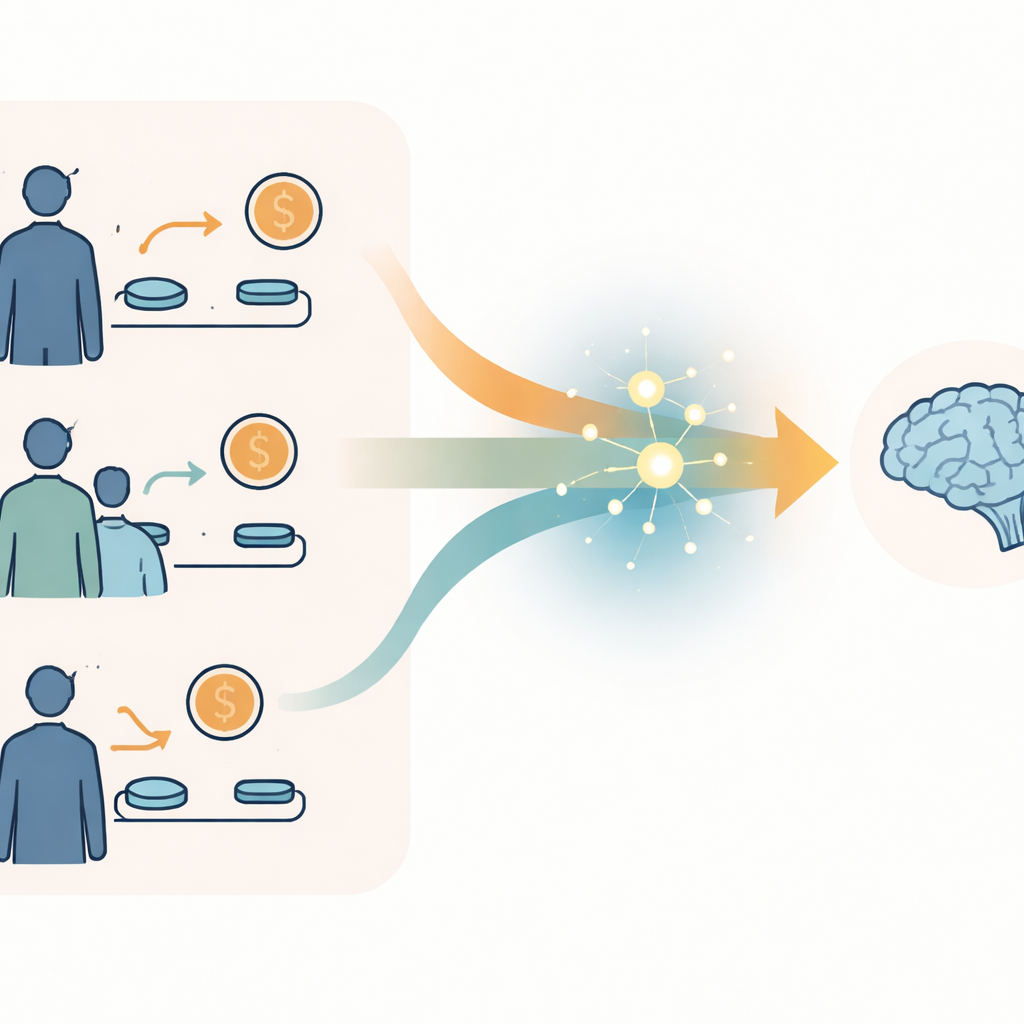
Everyday life is full of learning from our own choices—like trying a new route to work—and from watching what happens to others—like seeing a friend get a speeding ticket. This study asks a deceptively simple question: when it comes to forming vivid memories, does it really matter whether we acted ourselves or merely observed someone else? And do the brain’s internal “surprise” signals during rewards link doing, watching, and remembering in the same way?
Taking risks in a game of wins and losses
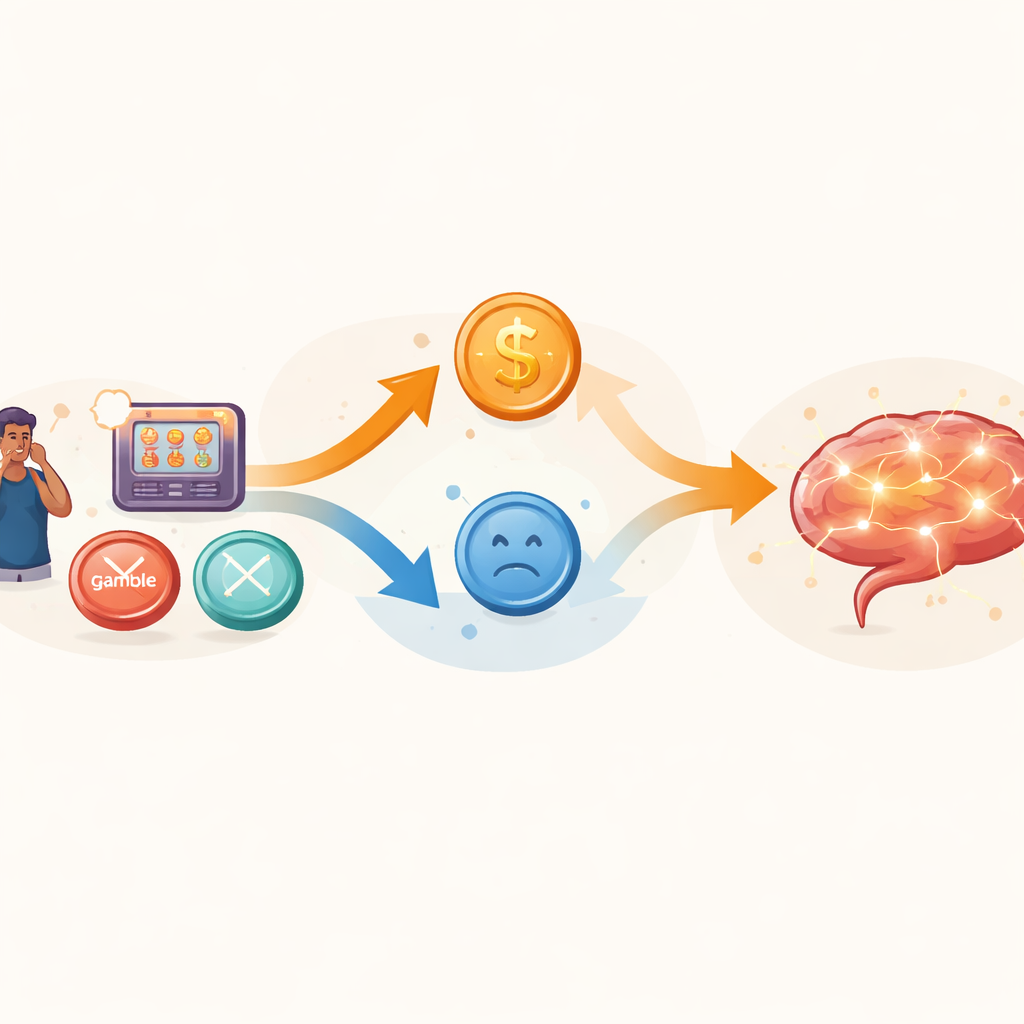
The researchers invited young adults to play a computer game that mixed two kinds of trials. In some, participants decided whether to “gamble” for points or play it safe; in others, they simply watched a supposed other player (actually a computer model) make the same choice. Each trial showed a possible reward size followed by a unique picture of an object or animal that hinted at the chance of winning. Later, without warning, participants took a memory test: they saw all the old pictures plus similar new ones and had to say whether each was old or new, and how confident they felt.
Doing it yourself feels more memorable
When the team compared how well people distinguished old pictures from new ones, performance was clearly above chance in both learning-by-doing and learning-by-watching. In other words, simply being present in the task—whether acting or observing—was enough to form reasonably accurate memories. Yet there was a twist: participants felt more confident about their memories for pictures from trials where they themselves had been the decision maker. Even when objective accuracy was similar, memories tied to one’s own choices felt stronger and more vivid than those formed while watching someone else play.
Risky choices and reward surprises boost memory
Another layer of the study focused on how risk and reward shaped remembering. Across both doing and watching, pictures shown on trials where the gamble was taken were remembered better than those from safe “pass” trials. The authors also examined so‑called reward prediction errors—internal signals that track the gap between what we expect to win and what we actually stand to gain. When a picture indicated a better‑than‑expected chance of reward and the gamble was taken, later memory for that picture was enhanced, whether the choice was made by the participant or by the observed player. Strikingly, very small or very large potential rewards tended to weaken memory, likely because people could decide to play or pass based on the number alone and paid less attention to the picture.
Watching others can tap into the same learning engine
By fitting computational learning models to the choices, the researchers showed that participants updated their beliefs about reward probabilities in a similar way across acting and observing. Signals driven by surprise and uncertainty helped adjust how quickly they learned from new outcomes. Importantly, the beneficial link between positive reward surprises during picture viewing and later memory appeared in both learning modes. The game also stirred competitive feelings in many volunteers—they were happier when the other player lost than when that player won—and this competitiveness was tied to somewhat stronger memories in the self‑play condition, suggesting that motivation and social comparison can selectively sharpen memories for our own experiences.
What this means for everyday learning
To a layperson, the main message is that our memory system uses similar internal “surprise” signals when we learn from our own actions and when we learn by watching others, especially in situations involving risk and reward. Observational learning can plant solid memories, but acting ourselves tends to make those memories feel more certain and personally owned. In classrooms, workplaces, and social settings, this implies that combining active decision‑making with opportunities to observe others—and ensuring that important information appears right when outcomes are uncertain and potentially better than expected—may be a powerful recipe for experiences that truly stick in mind.
Citation: Woitow, M.A., Jang, A.I., Eppinger, B. et al. Shared effects of one’s own and others’ experiences during reinforcement learning on episodic memory. npj Sci. Learn. 11, 16 (2026). https://doi.org/10.1038/s41539-026-00409-7
Keywords: observational learning, reward prediction error, episodic memory, risk taking, decision making