Clear Sky Science · en
Children consider changes in performance over time when reasoning about academic achievements
Why the road to success matters
Two students end the school year with the same good grade. One started strong and stayed steady; the other began lower and worked their way up. Most adults would say those stories feel different. This study asks a simple but powerful question: do children notice and care about these different paths to achievement—and if so, at what age and in what way?
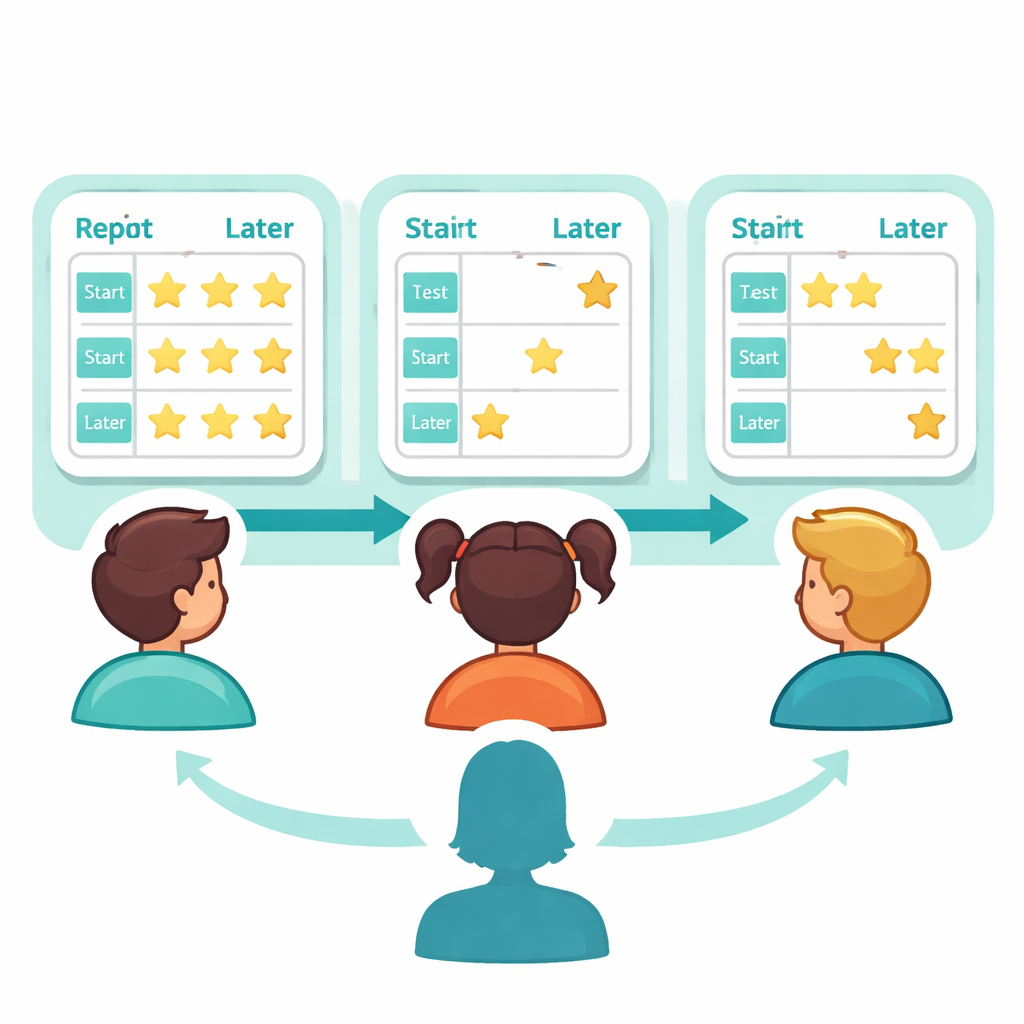
Following progress, not just snapshots
The researchers worked with 256 children in China, aged 4 to 10, plus groups of adults. Instead of looking only at a single score, children saw short stories about two cartoon classmates taking several exams. Stickers or class rankings showed how well each child did over time. Sometimes one child’s scores improved while the other’s stayed the same; sometimes one child’s performance declined; and sometimes the improving child eventually overtook the other. After each story, children answered questions such as: Who is smarter? Who works harder? Who deserves a prize? Who will be more successful in the future?
Seeing ability and effort as different things
Across all three studies, children of every age tended to see a classmate with steady, high performance as smarter than a classmate whose scores rose from lower to higher. In other words, consistency signaled talent. But views of effort changed with age. Younger children (around 4 to 6) often believed the constant high performer was both smarter and more hardworking, and they usually preferred or rewarded that student. Starting around ages 6 to 7, children began to separate ability from effort: they still thought the steady performer was smarter, but now judged the improving student as more hardworking—and increasingly chose that improver for prizes and future success.
Direction of change makes a difference
The team also asked what happens when performance slips. When children compared a classmate who gradually got worse with one who stayed the same—while ending at the same final level—older children shifted strongly toward favoring the stable performer. With age, they were more likely to say the declining student was less hardworking and to give rewards and future success to the classmate who held steady. This shows that children are not simply drawn to any kind of change; they specifically treat improvement as a positive sign of effort and decline as a warning sign.
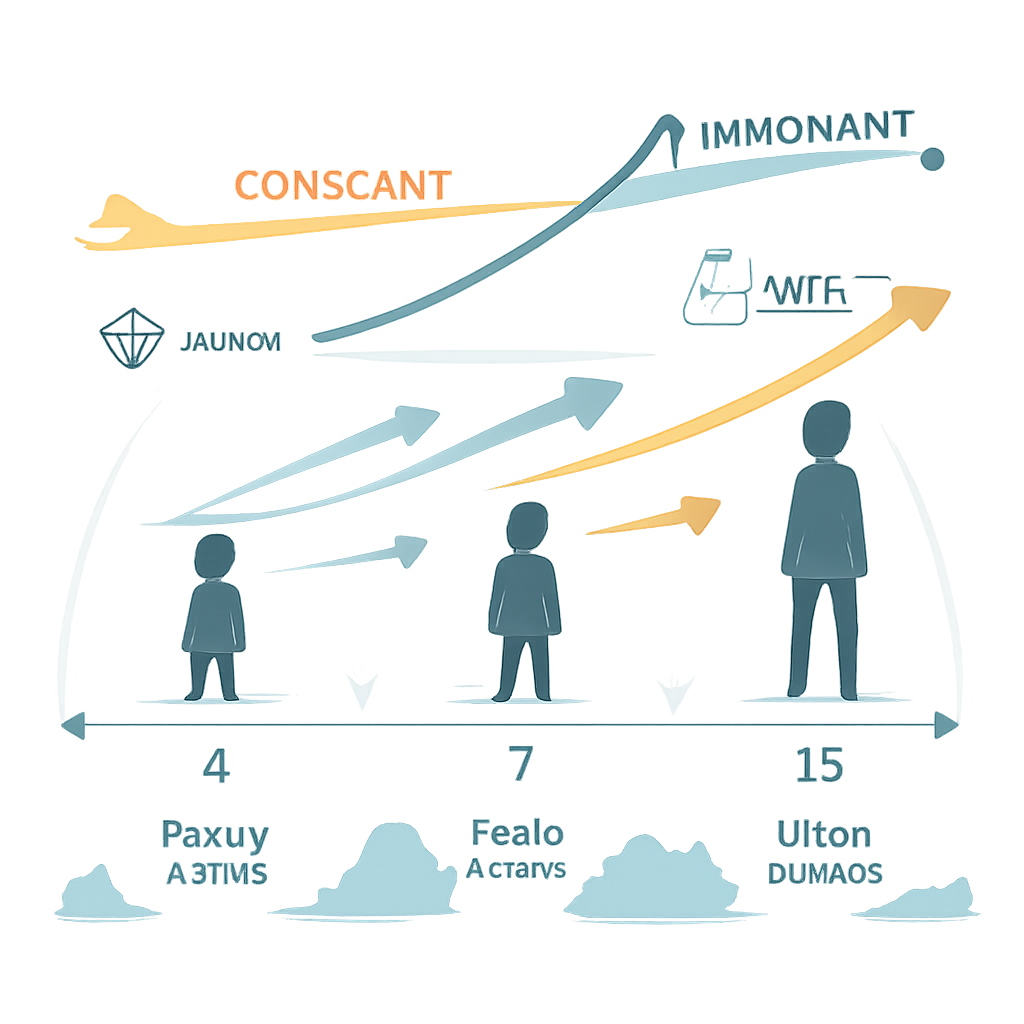
When younger children recognize hard-won success
In a final twist, the researchers tested whether even the youngest children might appreciate improvement if it became very obvious. They created situations where an initially weaker student improved so much that they eventually beat the constant performer, even though both had similar overall results. In these cases, 4- to 6-year-olds were more likely to say the improver worked harder and clearly favored them when deciding who deserved a prize or was more successful. This suggests that younger children do value progress, but may need very clear evidence before they look beyond who currently seems “better.”
What this means for children and schools
Overall, the work shows that by late childhood, many children think in surprisingly sophisticated ways about achievement. They see steady high marks as a sign of ability, but they also come to view climbing scores as proof of hard work—and they increasingly admire and reward that effort. For parents and teachers, this means it is helpful to talk not only about final grades, but also about how those grades change over time. Making progress visible, praising effort that leads to improvement, and discussing what it takes to maintain success may all encourage children to value their own growth as much as their current scores.
Citation: Hu, Y., Shu, Y. & Zhao, X. Children consider changes in performance over time when reasoning about academic achievements. npj Sci. Learn. 11, 13 (2026). https://doi.org/10.1038/s41539-026-00401-1
Keywords: academic achievement, children’s motivation, effort and ability, performance over time, learning trajectories