Clear Sky Science · en
Fragmented learning from short videos modulates neural activity and connectivity during memory retrieval
Why Our Brains Care About Short Videos
Short videos have become a daily habit for many of us, from quick travel clips to endless social media feeds. But while these bite-size bursts of information feel convenient and fun, scientists are beginning to ask a serious question: Do they quietly change how well we remember what we learn? This study uses brain scans to compare what happens when people learn from a single, continuous video versus a string of short, chopped-up clips—and what it finds has important implications for students, teachers, and anyone who relies on digital media to learn.
Two Ways to Watch, Two Kinds of Memories
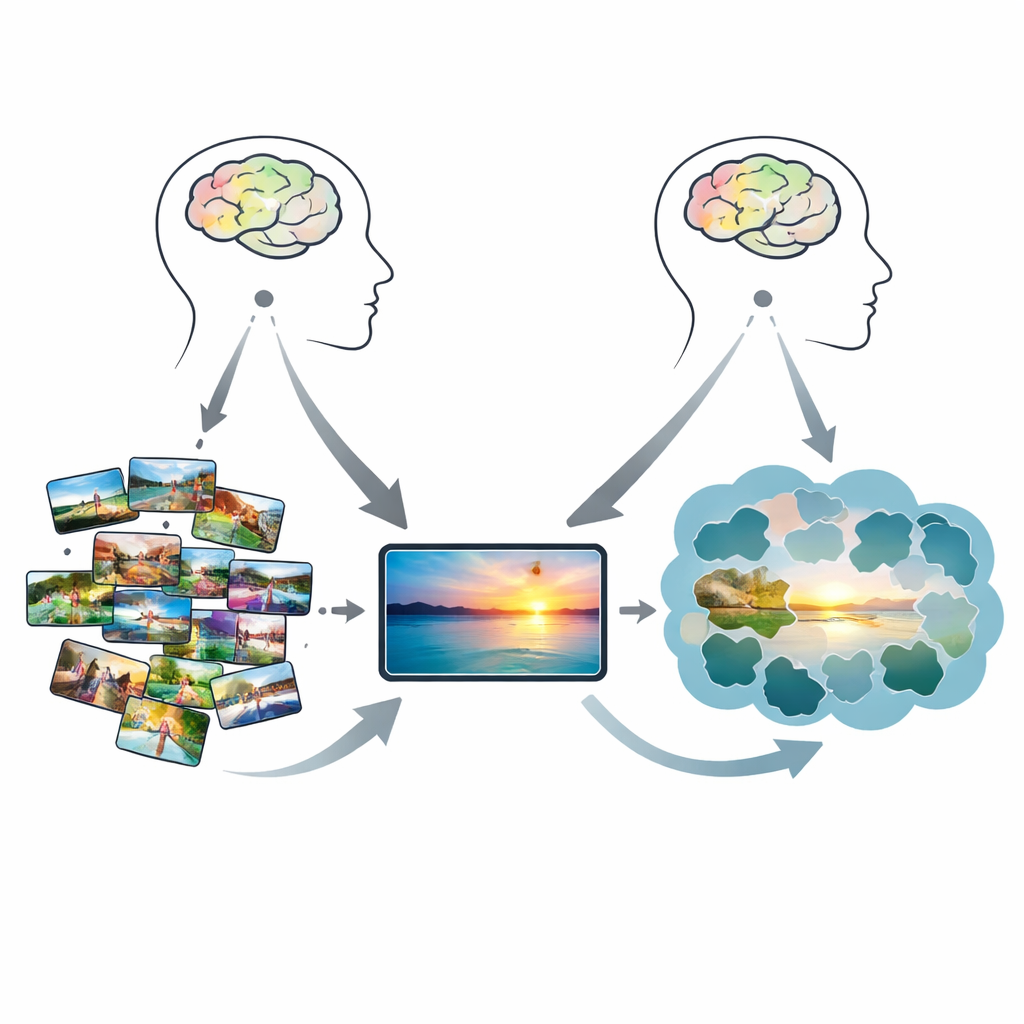
The researchers recruited 57 university students and randomly assigned them to one of two groups. One group watched a 10-minute continuous video about lesser-known tourist sites, like a single short documentary. The other group watched seven short segments, matched in total length and information, but broken into separate clips that mimicked the feel of short-form platforms. Everyone knew they would take a memory test right after viewing, and they completed this test while lying in an MRI scanner so the scientists could track brain activity during recall.
What Fragmented Viewing Does to Recall
Despite seeing the same amount of information for the same amount of time, the two groups did not remember equally well. Those who watched the short, fragmented clips answered significantly fewer questions correctly than those who watched the continuous video. In other words, chopping the story into pieces—without changing its length or core content—was enough to noticeably weaken memory. This echoes previous work on media multitasking and context switching, but now shows that the structure of the content itself, even without juggling multiple tasks, can undermine how well we build and retrieve a coherent memory.
What Changes Inside the Brain
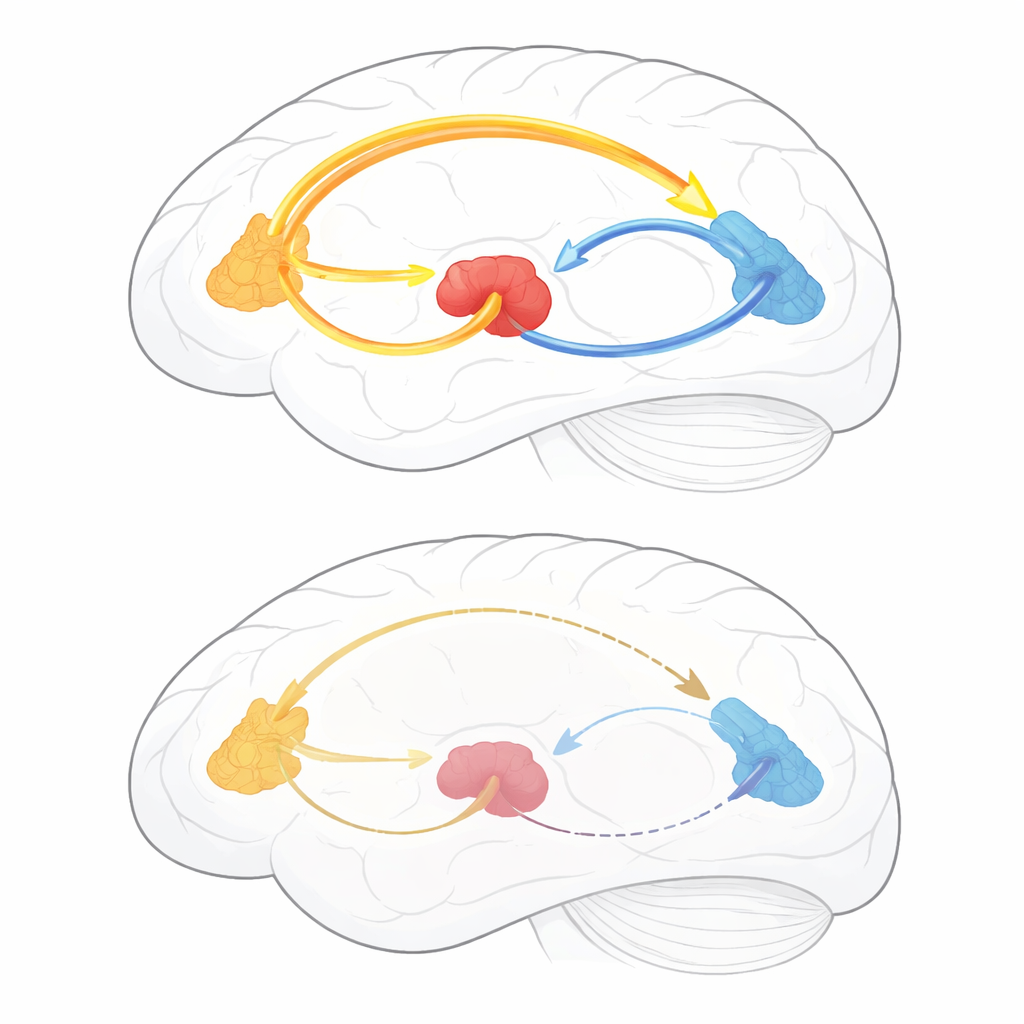
The MRI scans revealed that fragmented learning is not just a surface-level problem; it shows up deep in the brain. When recalling what they had seen, people in the short-video group showed lower activity in three key areas: the claustrum, the caudate nucleus, and a region of the temporal lobe involved in understanding meaning. Together, these regions help weave pieces of information into a single scene, support mental control over what we focus on, and help us connect words and ideas into a story. In the short-video condition, not only were these regions less active, but the communication between the claustrum and caudate was also weaker, suggesting a less coordinated network for pulling memories together.
Hidden Costs and Strained Compensation
The study also found that people’s everyday short-video habits mattered. Measures of how easily someone lost self-control with short-video use were tied to patterns of brain activity and connectivity. In some cases, stronger links between the claustrum and caudate appeared in people with more self-control problems—but this did not translate into better memory. Instead, the researchers interpret this as a kind of strained compensation: the brain has to work harder, using less efficient routes, just to keep performance from collapsing. Rather than indicating a stronger system, this pattern may reflect a network pushed to its limits by frequent exposure to fragmented, high-speed content.
What This Means for Everyday Learning
Put simply, this work suggests that learning the same material through a feed of short clips may leave us with thinner, more fragile memories than learning it through a continuous story. The brain seems less able to knit together what we see into a single, well-organized mental picture, and the systems that normally support control and meaning-making appear to run in a lower gear or in a strained, inefficient mode. For anyone designing lessons, studying for exams, or relying on quick videos to understand the world, the message is clear: short clips may boost engagement, but when it comes to solid, long-lasting memory, our brains still seem to favor a well-told, continuous story.
Citation: Wei, M., Liu, J., Wang, H. et al. Fragmented learning from short videos modulates neural activity and connectivity during memory retrieval. npj Sci. Learn. 11, 15 (2026). https://doi.org/10.1038/s41539-025-00399-y
Keywords: short videos, memory, learning, brain imaging, attention