Clear Sky Science · en
Mechanism of Morchella polysaccharide in anti-fatigue: the role of the gut microbiota-metabolite axis in mice
Why a Mountain Mushroom Matters for Everyday Tiredness
Feeling wiped out after a long day or workout is familiar to most of us, but persistent fatigue can chip away at health over time. This study looks at an unusual ally against tiredness: polysaccharides—complex sugars—extracted from morel mushrooms growing on the harsh, high-altitude Qinghai–Tibet Plateau. By testing these mushroom compounds in mice, the researchers explore how they might boost endurance, protect organs, and work through the gut to fine-tune the body’s energy and defenses.
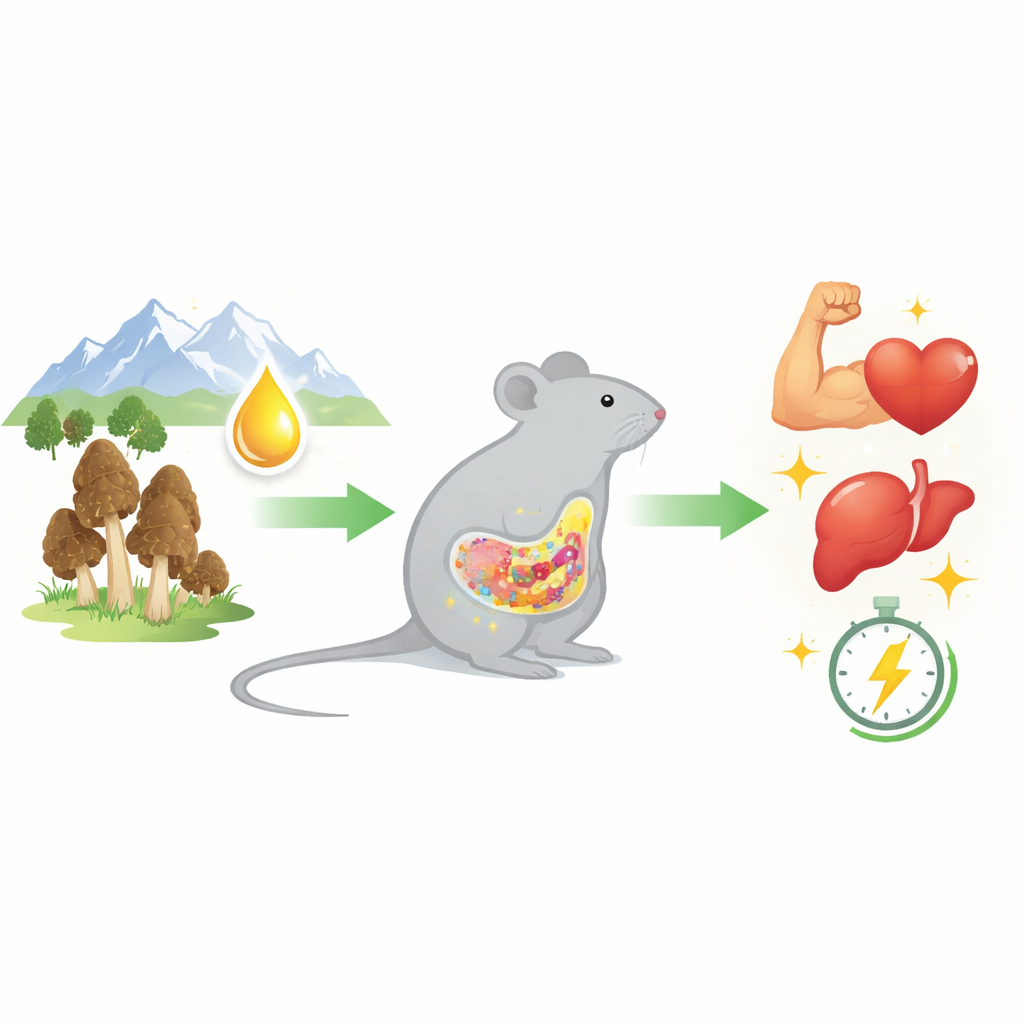
A Tough Mushroom from a Harsh Plateau
Morel mushrooms are prized for both flavor and traditional health benefits. Those that survive the thin air, cold, and strong sunlight of the Qinghai–Tibet Plateau are particularly rich in bioactive molecules. The team focused on the mushroom’s polysaccharides, first extracting a crude mixture and then purifying its main water‑soluble part. They discovered that the dominant component is an "/alpha-glucan," a chain of glucose units linked in a specific pattern. While many well-known mushroom polysaccharides are of a different type, this finding highlights a less-studied structure that may have its own unique biological effects.
Putting Endurance and Protection to the Test
To see whether these mushroom sugars could actually fight fatigue, the researchers fed different doses of the extract to mice for four weeks, alongside a standard control group and a group given a known herbal anti-fatigue supplement. The mice then performed a weight‑bearing swim until exhaustion. Mice receiving the higher doses of the mushroom polysaccharides swam dramatically longer—over 60 percent more than untreated animals—without any harmful changes in body or organ weight. Inside their bodies, key energy stores in the liver and muscles were higher, while markers linked to muscle damage and protein breakdown in the blood were lower, suggesting the animals were both better fueled and better protected during hard effort.
Shielding the Body from Stress and Inflammation
Hard exercise produces a surge of reactive molecules and inflammatory signals that can damage tissues and worsen fatigue. In the treated mice, levels of malondialdehyde—a byproduct of fat damage—fell, while antioxidant defenses such as superoxide dismutase and glutathione peroxidase rose in a dose‑dependent fashion. At the same time, pro‑inflammatory messengers in the blood, including well‑known alarm signals like IL‑6 and TNF‑alpha, dropped, and a key calming messenger, IL‑10, increased. Under the microscope, hearts, livers, muscles, and kidneys from treated mice showed fewer signs of swelling, fatty change, and structural disruption than those from untreated, overworked animals. Together, these findings point to a mushroom‑driven bolstering of the body’s internal shield against oxidative and inflammatory stress.
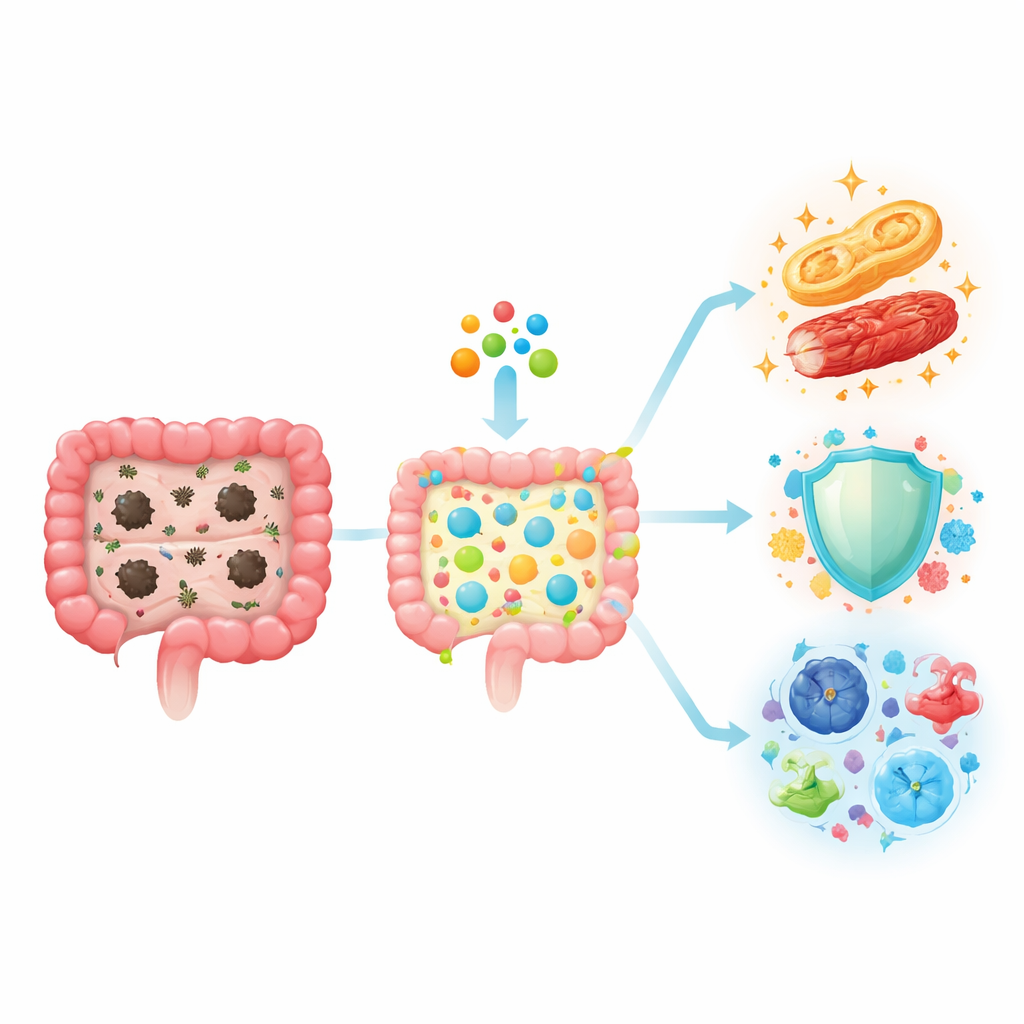
The Gut as a Control Center for Energy
The study goes further by probing the “gut axis”—the idea that microbes and small molecules in the intestines help set the tone for whole‑body energy and resilience. Using DNA sequencing, the researchers found that the mushroom polysaccharides subtly increased the richness and balance of the gut community while tilting it toward bacteria generally viewed as beneficial, such as Lactobacillus, Bifidobacterium, Bacteroides, and Colidextribacter. At the same time, microbes linked in other work to inflammation and disease, including Desulfovibrio and Helicobacter, became less abundant. Mice with more of the helpful bacteria tended to have higher antioxidant capacity and glycogen reserves, and lower inflammation and tissue damage, suggesting that changes in the gut community and physical performance were closely intertwined.
Rewiring the Body’s Chemical Traffic
Beyond the microbes themselves, the team measured hundreds of small molecules in the gut contents. The mushroom treatment shifted 70 of these, with many involved in how the body handles fats, sugars, and amino acids. Pathways that feed energy production—such as those that support carnosine synthesis, fat breakdown, and the pentose phosphate route that supplies antioxidant power—were especially affected. One long‑chain fatty acid associated with extra fuel became more abundant, while a bile‑acid‑related compound that can be harmful at high levels declined. Network analyses suggested that these changes were not isolated tweaks but part of a broader remodeling of the chemical environment, driven in part by the reshaped microbiota.
What This Means for Fighting Everyday Fatigue
In simple terms, the study suggests that polysaccharides from plateau‑grown morel mushrooms help tired animals go farther and recover better by acting on several fronts at once. They appear to gently reshape gut microbes, shift metabolic traffic toward more efficient energy use and stronger antioxidant defenses, and dial down excessive inflammation, all without obvious side effects in mice. While this work is still in the realm of animal research and cannot yet be applied directly to people, it provides a scientific basis for viewing morel polysaccharides as promising ingredients for future functional foods or supplements aimed at easing physical fatigue.
Citation: Liu, J., Li, J., Li, Y. et al. Mechanism of Morchella polysaccharide in anti-fatigue: the role of the gut microbiota-metabolite axis in mice. npj Sci Food 10, 100 (2026). https://doi.org/10.1038/s41538-026-00763-1
Keywords: fatigue, morel mushroom, gut microbiota, polysaccharides, functional food