Clear Sky Science · en
Genomic and phenotypic insights into quorum sensing-mediated spoilage of Morganella psychrotolerans isolated from tuna
Why some fish turns dangerous in the fridge
Many people rely on seafood as a healthy source of protein, but even fish that looks fresh can sometimes cause unpleasant smells or even food poisoning. This study explores a little-known cold‑loving bacterium, Morganella psychrotolerans, commonly found on tuna and other fish. The researchers show how this microbe “talks” to its neighbors using chemical signals, and how this chatter ramps up spoilage and production of toxic compounds. Understanding this hidden conversation could lead to new ways to keep seafood safe for longer and reduce food waste.
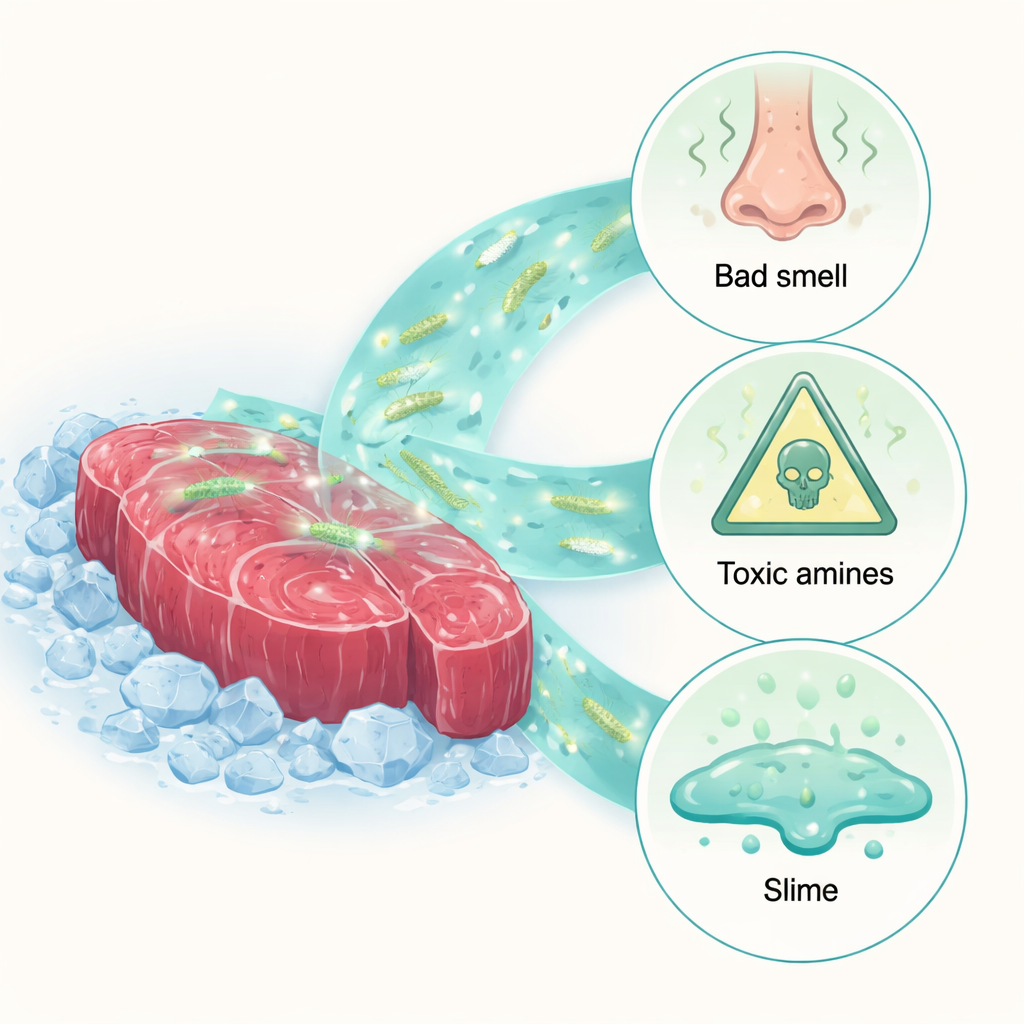
A microscopic troublemaker on chilled tuna
The team focused on a strain called Morganella psychrotolerans GWT 901, isolated from spoiled yellowfin tuna and known for its strong ability to spoil fish. Unlike many bacteria, this strain can grow and stay active at fridge temperatures close to 0 °C. It produces large amounts of histamine and other so‑called biogenic amines—small nitrogen‑rich molecules that cause sharp odors, loss of quality, and, at high levels, a type of food poisoning often associated with tuna and other dark‑meat fish. Because fish is a valuable global food source and around a third of it is lost or wasted each year, understanding what makes this bacterium so effective at spoiling seafood has important health and economic implications.
Decoding the bacterium’s playbook
To see what this microbe is capable of, the scientists sequenced its entire genome, reading all of its DNA. They found a rich collection of genes that equip the bacterium to thrive on fish and break it down. These include genes for building histamine and putrescine from amino acids naturally present in fish muscle, as well as genes for lipases and proteases—enzymes that chop up fats and proteins into smaller pieces that contribute to off‑flavors and soft, mushy texture. They also uncovered a full set of genes for sulfur metabolism, which are linked to the rotten egg odor of hydrogen sulfide in spoiled seafood. In addition, the genome carries many stress‑response genes that help the bacterium cope with cold, salt, and other harsh conditions during refrigerated storage and transport.
How bacterial “conversation” drives spoilage
A central discovery is that M. psychrotolerans GWT 901 uses a communication system known as LuxS/AI‑2 quorum sensing. In simple terms, each cell releases tiny signal molecules (AI‑2) into its surroundings; as the bacterial population grows, the signal builds up. Once it reaches a certain level, the cells sense it and collectively switch on groups of genes. The researchers confirmed that this strain makes AI‑2 and carries all the known parts needed to produce, sense, and transport this signal. They then grew the bacterium in a tuna‑based juice at cold temperature and either boosted signaling with an AI‑2 precursor or blocked it using baicalin, a natural compound from a medicinal plant that interferes with the LuxS enzyme.
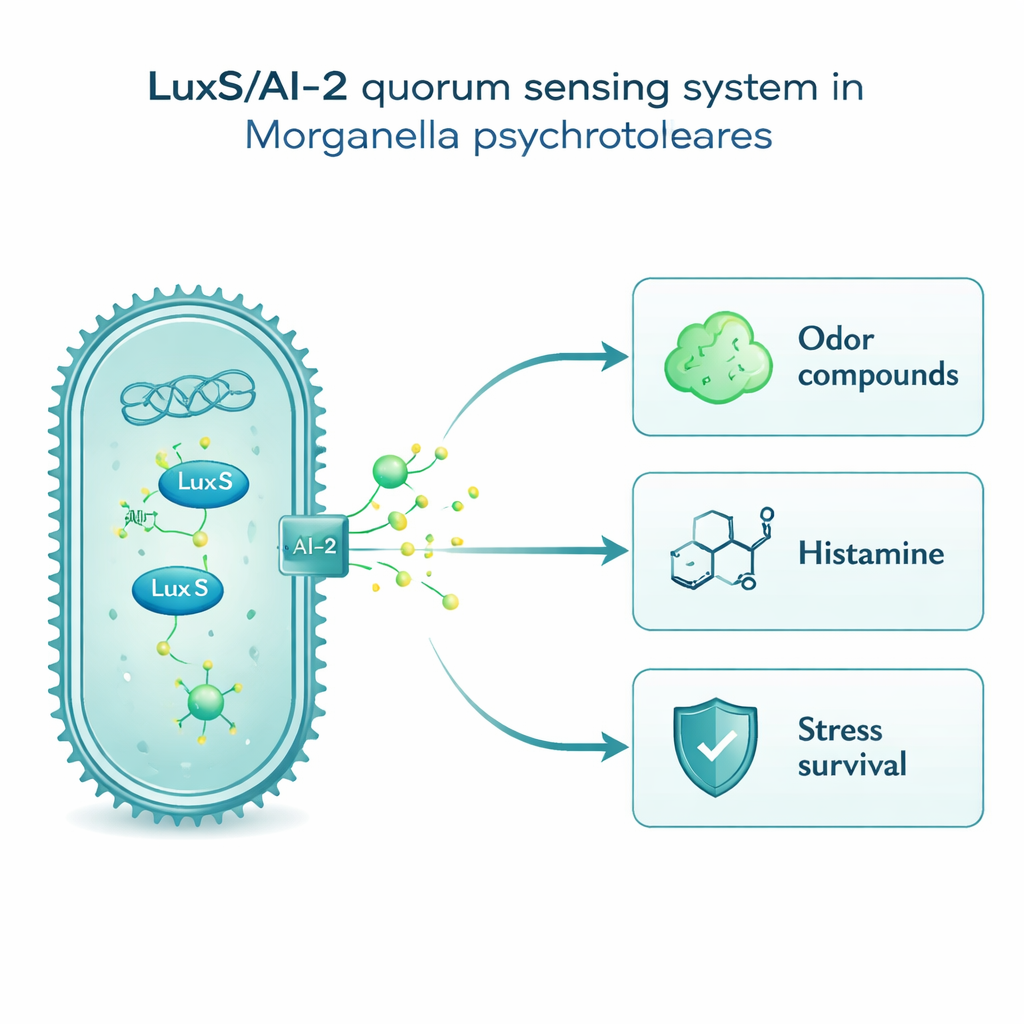
Turning down the signals to slow the rot
When signaling was enhanced, the bacterium produced higher levels of total volatile basic nitrogen (TVB‑N)—a standard measure of fish spoilage—as well as more histamine and putrescine. Gene‑activity tests showed that key spoilage genes involved in amine production, sulfur metabolism, and stress survival were also switched on more strongly. In contrast, when baicalin dampened the signaling system, the overall growth of the bacteria stayed about the same, but TVB‑N and toxic amines rose much more slowly, and the spoilage‑related genes were less active. This shows that quorum sensing in this strain does not mainly control how fast the bacteria multiply; instead, it controls how aggressively they spoil the fish and make hazardous compounds.
What this means for safer, longer‑lasting seafood
For non‑specialists, the key message is that some of the worst seafood spoilers are not just present—they are organized. Morganella psychrotolerans uses chemical messages to coordinate the production of bad smells and toxins once enough cells have gathered on the fish. By reading its genetic blueprint and showing how blocking these signals slows the buildup of spoilage markers, this work points to new strategies for protecting seafood. Rather than relying only on killing bacteria outright, future preservatives might selectively silence their communication, keeping fish safer and fresher for longer without heavy processing or large doses of traditional chemicals.
Citation: Wang, D., Wang, Y., Yu, G. et al. Genomic and phenotypic insights into quorum sensing-mediated spoilage of Morganella psychrotolerans isolated from tuna. npj Sci Food 10, 74 (2026). https://doi.org/10.1038/s41538-026-00761-3
Keywords: seafood spoilage, histamine poisoning, quorum sensing, Morganella psychrotolerans, food safety