Clear Sky Science · en
Tracing origin and cultivation practice of Lithocarpus litseifolius via multi-data fusion and machine learning approaches
Why a new kind of sweet tea matters
Sweet tea made from the leaves of Lithocarpus litseifolius is rapidly gaining popularity in China as both a health drink and a natural low-calorie sweetener. Its leaves contain powerful plant compounds that are hundreds of times sweeter than table sugar yet add almost no calories, and they may help protect the liver and support blood sugar control. As demand soars, however, questions arise: where exactly do these leaves come from, how are they grown, and can shoppers trust that what is on the label matches what is in the cup? This study tackles those questions using a blend of chemistry and artificial intelligence to build a scientific “fingerprint” for sweet tea.
The story behind a special tree
Lithocarpus litseifolius, often called “sweet tea,” has been used for centuries in parts of China as both a drink and a traditional remedy. Modern research shows that its leaves are rich in dihydrochalcones, a family of natural sweeteners such as phloridzin and trilobatin that can taste roughly 300 times sweeter than sugar while contributing only a tiny fraction of the calories. These molecules also have antioxidant and potential anti-diabetic effects, which has led to clinical trials and a boom in products, from teas to candies. Yet the boom has outpaced regulation: farmers across several provinces grow sweet tea under different conditions, labels about where it was grown are not always reliable, and there is little oversight of quality. The result is a fragmented supply chain that makes it hard for consumers and manufacturers to know what they are really getting.
Reading the chemical fingerprint of place
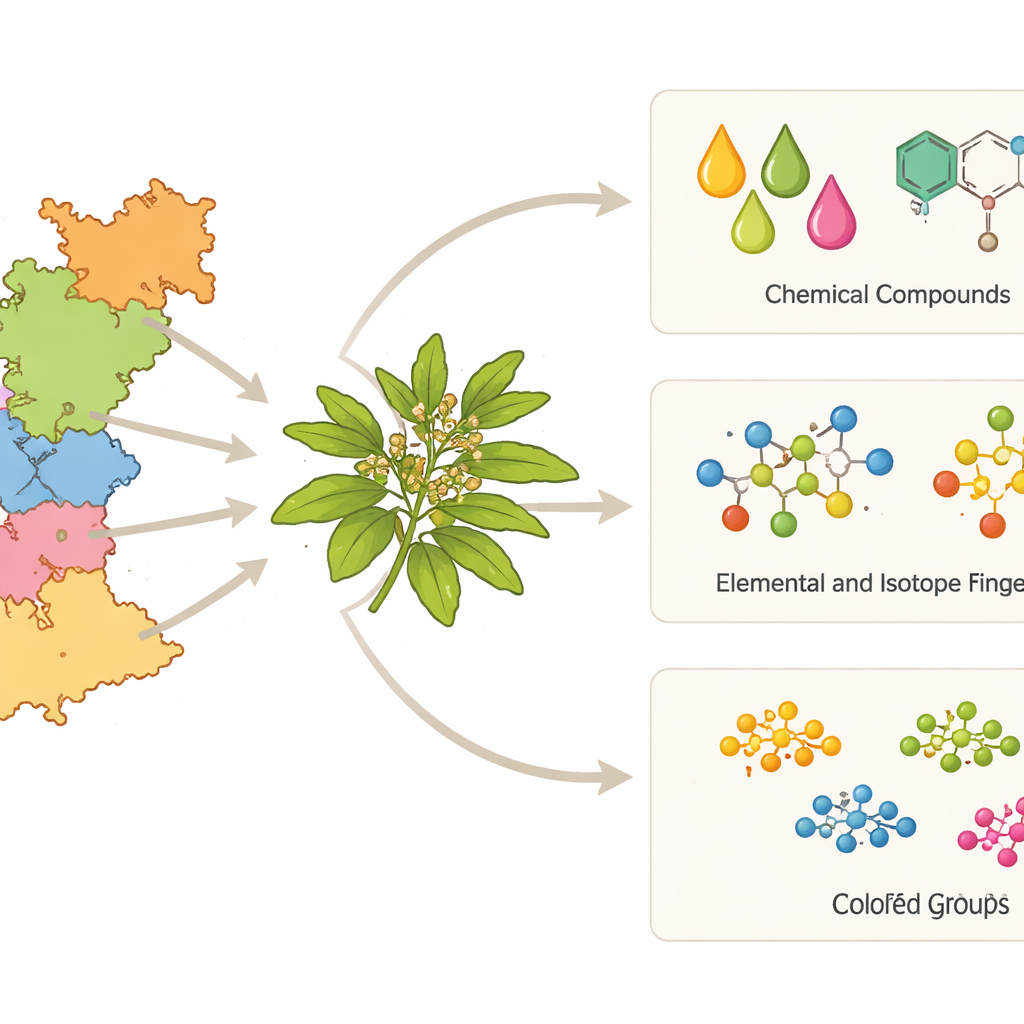
To bring order to this chaos, the researchers collected 163 leaf samples from seven major sweet tea-producing regions in four Chinese provinces. For each sample, they measured three broad types of information. First were 22 functional compounds, including sweet-tasting dihydrochalcones, organic acids, and nutrients that shape flavor and health value. Second were four stable isotope ratios—subtle variations in the forms of elements like carbon, nitrogen, hydrogen, and oxygen that reflect long-term climate, water sources, and farming practices. Third were 49 different elements, from essential nutrients like potassium and magnesium to trace metals and rare earth elements tied to local rocks and soils. Together, these layers create a detailed chemical “passport” for each batch of leaves that is difficult to fake.
How algorithms learn to spot the origin
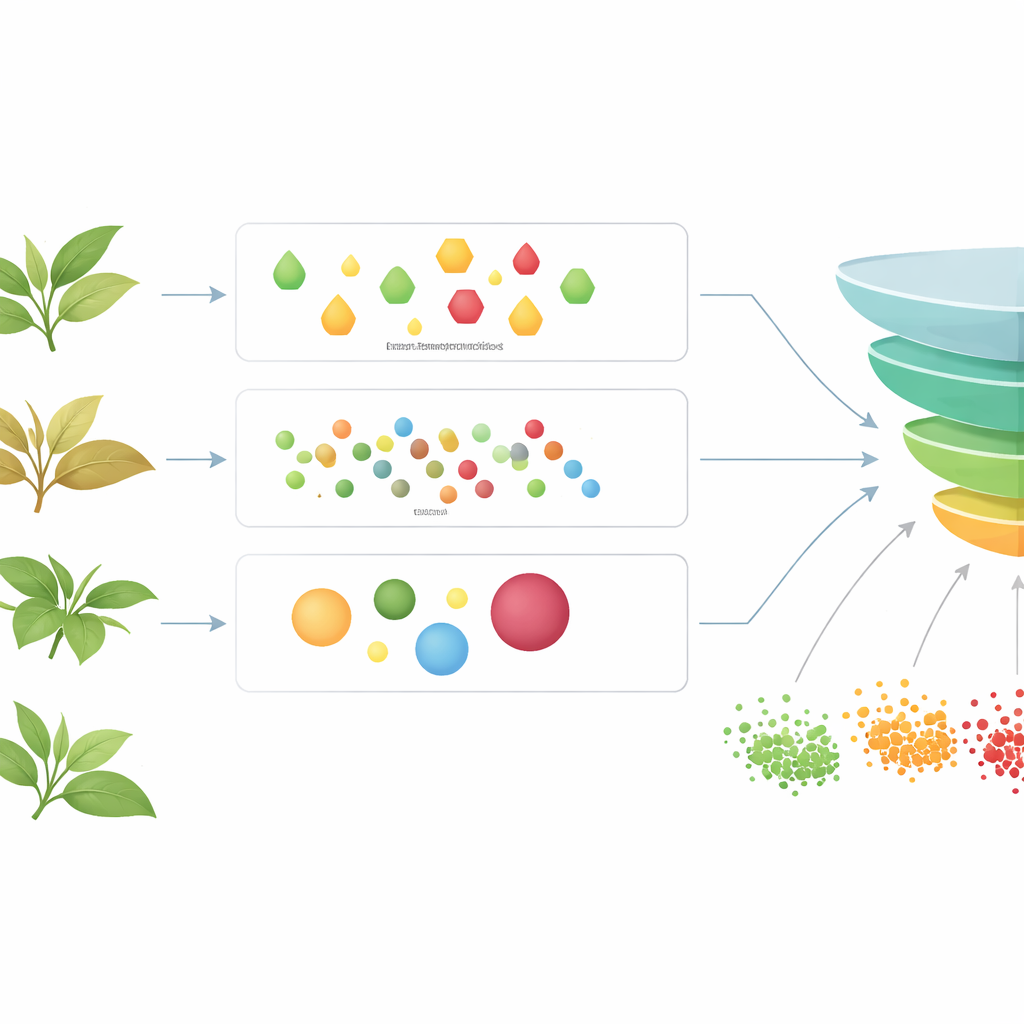
On their own, each type of data could only partially separate regions or farming styles. For example, some wild and cultivated samples from the same province looked quite similar if researchers only considered flavor-related compounds. To overcome this, the team turned to machine learning and data fusion—methods that allow computers to detect complex patterns by combining many clues at once. They tested eight different algorithms and several ways of merging the data, from simply stacking all measurements together to first extracting the most informative features and then mixing model outputs. In the end, they discovered that just six key variables—caffeine, one plant sweetener derivative, the elements rubidium, cerium, and strontium, and the nitrogen isotope signal—were enough for a set of models working together to correctly identify the growing region of every single sample in both training and testing.
What growing conditions leave in the leaves
Beyond tracing origin, the study also asked why sweet tea from different places looks and tastes different. By comparing the six key chemical markers with local climate and geography, the researchers showed that factors such as altitude, rainfall, sunshine, and temperature strongly shape the plant’s chemistry. For instance, colder and drier sites encouraged the buildup of caffeine and certain sweet compounds, likely as part of the plant’s stress responses. Element patterns like strontium and cerium reflected deeper geological history, revealing whether plants grew on red soils derived from silicate rocks or on karst landscapes formed from carbonates. Nitrogen isotope signals changed with how often farmers fertilized, hinting at how cultivation practices can unlock or suppress the plant’s natural capacity to make valuable sweeteners.
From trusted labels to smarter farming
By weaving together plant chemistry, soil and water fingerprints, climate records, and machine learning, this work delivers a highly reliable system for verifying where sweet tea comes from and how it was grown. For everyday drinkers, that means a stronger guarantee that a premium label truly reflects origin and quality rather than clever packaging. For growers and regulators, the key markers and environmental insights point toward cultivation strategies that can boost desirable sweet compounds while keeping heavy metals low and farming more sustainable. In practical terms, the study shows that a handful of well-chosen measurements can protect consumers, reward honest producers, and guide the future development of this unusually sweet tree.
Citation: Tang, Y., Yu, P., Xiong, F. et al. Tracing origin and cultivation practice of Lithocarpus litseifolius via multi-data fusion and machine learning approaches. npj Sci Food 10, 105 (2026). https://doi.org/10.1038/s41538-026-00748-0
Keywords: sweet tea, food traceability, machine learning, plant chemistry, geographical origin