Clear Sky Science · en
Proteogenomic investigation of plant constituents in herbal beverages
Why Your Herbal Tea May Not Be What You Think
Many people turn to herbal teas and plant-based drinks for comfort, culture, or health. We trust that the flowers and leaves listed on the label are really in the cup. This study shows that, especially for complex herbal blends, that trust is not always justified—and that checking what is actually inside these products requires more than one scientific trick.
Plants in the Cup, Trust on the Line
Herbal beverages are made from many different plants and are often sold as gentle remedies for problems like inflammation or stress. The plant Epilobium angustifolium—known as fireweed or Ivan chai—is one such popular ingredient, especially in Russia, with a long history as both food and folk medicine. But when many species are mixed and dried, it becomes easy to swap one plant for another, either by accident or on purpose. Some swaps may simply be dishonest, but others can pose health risks if the unexpected plant has strong effects on blood vessels or blood clotting. This work focuses on commercial fireweed-based teas to see whether what is promised on the package truly matches what is present inside.
Looking with Eyes, Genes, and Proteins
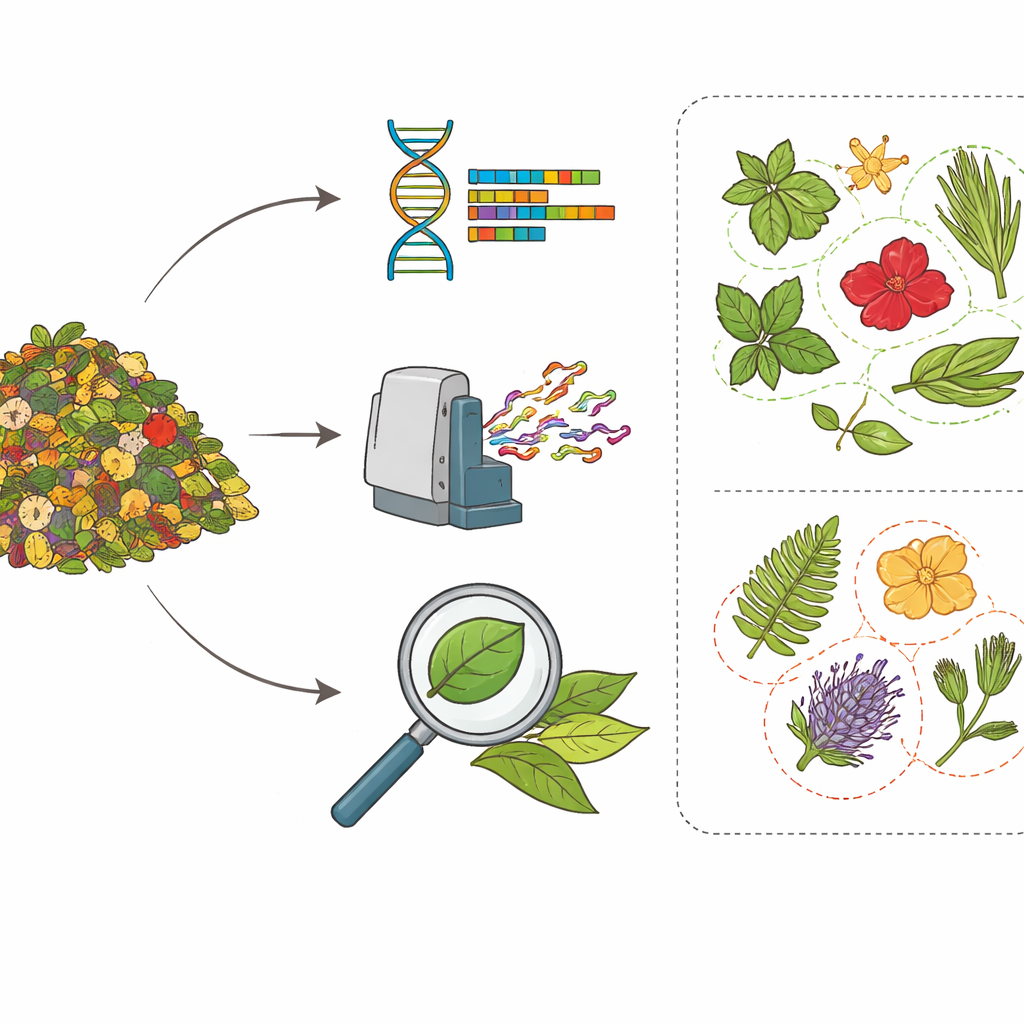
The researchers examined seven fireweed-containing herbal products bought in Russian shops using three very different approaches. First, they used classical botany: sorting and inspecting leaf, stem, flower, and fruit fragments under a microscope to recognize key shapes and surface traits. Second, they read plant DNA “barcodes” from the tea mixtures, using two sequencing platforms that can handle short snippets and long stretches of genetic material. Third, they analyzed plant proteins with high-resolution mass spectrometry, breaking them into tiny peptide pieces and comparing those to large reference collections. Together, these methods formed a “multi-omic” or multimodal view of what plants went into each batch.
When Labels and Reality Clash
The combined analyses showed that two of the seven products contained a major undeclared plant: Lythrum (spiked loosestrife) in place of part of the promised fireweed. In one supposedly single-plant tea, more than half of the material came from Lythrum, with fireweed making up only a small fraction. Another multi-herb blend also contained noticeable Lythrum material. These findings were not based on one type of evidence alone: leaf shapes confirmed by microscopy, DNA barcodes, and species-specific protein fragments all pointed to the same hidden guest. Other undeclared plants appeared at trace levels in some samples, and some listed ingredients—particularly apple, pear, and thyme—were visible under the microscope yet almost invisible to DNA or protein tests, likely because fruit tissues and tiny fractions degrade heavily during drying and processing.
Why One Method Is Not Enough
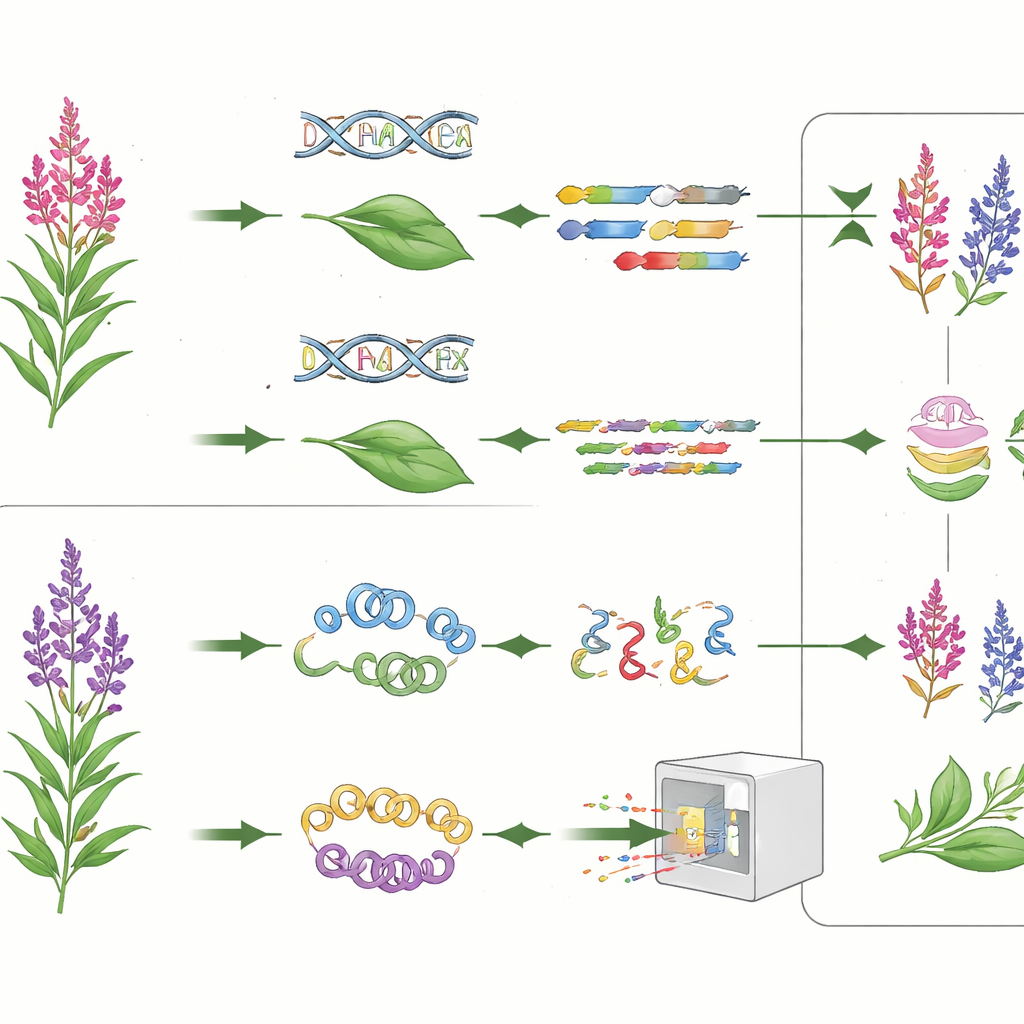
The study revealed that each method on its own can miss important pieces of the puzzle. DNA-based tests can fail when the genetic material has been destroyed by heat or time, or when some species’ barcodes are hard to amplify. Protein-based tests, in turn, suffer when only small amounts of plant material are present or when reference databases lack good coverage for many plant groups. Visual inspection by experts is powerful for large, intact fragments, but breaks down when material is finely ground or when taxonomic knowledge is scarce. By comparing where the three approaches agreed and where they conflicted, the authors showed that only a combination of at least two independent methods can reliably uncover both obvious substitutions and subtle contamination in complex herbal mixtures.
What This Means for Tea Drinkers and Food Safety
For consumers, the most reassuring sample in this study—also the most expensive—contained only fireweed as advertised, while cheaper products showed more inconsistencies and hidden plants. One of the common substitutes, Lythrum, may narrow blood vessels and influence clotting, which could be risky for people with hypertension or circulation problems. The work argues that regulators, manufacturers, and perhaps future AI tools for image analysis should embrace a multimodal testing strategy that combines DNA, proteins, and morphology rather than relying on a single “magic bullet” technology. In simple terms, the conclusion is clear: to be confident that what is printed on a herbal tea label matches what ends up in your mug, science must look at the same mixture through several independent lenses at once.
Citation: Chudinov, I.K., Krinitsina, A.A., Petukhova, D.A. et al. Proteogenomic investigation of plant constituents in herbal beverages. npj Sci Food 10, 99 (2026). https://doi.org/10.1038/s41538-026-00747-1
Keywords: herbal tea adulteration, food authenticity, DNA barcoding, proteomics, Epilobium fireweed