Clear Sky Science · en
In vitro gut microbial catabolism of ferulic acid is characterized by interindividual variability
Why this matters for your morning toast
Whole‑grain bread, coffee, fruits, and vegetables all contain a natural compound called ferulic acid that has been linked to heart, brain, and gut health. But this study shows that what happens to ferulic acid in your body depends strongly on the tiny organisms living in your gut. Understanding these differences may help explain why the same healthy food can benefit some people more than others, and could one day guide truly personalized nutrition advice.
A common ingredient with surprisingly personal effects
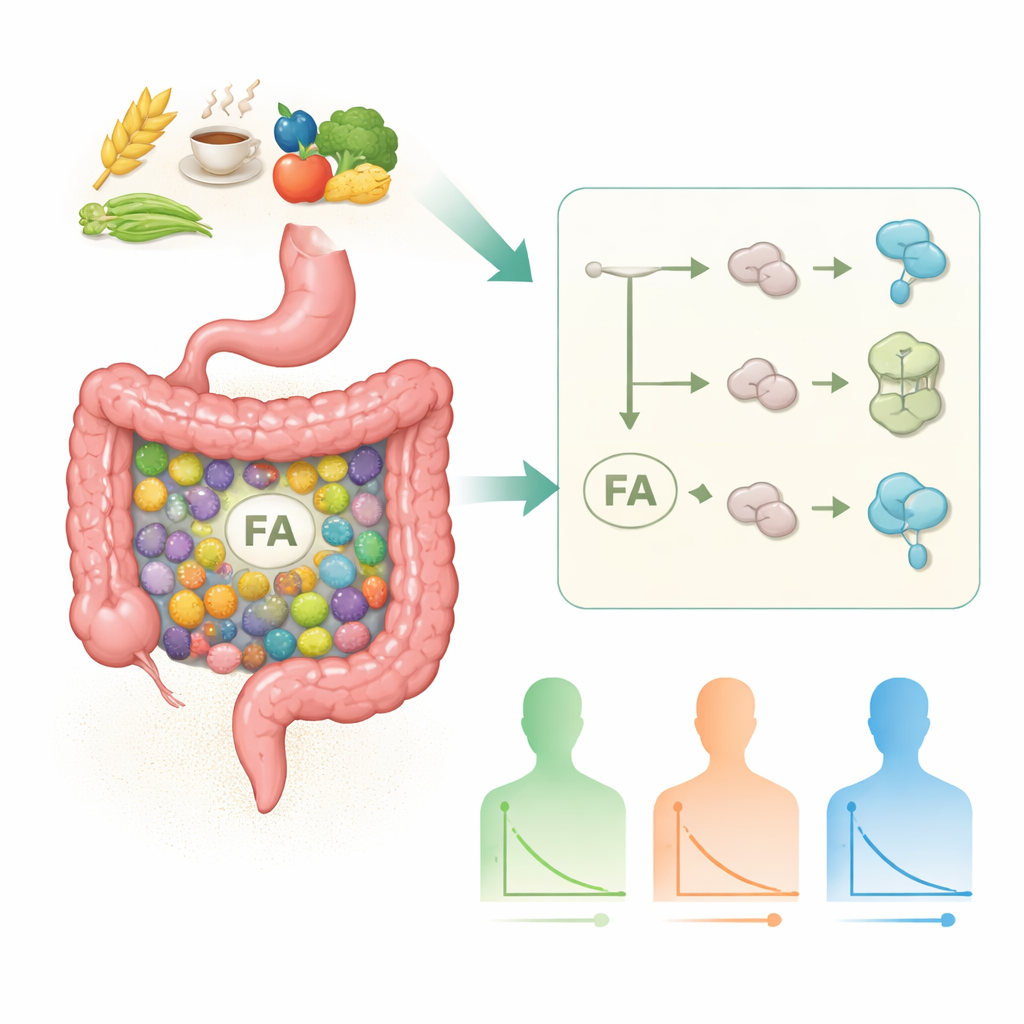
Ferulic acid is one of the most abundant plant chemicals in the Western diet, especially in wheat and other cereals, and to a lesser extent in coffee, fruits, and vegetables. Only a small portion is absorbed in the upper gut. Much of it travels to the large intestine, where trillions of microbes break it down into a family of smaller molecules. These microbial products can travel through the body and influence inflammation, blood vessels, the brain, and the gut barrier. Earlier work suggested that people fall into “metabotypes” for some plant chemicals, meaning they consistently produce different mixes of breakdown products. For ferulic acid, however, such distinct groups had not been clearly described.
Following ferulic acid through the gut
The researchers collected stool samples from 18 healthy volunteers aged 12 to 80 years and used them to seed tiny, oxygen‑free reactors that mimic conditions in the large intestine. They added a diet‑relevant dose of ferulic acid and tracked how it and its breakdown products changed over 24 hours using nuclear magnetic resonance (NMR), a technique that measures molecules in a sample, and DNA sequencing to profile the microbes present. Across all individuals, ferulic acid followed a broadly similar route: it was first converted into an intermediate called dihydroferulic acid and then into a series of related compounds. Some of these were more antioxidant and anti‑inflammatory, while later products tended to be less chemically complex but could strengthen the gut barrier or affect microbes themselves.
Shared pathway, different speeds and destinations
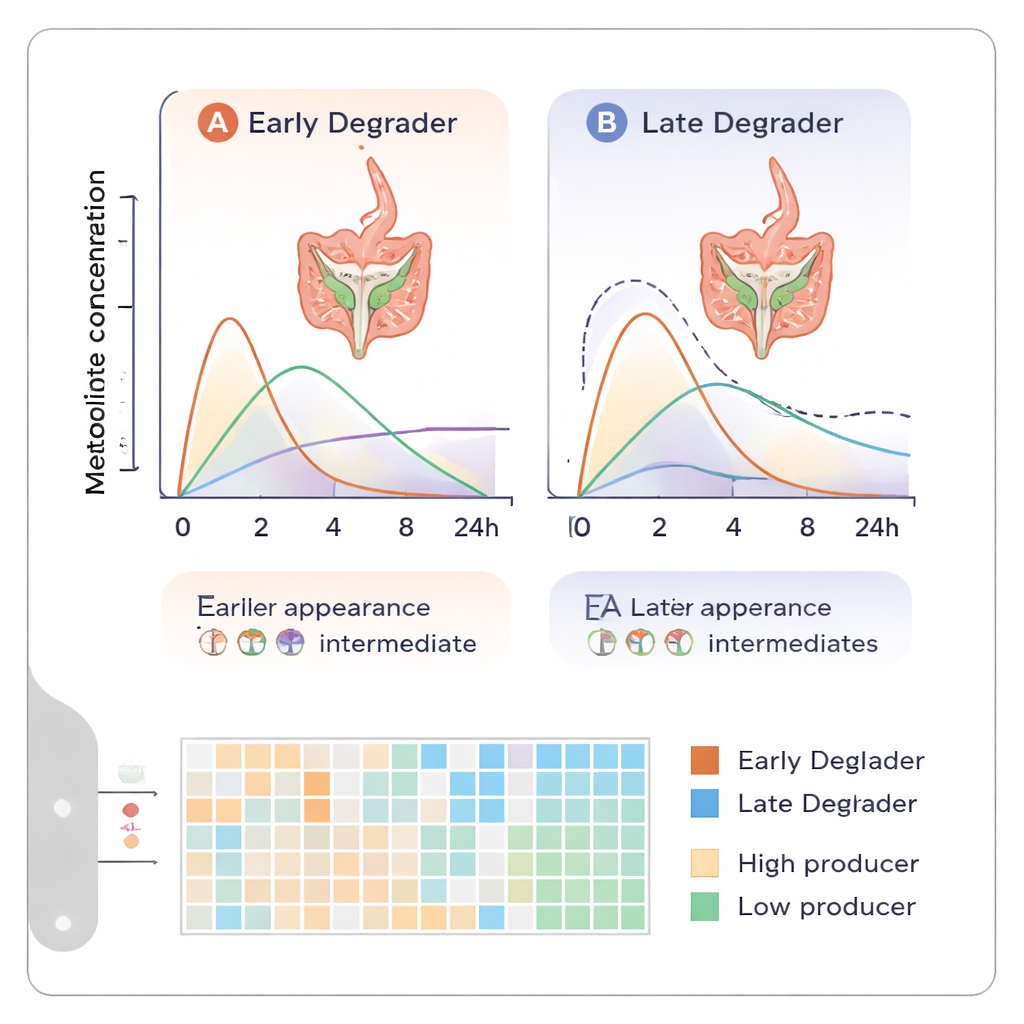
Although everyone produced the same core set of ferulic‑acid‑derived molecules, they did so at very different speeds and in different proportions. Ferulic acid itself disappeared rapidly in some samples (within about two hours) but lingered much longer in others. One late‑forming product, 3‑phenylpropanoic acid, often became the dominant compound after a day, while important intermediates such as 3,4‑dihydroxyphenylpropanoic acid appeared early in some donors and much later in others, or were further transformed. These timing and quantity patterns formed five “metabolic signatures,” such as early or late ferulic‑acid degraders, early or late producers of specific intermediates, and people who made relatively more of certain end products. Older donors were more likely to break down ferulic acid slowly, indicating that age can influence how quickly the gut community processes this common food component.
It’s not who is there, but what they are doing
One might expect that people with different metabolic signatures would harbor very different gut bacteria. Instead, the overall mix of major microbial groups looked broadly similar between the signatures, and measures of microbial diversity changed only in limited ways. What did differ strongly was the chemical “fingerprint” of microbial activity. For example, fast ferulic‑acid degraders showed higher levels of certain fatty acids that come from breaking down proteins, and they used up sugars and amino acids in the growth medium more quickly. People who produced one intermediate earlier also tended to consume the amino acid tryptophan more actively, hinting at shared microbial pathways. Another comparison linked higher levels of a later end product with changes in fumarate, a central energy‑related molecule for anaerobic bacteria.
What this could mean for personalized nutrition
To a non‑specialist, the key message is that your gut microbes process the same ferulic acid from whole grains and other plant foods in broadly similar ways, but at different speeds and with different emphasis on particular by‑products. These differences seem to reflect how active and metabolically busy your microbial community is, rather than which broad species it contains. Because some breakdown products are more strongly linked to antioxidant and anti‑inflammatory effects than others, such variation may help explain why whole‑grain‑rich diets do not benefit everyone equally. The study was done in lab conditions rather than in people, but it lays groundwork for future human studies and, eventually, for tailoring dietary advice so that individuals can get the most health benefit from the ferulic acid in everyday foods.
Citation: Tomisova, K., Mascellani Bergo, A., Jarosova, V. et al. In vitro gut microbial catabolism of ferulic acid is characterized by interindividual variability. npj Sci Food 10, 71 (2026). https://doi.org/10.1038/s41538-026-00746-2
Keywords: ferulic acid, gut microbiome, whole grains, polyphenol metabolism, personalized nutrition