Clear Sky Science · en
Strategies for enhancing protein solubility: methods, applications, and prospects
Why this matters to everyday food and medicine
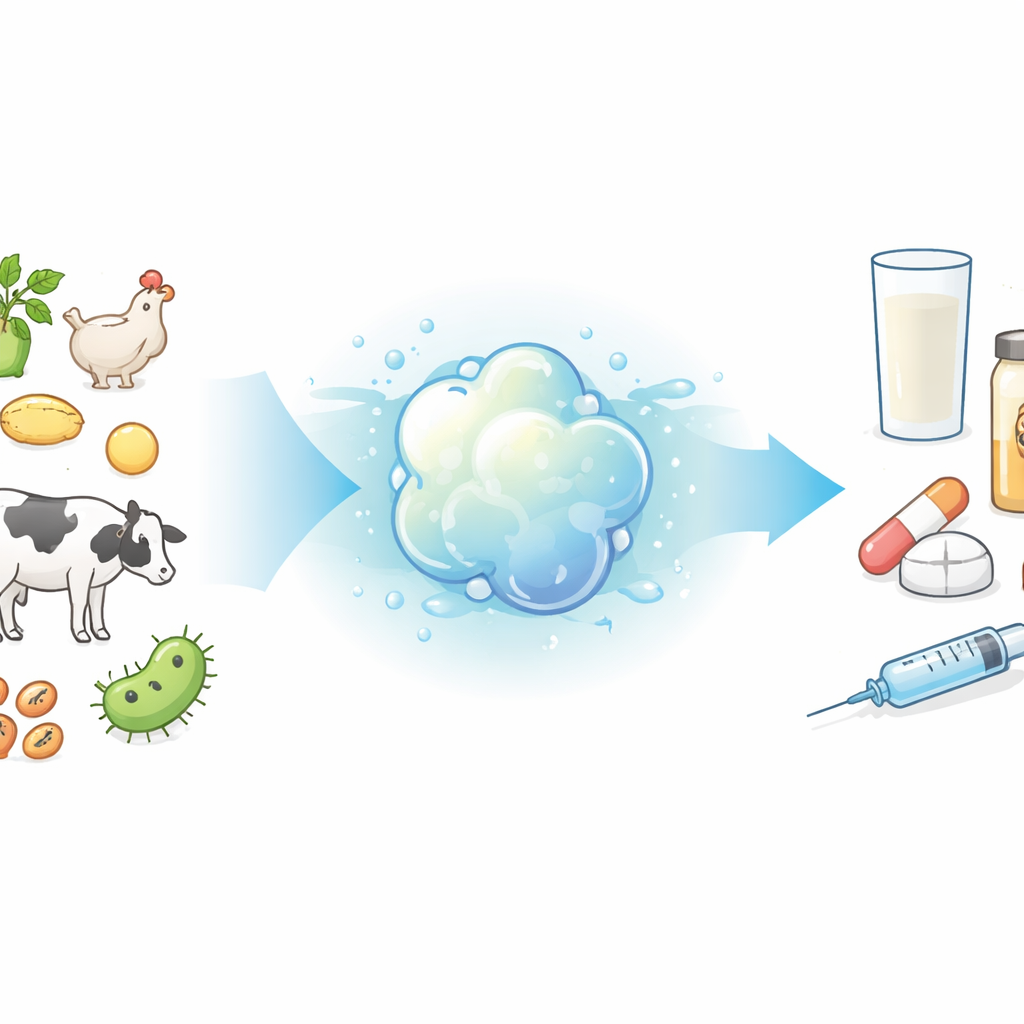
From plant-based burgers to protein shakes and life-saving antibody drugs, many modern products depend on proteins that must dissolve smoothly in water. When proteins clump instead of dissolving, foods can feel gritty, drinks separate, and medicines lose safety or potency. This review article explains what controls whether proteins stay dissolved, the many ways scientists can tune that behavior, and how new artificial intelligence (AI) tools are turning what used to be trial‑and‑error into a more predictable science.
What makes a protein easy or hard to dissolve
Whether a protein behaves like sugar (readily dissolving) or like wet sand (clumping and sinking) is rooted in its molecular makeup. The mix and placement of its building blocks determine which parts of the protein are water-loving and which are water-fearing, as well as how much electric charge is exposed on its surface. If more charged and water-loving groups face outward, water can surround and stabilize the protein. The overall charge of the protein, which changes with acidity (pH), also matters: at certain pH values where positive and negative charges balance out, proteins tend to attract each other and fall out of solution. Thus, solubility is not a single fixed property, but the outcome of structure, charge, and how the protein is folded.
How the surrounding conditions tip the balance
Real foods and drug formulations add layers of complexity beyond the protein itself. Acidity, salt content, and temperature constantly push proteins toward unfolding, refolding, or sticking together. Moving the pH away from the point of electrical balance often increases solubility, while strong salt solutions can either help proteins separate or force them to clump, depending on concentration and salt type. Gentle warming can briefly open up a protein and make it more accessible to water, yet harsher heating can create permanent links between protein molecules, forming stubborn aggregates. Because these factors interact, solubility becomes a dynamic knob that technologists can tune, but only if they understand the trade‑offs.
Hands-on ways to make stubborn proteins behave
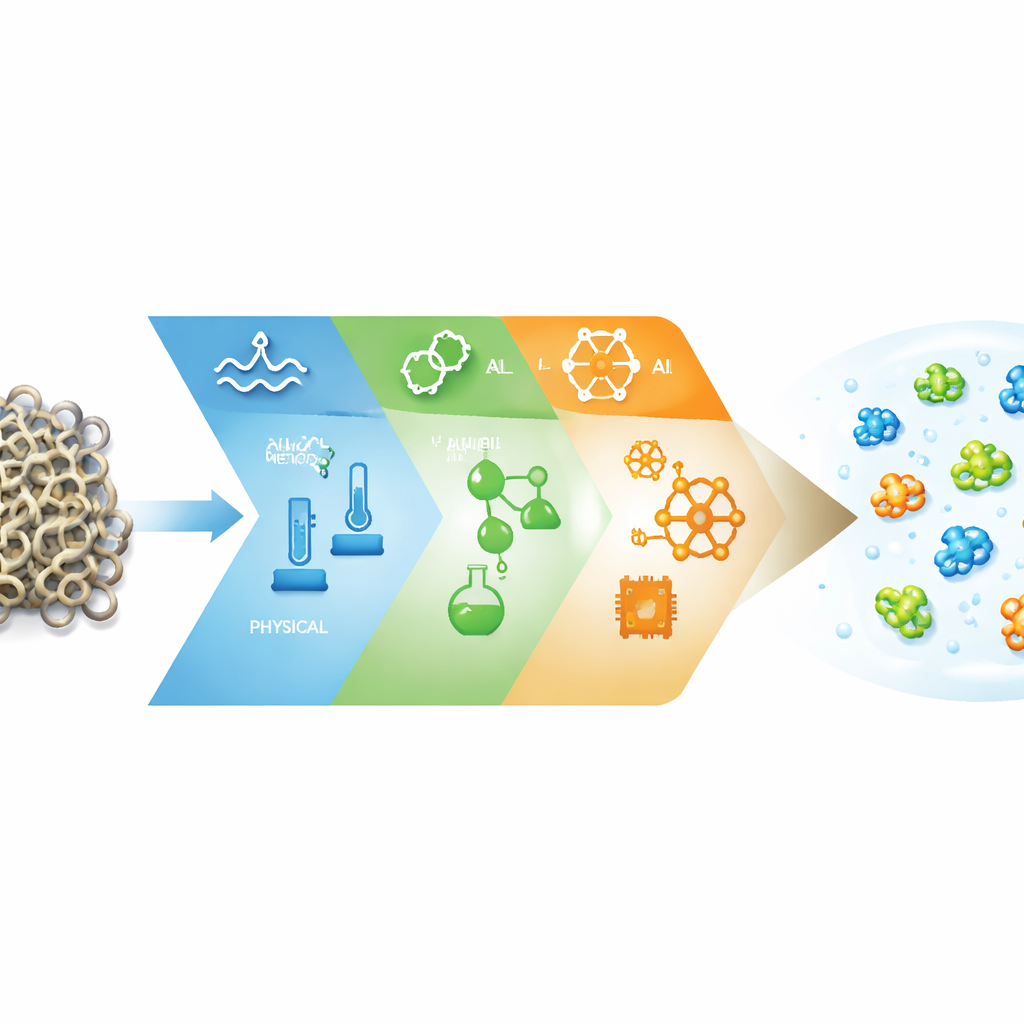
To deal with poorly soluble proteins, researchers have built a toolkit of physical, chemical, and biological treatments. Physical approaches such as ultrasound, high-speed shearing, and very high pressure use intense mechanical forces to pry apart protein clusters or partially unfold them, often making them more dispersible. Chemical methods attach new groups—such as phosphate, sugar, or small acidic fragments—to the protein surface, adding charge or water-loving features that encourage dissolution. Biological routes use enzymes to cut proteins into smaller pieces or adjust their side chains, and genetic engineering to redesign protein sequences so they fold correctly and avoid forming clumps inside living cells. Combining methods, for example pairing high pressure with enzymatic cutting, can give larger gains with less processing time and energy.
How artificial intelligence reshapes protein design
Despite these many tricks, improving solubility has long relied on guesswork. The review highlights how AI is changing that. Modern programs can predict the three-dimensional shapes of proteins from their sequences and pinpoint local patches most likely to stick together. Large datasets that record how thousands of proteins behave in different systems feed machine‑learning models that link sequence patterns to solubility. These tools can score proposed protein variants, suggest precise mutations to remove "sticky" regions, and even generate new, more soluble designs, especially for industrial enzymes and therapeutic antibodies. At the same time, the article notes that most existing models are trained in laboratory expression systems and do not yet fully capture the complex environments of real foods or concentrated drug solutions.
What this means for future foods and therapies
The authors conclude that mastering protein solubility sits at the crossroads of basic science and practical innovation. By clarifying how molecular features and processing conditions work together, and by cataloging the strengths and limits of current modification methods, the review lays out a roadmap for more reliable control. The next leap, they argue, will come from pairing greener processing technologies with AI models that are grounded in physical chemistry and fed with richer, better‑labeled data. For the public, these advances promise smoother high‑protein drinks, more appealing plant-based foods, and safer, longer‑lasting protein medicines—all built on proteins that dissolve when and where we want them to.
Citation: Cao, R., Wang, W., Zhang, Z. et al. Strategies for enhancing protein solubility: methods, applications, and prospects. npj Sci Food 10, 86 (2026). https://doi.org/10.1038/s41538-026-00743-5
Keywords: protein solubility, food proteins, protein modification, artificial intelligence, protein engineering