Clear Sky Science · en
Mapping gas permeability of sustainable packaging materials to link food barrier needs by clustering algorithms
Why Food Packaging and Freshness Matter
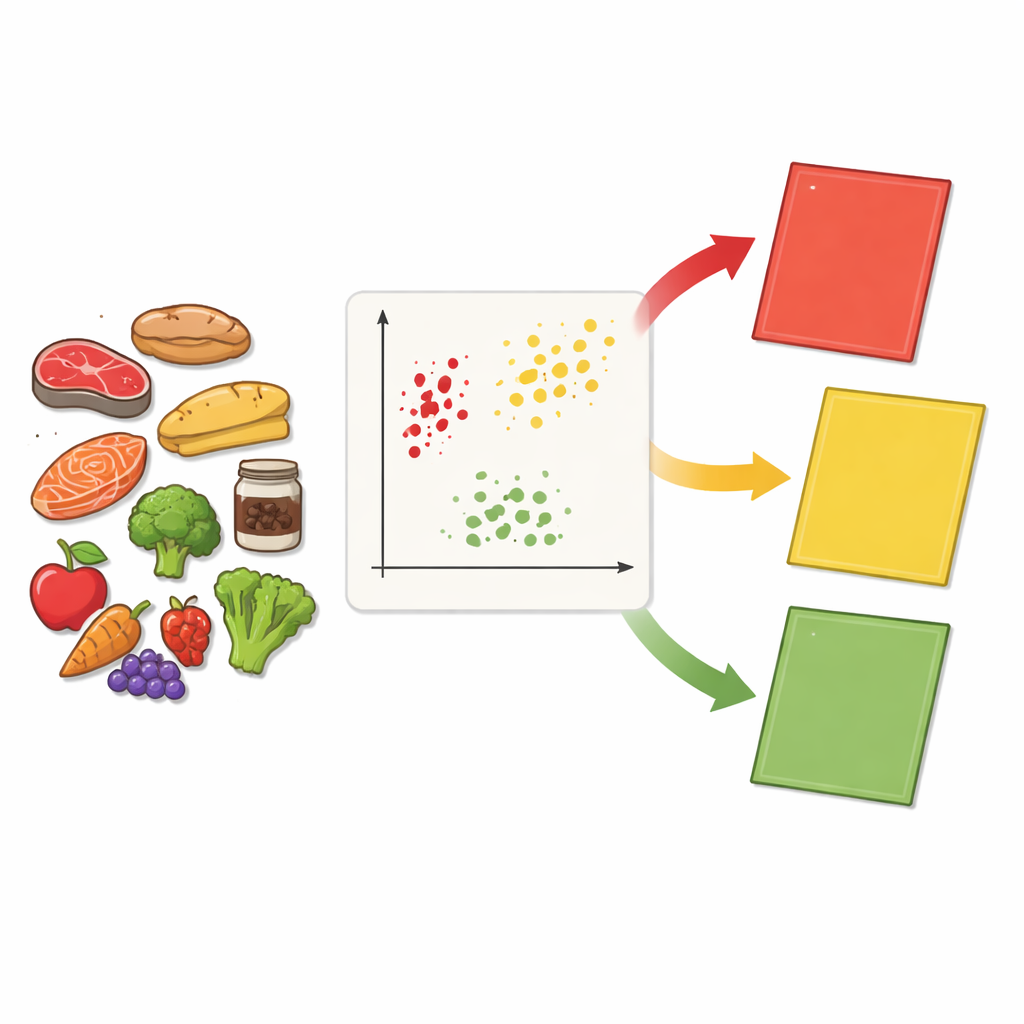
Every time you open a bag of salad or a packet of coffee, invisible gases are quietly deciding how long that food will stay good. Packaging is meant to keep oxygen and moisture at just the right levels so food remains safe and tasty. But most of today’s high‑performing packages are made from plastics that are hard to recycle and build up in the environment. This study explores whether a data‑driven method—clustering—can help sort through emerging “greener” packaging materials and see which ones might one day protect food as well as conventional plastics do.
The Problem with Going Green on Packaging
Conventional plastic packaging is remarkably good at blocking oxygen and water vapor, which slows spoilage and cuts food waste. Sustainable alternatives made from plants or biodegradable polymers often let too much gas through, especially under humid conditions. That can shorten shelf life or compromise safety. At the same time, companies, regulators, and consumers are pushing hard to move away from single‑use plastics. Yet there is no simple tool that tells a food producer, for example, which eco‑friendly film might suit coffee, cheese, or fresh berries, each of which needs very different amounts of protection from air and moisture.
Turning Scattered Studies into a Map
The authors pulled together data from 49 scientific papers published between 2000 and 2016 that reported how easily oxygen and water vapor pass through various packaging films. These included gelatin‑based nanocomposites, common plastics like polyethylene, biobased plastic PLA, and edible blends made from carrot purée and starch or cellulose. Because the studies used many different units and testing conditions, the team first converted everything into common measures and standardized the results to typical test temperatures and humidity. They then focused on two numbers for each material: how fast oxygen gets through and how fast water vapor gets through, expressed on a logarithmic scale so that films with very different properties could be compared fairly.
Letting Algorithms Find Natural Groups
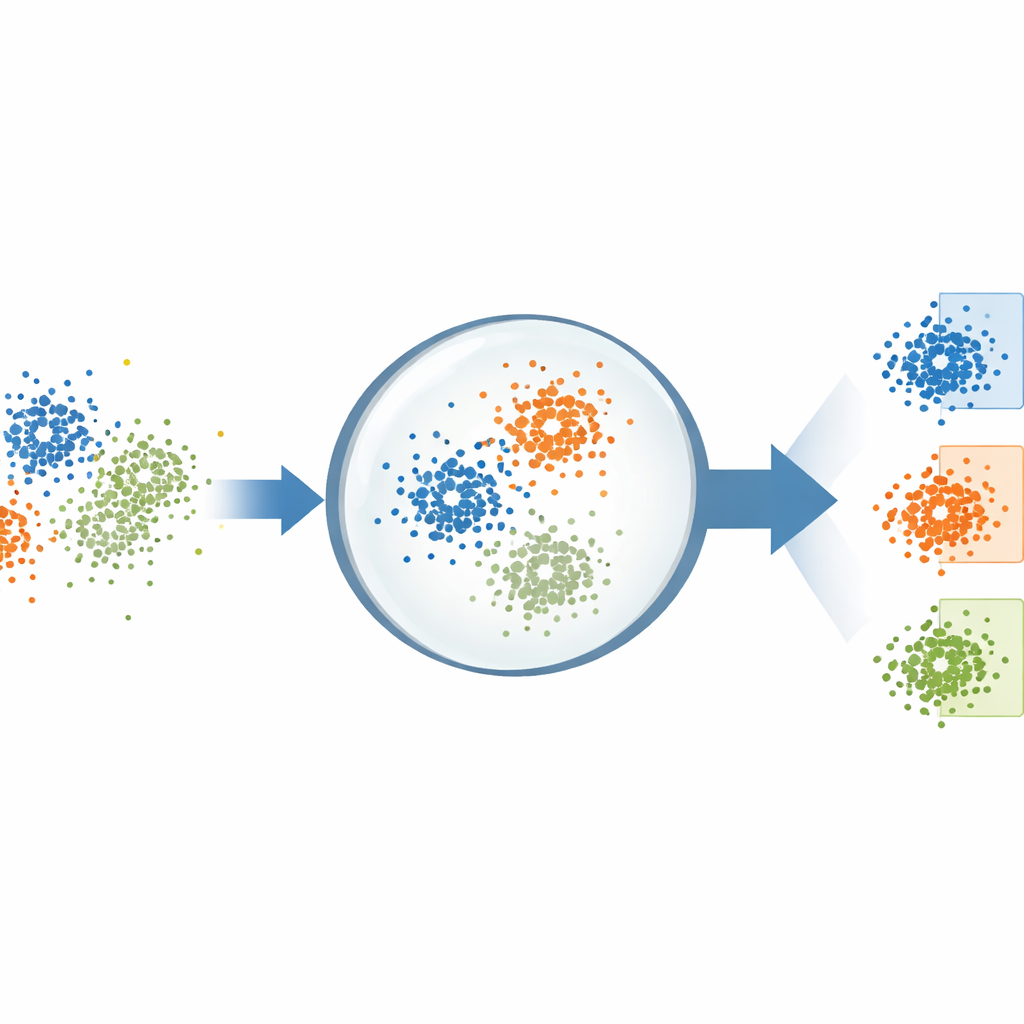
To see whether materials with similar gas‑blocking behavior naturally fall into groups, the researchers applied three clustering methods: K‑Means, Gaussian Mixture Models, and a density‑based approach called DBSCAN. These algorithms look for patterns in the two‑dimensional cloud of data points (oxygen versus water vapor), without being told in advance how many groups to expect. After standardizing the data, DBSCAN performed best according to two common quality measures, forming clear clusters while also identifying outliers that did not fit neatly anywhere. This suggests that the permeability landscape of sustainable films is not made of neat, round clumps, but of uneven regions of dense and sparse data—exactly the kind of pattern density‑based methods are designed to handle.
What the Clusters Reveal About Today’s Materials
DBSCAN sorted the films into three main clusters. One group, dominated by fish‑gelatin films reinforced with tiny clay particles, showed very low oxygen passage but only moderate resistance to water vapor—resembling the oxygen protection often needed for products like cheese, at least in broad terms. A second, smaller group contained both traditional plastics (LDPE and HDPE) and the bioplastic PLA, with high oxygen passage and medium water‑vapor passage, a profile often found in packaging for fruits, vegetables, and baked goods that need to “breathe.” The largest cluster consisted of carrot‑based and other polysaccharide‑rich edible films that let very little oxygen through but an enormous amount of moisture. These are far too permeable to water vapor for most current uses, but they illustrate how certain biobased materials form a separate family of behavior.
Limits of the Current Map and the Road Ahead
The authors stress that this is only a proof of concept, not a ready‑made design tool. The dataset is relatively small, biased toward a few material types, and often missing details such as film thickness or exact humidity, which had to be assumed. Those assumptions, along with uneven sample sizes across materials, mean the exact position of any cluster could shift as more and better data become available. Still, the work shows that clustering can organize scattered permeability results into a structured picture and hint at which sustainable materials might one day play similar roles to today’s plastics, especially when enhanced with nanofillers, coatings, or active ingredients.
What This Means for Future Food Packaging
For non‑experts, the key message is that smarter data analysis can help guide the transition to greener packaging without sacrificing food quality. This study shows that by mapping how different films let oxygen and moisture through, algorithms can begin to group materials in ways that mirror the diverse needs of foods—from coffee that must stay dry and oxygen‑free to produce that needs to breathe. With larger, more carefully reported datasets that also include strength, recyclability, and safety, the same approach could evolve into a practical decision‑support tool for food companies. In the long run, such tools could help match the right sustainable packaging to the right food, reducing both plastic waste and food waste together.
Citation: Yeh, T.Y., Turan, D. Mapping gas permeability of sustainable packaging materials to link food barrier needs by clustering algorithms. npj Sci Food 10, 96 (2026). https://doi.org/10.1038/s41538-026-00741-7
Keywords: sustainable food packaging, gas permeability, clustering algorithms, biodegradable materials, nanocomposite films