Clear Sky Science · en
Adopting omics-based approaches to facilitate the establishment of microbial consortia to generate reproducible fermented foods with desirable properties
Why the Future of Fermented Foods Matters
Yogurt, sourdough bread, kimchi, kombucha, cheese, and many other favorites owe their flavor and health benefits to tiny living communities of microbes. Yet traditional fermentations can be unpredictable: a batch might turn out delicious one week and disappointing the next. This article explains how a new wave of biological “big data” tools can be used to design carefully balanced microbial teams that deliver fermented foods with consistent taste, safety, and nutritional value—opening the door to more reliable, customizable, and potentially healthier everyday foods.
From Wild Ferments to Well-Trained Microbial Teams
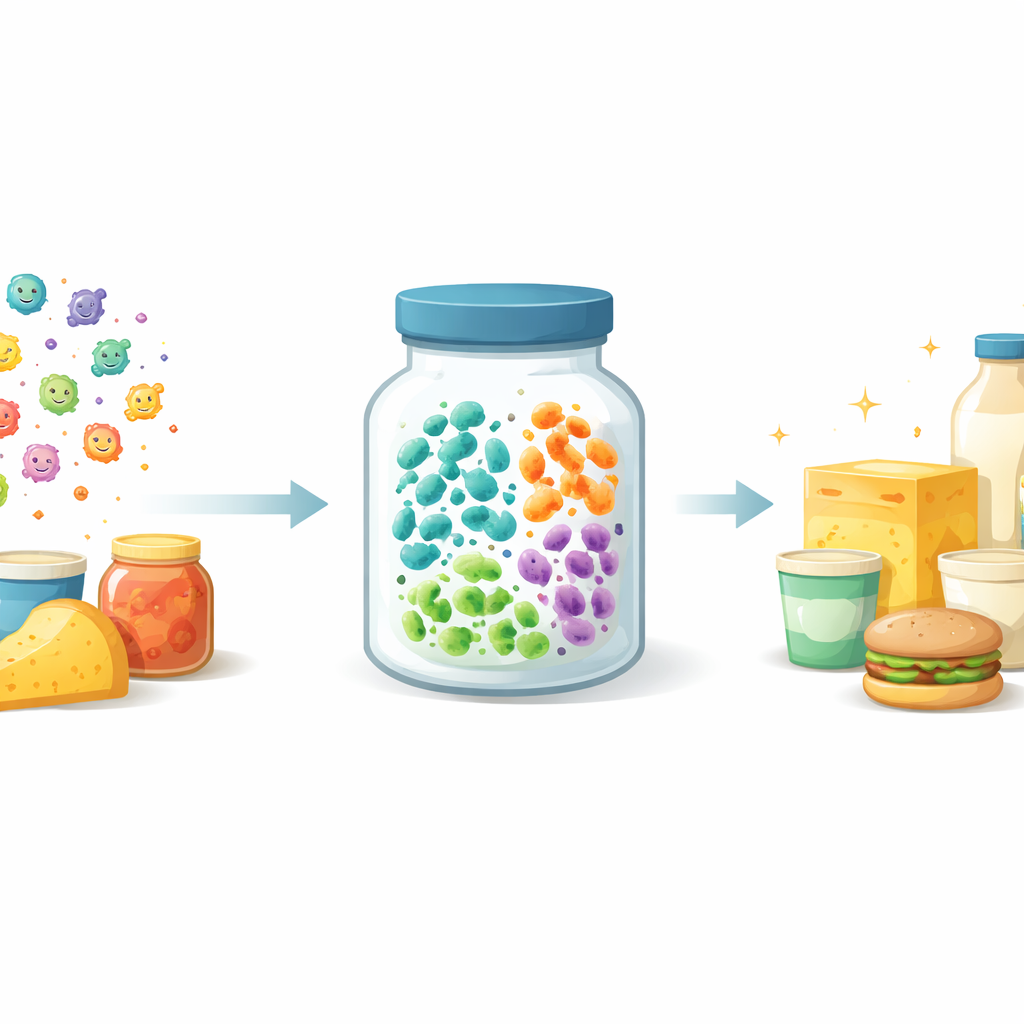
For centuries, people have relied on wild microbes that naturally cling to grains, milk, vegetables, or equipment to carry out fermentation. Methods like spontaneous fermentation and backslopping (reusing a bit of a previous batch) work well enough but depend on undefined, shifting communities of bacteria and yeasts. That variability can lead to off-flavors, uneven quality, and occasional safety concerns. To tame this unpredictability, scientists now talk about “defined microbial consortia”: deliberately assembled mixtures of known strains chosen to carry out specific jobs, such as producing a certain sourness, aroma, or health-promoting compound. The challenge is to know which microbes to pick and how to combine them so they work together reliably rather than at random.
Using Biological Big Data to Map Food Microbiomes
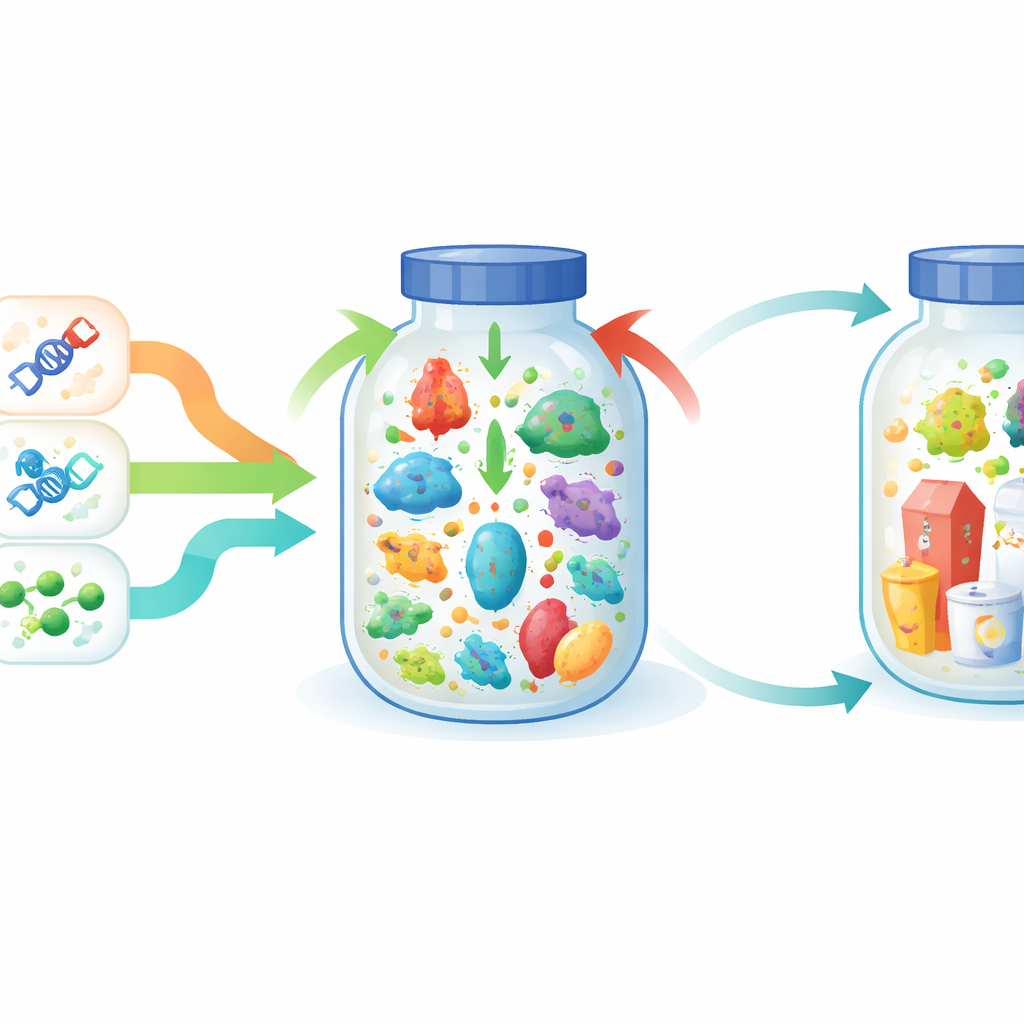
The review describes how a family of powerful techniques, often called “omics,” is transforming our understanding of fermented foods. Metagenomics reads all the DNA in a sample, revealing which microbes are present and what they could, in principle, do. Metatranscriptomics looks at RNA to see which genes are actively switched on during fermentation. Metaproteomics surveys the proteins that microbes actually produce, while metabolomics tracks the small molecules—acids, aromas, vitamins, and other end products—that shape flavor and nutrition. Finally, culturomics uses many culture conditions to isolate and grow individual strains suggested by these datasets. By combining these layers, researchers can move from simply listing species to building a mechanistic picture of who does what, when, and in partnership with whom.
Separating the Essential Players from the Flavor Specialists
A key idea in the article is that a well-designed microbial community for fermentation has two parts. The “core microbiome” is a minimal set of microbes that reliably drive the main transformations: turning sugars into lactic acid in yogurt or kimchi, producing alcohol and bubbles in bread and beer, making acetic acid in vinegar, or breaking down proteins in traditional soybean or fish ferments. These core players are often lactic acid bacteria, acetic acid bacteria, certain yeasts, and Bacillus species. Around them sits a “supplementary microbiome”: additional strains that are not strictly required to finish fermentation but can fine-tune the outcome. They may deepen fruity or floral aromas, shift the balance between different acids to smooth sharpness, speed up the process, boost levels of vitamins or bioactive compounds, or stabilize the community under changing conditions.
A Stepwise Cycle for Building Better Ferments
To actually engineer these consortia, the authors propose an iterative “Assembly–Assessment–Redesign” cycle. First, data from multiple omics layers are used to select a draft core and supplementary set of microbes that appear complementary in their metabolism and interactions. Second, these communities are tested in controlled fermentations, where researchers monitor how quickly they acidify or consume sugars, what flavor and aroma compounds they produce, how stable the community remains, and how the final product tastes and keeps. Third, the community is refined by adjusting the ratios of strains, dropping those that compete or cause off-notes, or adding new strains that fill missing roles. Advanced tools such as microfluidic systems and machine learning models can accelerate this loop, helping predict which combinations are most likely to succeed before running large experiments.
Balancing Tradition, Regulation, and Innovation
While this vision of precision-designed fermented foods is compelling, the article notes that real-world adoption will face practical and regulatory hurdles. Many iconic foods are protected by rules that insist on traditional methods and local microbes, limiting the use of tailor-made starter cultures. For now, multi-omics tools may be most useful for deeply characterizing existing fermentations, keeping them consistent, and authenticating products rather than replacing their native microbes. Over time, however, the integration of omics, careful community design, and data-driven optimization should enable a new generation of fermented foods that preserve cultural character while offering more dependable quality, customizable flavors, and targeted health benefits.
Citation: Zhang, E., Claesson, M.J. & Cotter, P.D. Adopting omics-based approaches to facilitate the establishment of microbial consortia to generate reproducible fermented foods with desirable properties. npj Sci Food 10, 90 (2026). https://doi.org/10.1038/s41538-026-00740-8
Keywords: fermented foods, microbiome, multi-omics, starter cultures, food fermentation