Clear Sky Science · en
Key sweet-aroma compounds and formation mechanisms in Mengding bud yellow tea using HS-SPME-GC-MS and sensomics
A Cup of Tea With a Story
Many tea drinkers know that yellow tea tastes smoother and sweeter than green tea, but few know why. This study dives inside a famous Chinese tea called Mengding Bud Yellow Tea to uncover how its processing turns fresh, grassy leaves into a drink with a gentle sweet and umami aroma. By tracking both what trained tasters perceive and what molecules form inside the leaves, the researchers reveal how careful heating and a special “yellowing” step choreograph a quiet chemical makeover in every bud.
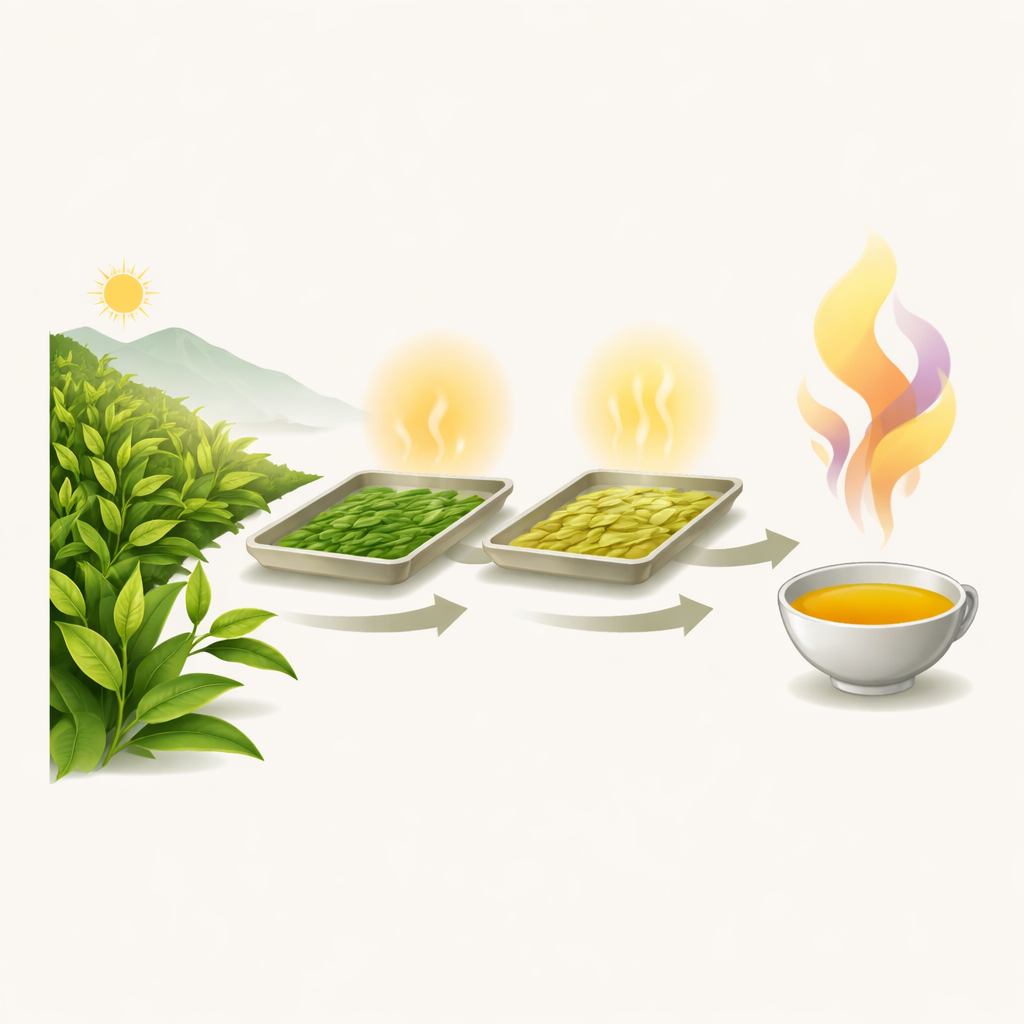
From Mountain Bud to Golden Brew
Mengding Bud Yellow Tea comes from the misty Mengding Mountains in Sichuan, and has been prized for centuries as a tribute tea. Unlike green tea, which is kept bright and brisk, this yellow tea follows a longer route: fresh buds are spread, heated to stop strong leaf enzymes, repeatedly wrapped and warmed in a humid environment, then gently fried and dried. The team collected tea at eight key stops along this path—from raw leaf to finished product—and had trained tasters score aroma and taste while instruments measured the changing mix of aroma compounds.
How Flavor Shifts During Crafting
The sensory panel found that as processing went on, the overall aroma and taste scores climbed steadily. Early on, the leaves smelled clean and grassy but not especially sweet. A first heating step stripped away much of the raw green odor and added light roasted notes. The real turning point arrived during the three rounds of “yellowing,” when warm, slightly humid conditions allowed a slow transformation: grassy notes faded, while sweetness, tenderness, and a mellow mouthfeel grew stronger. By the time the tea was finished, sweet, fresh, and gently flowery-fruity impressions dominated, matching what drinkers recognize as the signature style of this tea.
Following the Scent Molecules
To link these sensory changes to chemistry, the researchers used advanced techniques to identify 89 different volatile compounds, the small molecules that rise to the nose. Early in processing, alcohols typical of fresh, green leaves were most abundant. Heating and yellowing then reshuffled this mixture: some alcohols dropped, while other groups, such as alkenes and certain aldehydes and esters, increased. Statistical analyses showed that each processing step left a clear fingerprint in the aroma profile, with fixing (the first intense heating) and yellowing causing the largest shifts.
The Hidden Reservoirs of Sweet Aroma
Not all important aroma compounds are present in free form at the start; many are locked up as sugar-attached “reservoirs” inside the leaf. The team measured ten of these bound forms and watched how their levels rose or fell during processing. They found that certain sugar-linked versions of floral and fruity compounds—especially those related to linalool and geraniol—built up during fixing and then changed again during yellowing. This pattern supports the idea that these reservoirs are slowly broken open under warm, humid conditions, releasing key sweet-smelling molecules right when the tea’s character is being shaped.
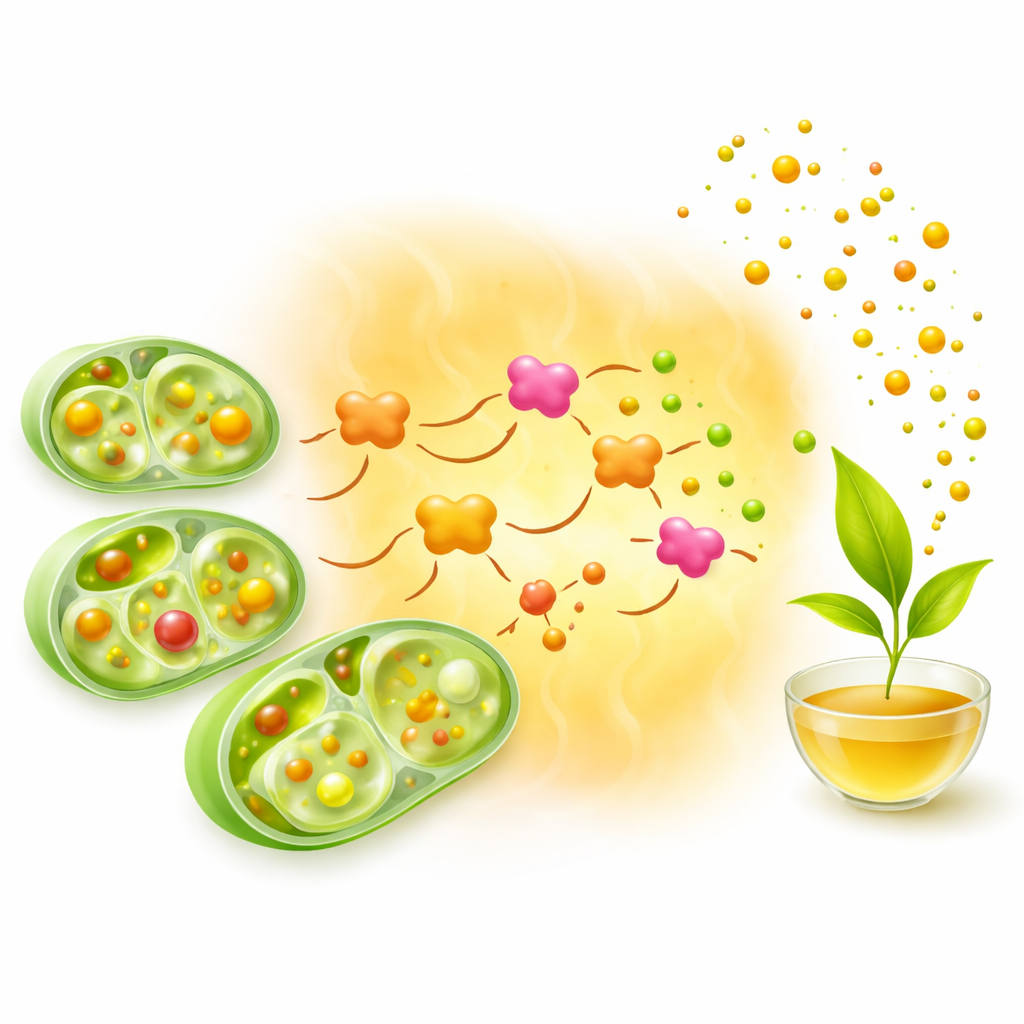
A Network Behind the Sweetness
By combining tasting results, the intensity of individual odor molecules, and their known smell thresholds, the researchers pinpointed a small group of compounds that matter most. Among them, β-ionone and linalool stood out as heavy hitters for sweetness, flower-like notes, and overall aroma strength, while others such as n-heptanal, n-octanal, and 1-octen-3-ol added creamy, baked, or corn-like nuances. These key compounds trace back to three main reaction routes inside the leaf: the breakdown of colorful carotenoid pigments, the opening of sugar-bound aroma stores, and the oxidation of fats in the leaf membranes. Together, these pathways form a linked network that turns simple green buds into a complex, sweet-scented yellow tea.
What This Means For Your Teacup
For everyday tea lovers, the message is that the soft sweetness of Mengding Bud Yellow Tea is no accident. It is the result of a carefully timed series of warm and humid steps that nudge leaf pigments, fats, and hidden aroma reservoirs to release specific scent molecules. Understanding this network lets producers fine-tune temperature and timing to consistently bring out the most appealing flavors. In other words, each mellow, sweet sip reflects a precisely guided journey from mountain leaf to golden cup.
Citation: Xu, J., Xie, M., Yang, X. et al. Key sweet-aroma compounds and formation mechanisms in Mengding bud yellow tea using HS-SPME-GC-MS and sensomics. npj Sci Food 10, 80 (2026). https://doi.org/10.1038/s41538-026-00737-3
Keywords: yellow tea, tea aroma, Mengding Bud Yellow Tea, tea processing, flavor chemistry