Clear Sky Science · en
Integrated foodomics and network pharmacology reveal functional food potential in tatsoi microgreens and baby greens
Small Greens with Big Promise
Tatsoi, a close cousin of bok choy, is showing that tiny leaves can carry big flavor and potential health benefits. This study looks at tatsoi harvested very young as microgreens and slightly older as baby greens, asking two simple questions with sophisticated tools: how do taste and aroma change as the plant grows, and which natural compounds might help protect us against modern health problems like obesity, diabetes, and heart disease?
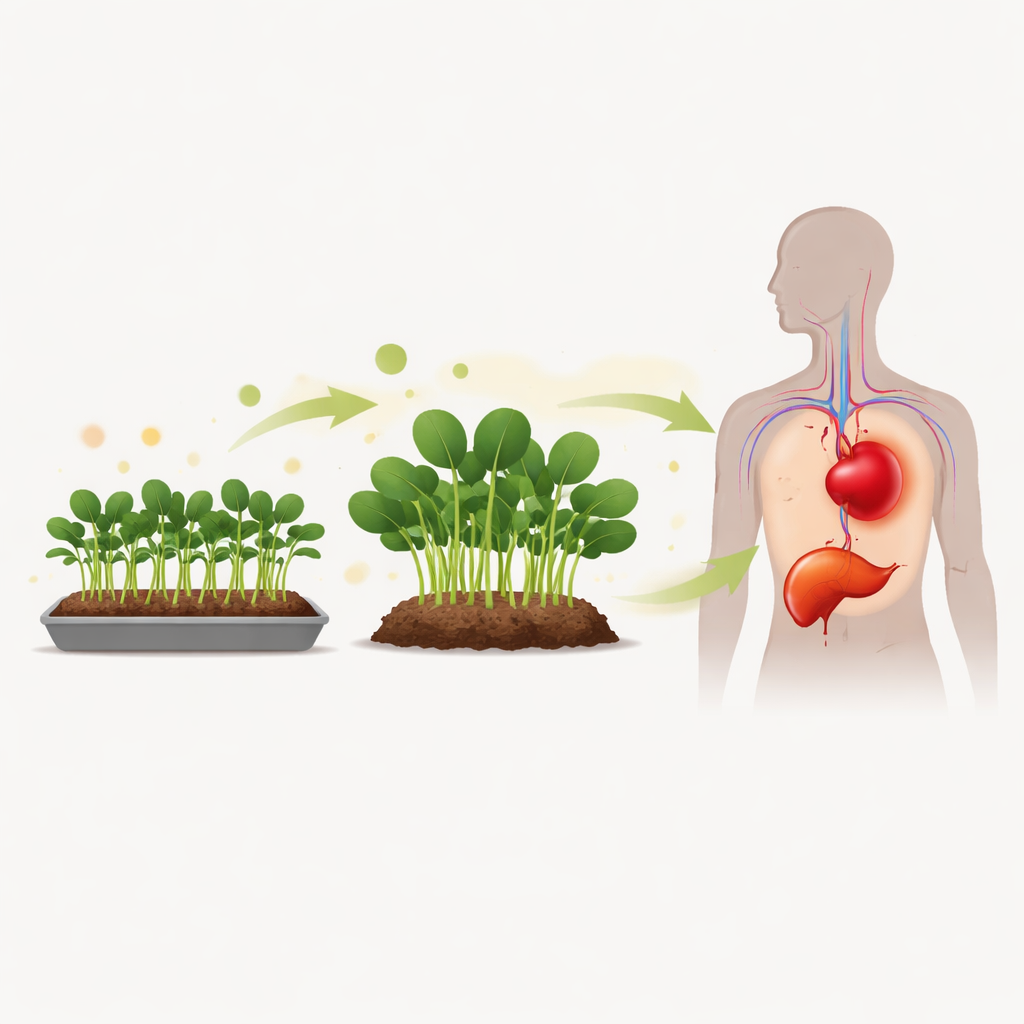
From Seedling to Salad Bowl
The researchers grew tatsoi in a greenhouse and harvested it at two stages: microgreens, picked at about 11 days when plants are only a few centimeters tall with just one or two true leaves, and baby greens, cut at around 26 days with several leaves. Both stages are already popular in salads and garnishes because they are tender and colorful. But beyond their looks, these young plants are known to be packed with vitamins and plant chemicals that can influence both flavor and health. Tatsoi belongs to the same family as broccoli and cabbage, vegetables often praised for cancer-fighting and heart-protective compounds.
How the Plants Smell and Taste
To understand flavor, the team analyzed the tiny airborne molecules that give tatsoi its aroma. They detected more than 500 different volatile compounds and linked them to sensory qualities like "green," "fruity," "sweet," "floral," and "creamy." Microgreens leaned toward fresher, greener notes reminiscent of cucumber, melon, and nuts, largely driven by molecules formed from fatty acids. Baby greens, in contrast, developed a more complex bouquet: fruity, floral, and creamy tones became stronger as esters, ketones, and certain sulfur-containing compounds increased. A handful of key aroma molecules, present in very low amounts but with strong smell power, turned out to make a big difference in whether tatsoi smells light and refreshing or richer and milkier.
Hidden Chemistry Inside the Leaves
Flavor is only half the story. The scientists also cataloged nearly 1,500 non-volatile compounds—the ones you do not smell but that can shape nutrition and potential health effects. These included amino acids, lipids, and a wide range of plant “specialty chemicals” like flavonoids, phenolic acids, lignans, coumarins, and glucosinolates. Microgreens were richer in many flavonoids, a group often linked with anti-inflammatory and anti-obesity actions, and some of these may also influence bitterness and astringency. Baby greens, on the other hand, showed higher levels of phenolic acids, lignans, coumarins, and several glucosinolates and their relatives. Many of these molecules are known antioxidants and have been studied for protecting the liver, helping control blood sugar, and supporting the body’s defenses against infections and cell damage.
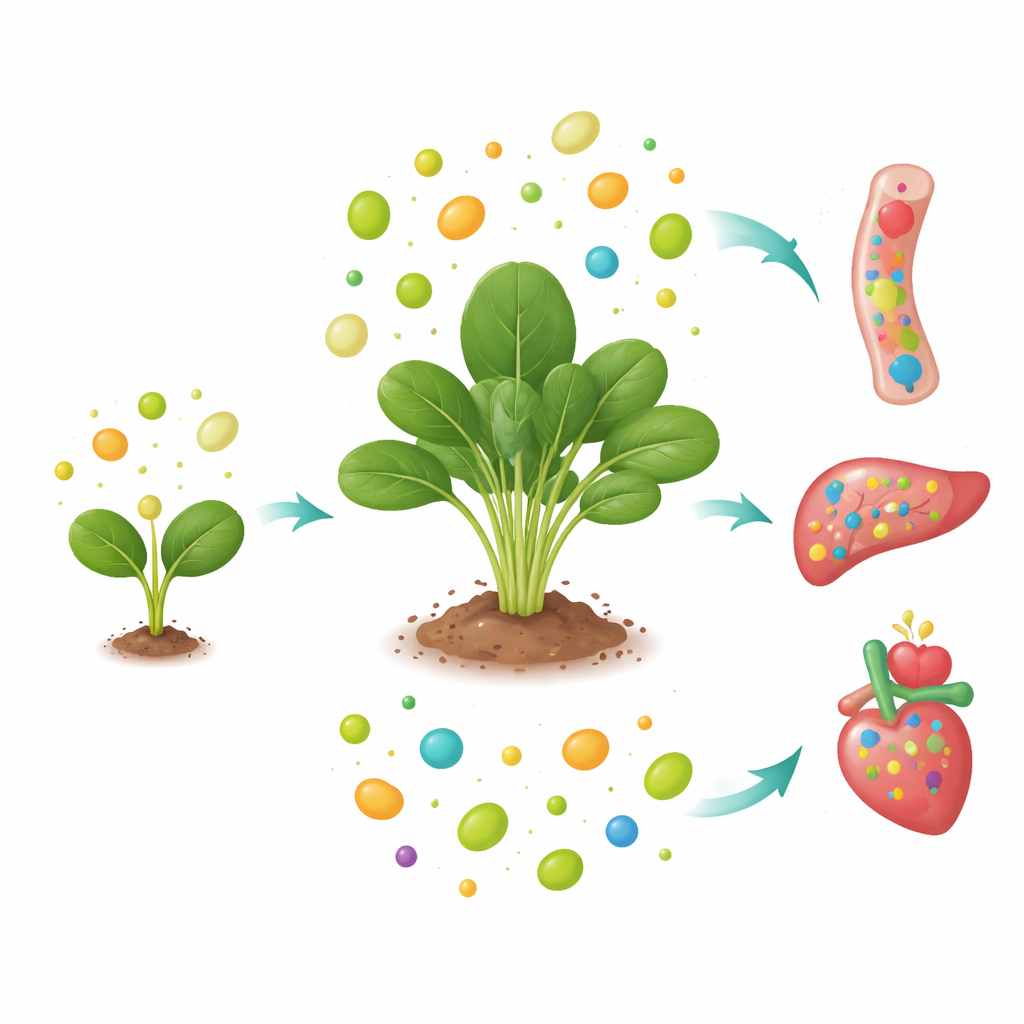
Linking Plant Compounds to Human Health
To bridge the gap between chemical profiles and real-world health, the team used a “network pharmacology” approach. They compared the identified tatsoi compounds with databases of molecules already studied in the context of disease. In total, 113 tatsoi metabolites were linked to targets involved in metabolic disorders such as obesity, type 2 diabetes, and non-alcoholic fatty liver disease, as well as cardiovascular problems including high blood pressure, atherosclerosis, and heart attack. Some flavonoids, like naringenin and nobiletin, showed potential connections to all of these conditions through their influence on blood sugar handling, fat metabolism, inflammation, and oxidative stress. Several phenolic acids, including caffeic acid and related compounds, also emerged as multitaskers with possible liver- and heart-protective roles. This web of interactions suggests that eating tatsoi, especially at different young stages, might deliver a cocktail of helpful molecules that act on many pathways at once.
What This Means for Your Plate
Overall, the study shows that tatsoi is not just a pretty garnish. As it matures from microgreen to baby green, its flavor shifts from crisp and green to more fruity and creamy, while its internal chemistry rearranges in ways that may matter for health. Microgreens offer higher levels of certain flavonoids, whereas baby greens concentrate phenolic acids, glucosinolates, and other protective compounds. By mapping these changes and their possible links to major chronic diseases, the work supports tatsoi’s promise as a functional food—one that can make meals tastier while contributing to long-term wellness. For consumers and growers alike, it suggests that choosing a mix of microgreens and baby greens could be a simple, plant-based way to diversify both flavor and potential health benefits.
Citation: Xie, Y., Wu, J., Zhang, D. et al. Integrated foodomics and network pharmacology reveal functional food potential in tatsoi microgreens and baby greens. npj Sci Food 10, 85 (2026). https://doi.org/10.1038/s41538-026-00731-9
Keywords: tatsoi microgreens, functional foods, plant phytochemicals, metabolic health, foodomics