Clear Sky Science · en
Polygonatum cyrtonema Hua fructan ameliorates ulcerative colitis via gut microbiota modulation and follistatin targeting
Food, Gut, and Relief from a Painful Disease
Ulcerative colitis is a long‑lasting disease in which the large intestine becomes chronically inflamed, causing abdominal pain, bleeding, and an urgent need to use the bathroom. Many medicines help only partly and can have serious side effects. This study explores whether a natural sugar from the roots of a traditional Chinese medicinal food plant, Polygonatum cyrtonema Hua, can calm this inflammation and protect the gut, offering a gentler way to support people living with this condition.
A Special Sugar Hidden in a Mountain Plant
The researchers focused on rhizomes of P. cyrtonema grown on Jiuhua Mountain in China, long valued as both food and medicine. From these roots they purified a tiny, low‑molecular‑weight carbohydrate called PCP2, classified as a fructan because it is built mainly from fructose units. Using a suite of chemical tools—including chromatography, infrared spectroscopy, and nuclear magnetic resonance—they showed that PCP2 is a highly pure, branched chain of sugar rings with a narrow size distribution. Microscopy and thermal tests revealed that PCP2 forms compact, layered particles that stay stable at cooking‑level temperatures, suggesting it could survive typical food processing and reach the gut intact. 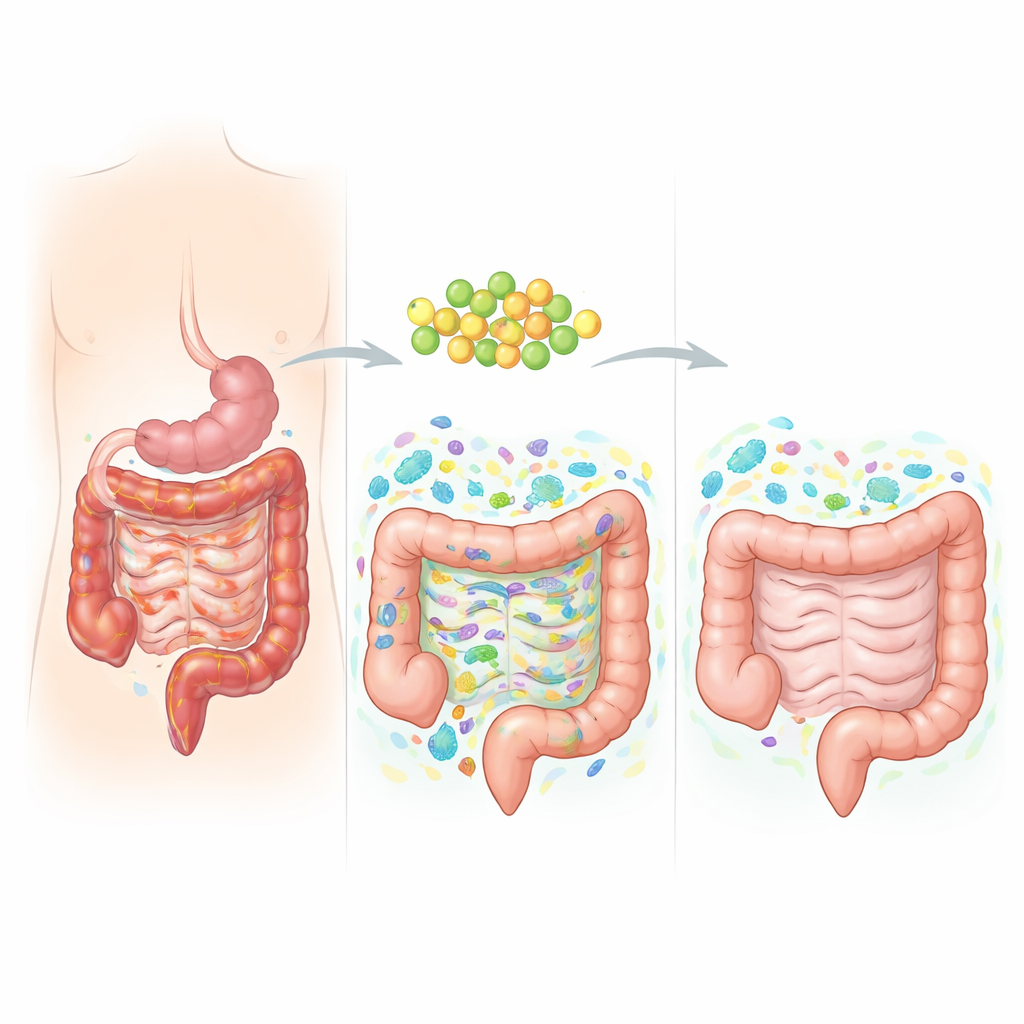
Protecting the Lining of an Injured Gut
To see whether this plant sugar could fight disease, the team used mice given dextran sulfate sodium, a chemical that reliably triggers ulcerative‑colitis‑like damage. Untreated animals lost weight, developed diarrhea and bleeding, and showed shortened, scarred colons with eroded tissue, missing goblet cells, and leaky cell junctions. Mice fed PCP2 fared much better: they kept more body weight, had lower disease scores, and their colons were longer and healthier under the microscope. PCP2 restored mucus‑producing goblet cells and increased levels of MUC2, the main gel that coats and shields the colon. It also brought back key “tight junction” proteins that help neighboring intestinal cells seal together, while damping down inflammatory messengers and oxidative stress markers in blood and tissue.
Rebuilding a Friendly Microbial Neighborhood
Because ulcerative colitis is tightly linked to disturbed gut microbes, the scientists sequenced bacterial DNA from the animals’ stool. Disease pushed the microbial community toward lower diversity, fewer helpful species, and more harmful ones. PCP2 reversed this trend, enriching bacteria that produce short‑chain fatty acids—energy‑rich molecules that nourish colon cells and have natural anti‑inflammatory effects. Notably, PCP2 boosted Akkermansia muciniphila, a mucus‑dwelling bacterium known to stimulate goblet cells and strengthen the mucus layer, and reduced genera associated with inflammation and toxin production. When fecal microbes from PCP2‑treated mice were transferred into new mice with colitis, those recipients also showed milder disease, indicating that a reshaped microbial community can carry much of PCP2’s protective power from one host to another. 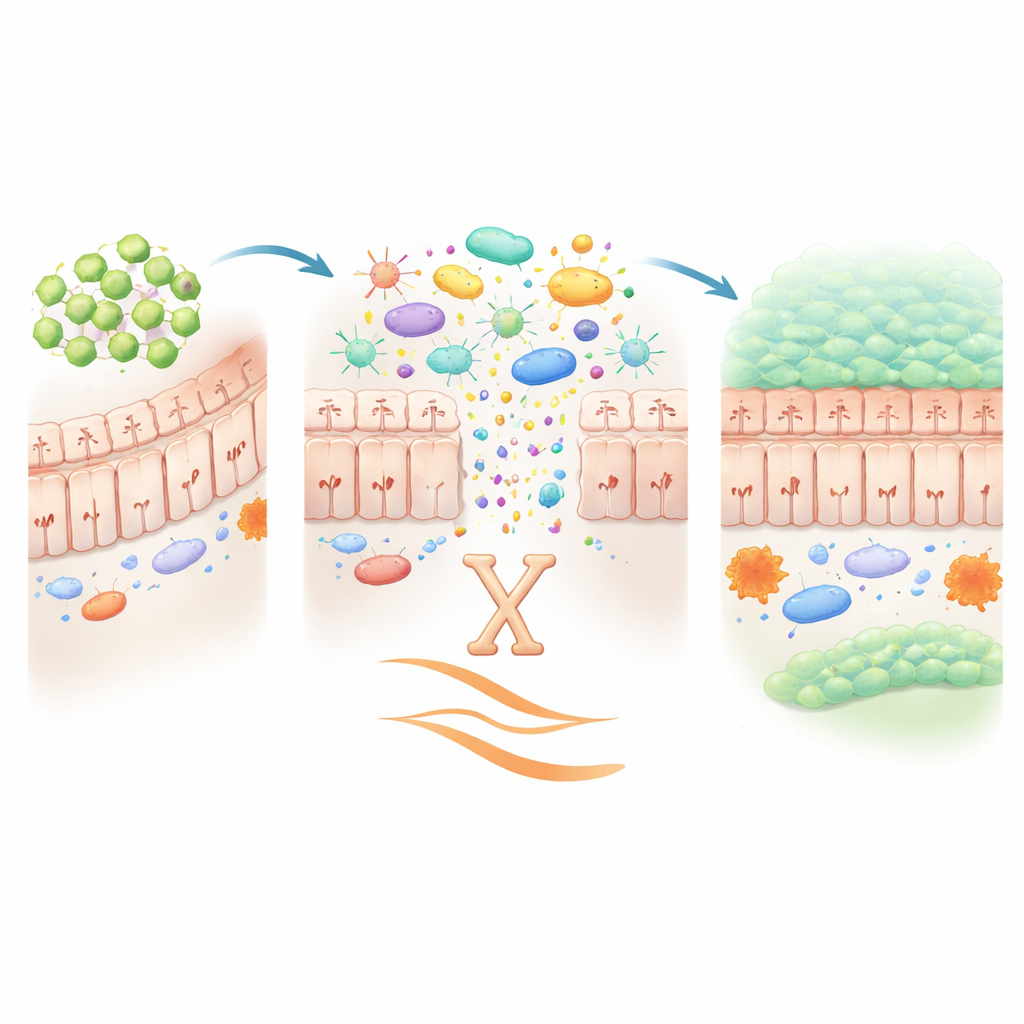
A Direct Conversation with Gut Repair Machinery
Intriguingly, the plant sugar’s benefits did not depend entirely on microbes. When the team largely wiped out gut bacteria with antibiotics, PCP2 still eased symptoms and tissue damage, though to a lesser degree. To uncover a microbe‑independent route, they turned to a high‑throughput protein survey and computer docking. One protein stood out: follistatin, a naturally occurring regulator that can restrain certain growth factors involved in inflammation and scarring. Simulations, and then precise binding tests, showed that PCP2 physically latches onto follistatin in a stable way. In diseased mice, PCP2 increased follistatin activity and in turn quieted a downstream signaling chain known to drive intestinal injury and fibrosis. When the scientists deliberately reduced follistatin levels in cells and in mouse colons, PCP2 largely lost its ability to shut down this signaling and to protect tissue, proving that this host protein is a crucial partner.
What This Could Mean for Future Gut‑Friendly Foods
Taken together, the findings present PCP2 as a two‑pronged defender of the colon. On one side, it behaves like a targeted prebiotic, nourishing and favoring bacteria that fortify the mucus barrier and generate soothing metabolites, while crowding out harmful strains. On the other, it acts more like a gentle drug, binding directly to follistatin to block a damaging inflammatory pathway within the gut wall itself. Although more work is needed to test safety, dosage, and effectiveness in humans, this dual action suggests that carefully characterized plant sugars from everyday foods might one day help prevent or ease ulcerative colitis by supporting both our inner ecosystem and our own repair systems.
Citation: Xu, Q., Lv, Q., Yang, Z. et al. Polygonatum cyrtonema Hua fructan ameliorates ulcerative colitis via gut microbiota modulation and follistatin targeting. npj Sci Food 10, 83 (2026). https://doi.org/10.1038/s41538-026-00729-3
Keywords: ulcerative colitis, gut microbiota, prebiotic fructan, follistatin, intestinal barrier