Clear Sky Science · en
Effects of Antarctic krill oil on lipid profiles and SPM levels in rats over time
Why tiny sea creatures matter for your health
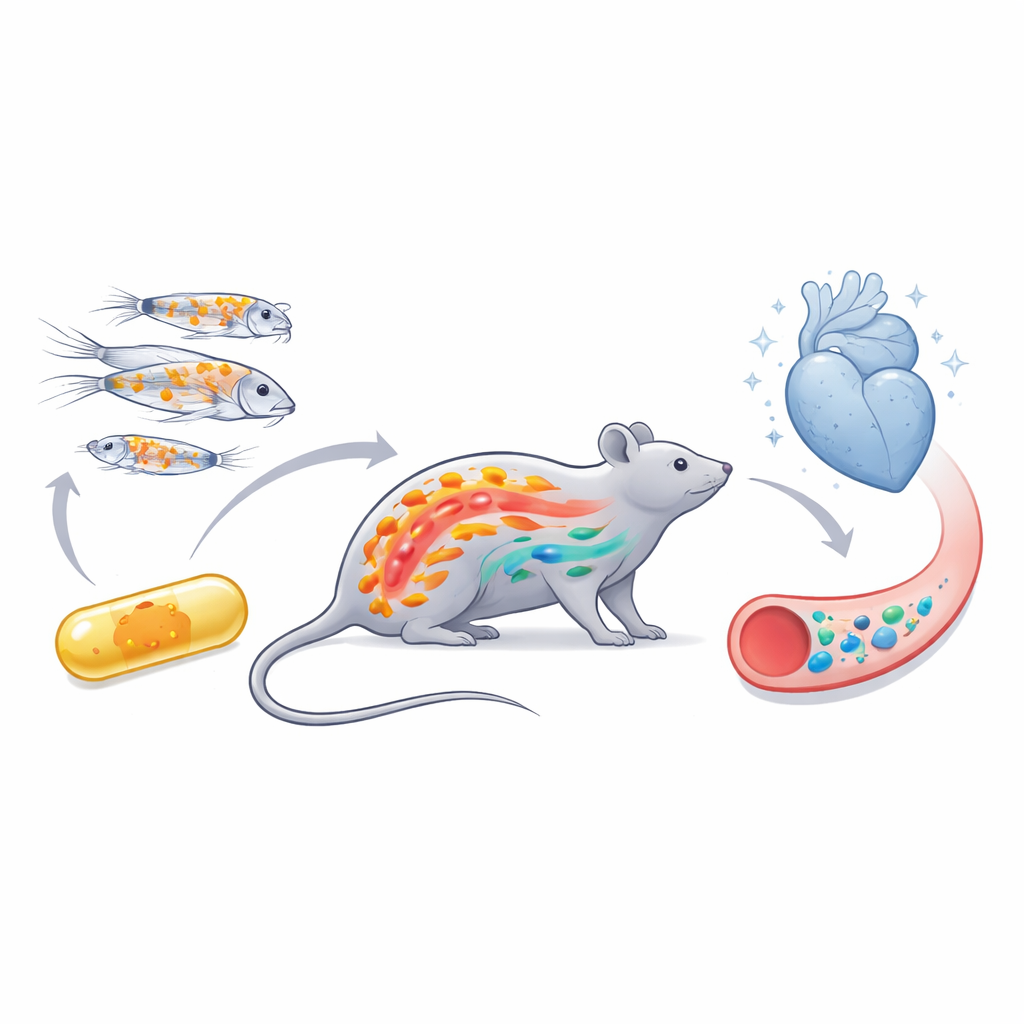
Most people know fish oil as a source of “good fats,” but few have heard of krill oil, which comes from small, shrimp-like creatures living in Antarctic waters. This study asks a practical question with big health implications: when krill oil is added to the diet, how does it reshape the fats and chemical messengers circulating in the blood over time? By tracking thousands of fat-related molecules in rats, the researchers show that krill oil steadily shifts the body away from signals that drive inflammation and toward signals that help quietly switch it off, offering clues to how this supplement might support heart and metabolic health.
From ordinary fats to peacekeeping molecules
Fats in the bloodstream are far more than stored calories. They include a complex mix of building blocks for cell membranes and potent chemical messengers that can either fan the flames of inflammation or help put them out. Krill oil is unusually rich in long-chain omega-3 fats, especially EPA and DHA, which are thought to feed the body’s own “pro‑resolving” pathways that tidy up inflammation once a threat has passed. The team used advanced chemical profiling tools to look not only at broad changes in fat classes, but also at dozens of tiny, short‑lived molecules made from these fats that act as on–off switches for the immune system.
Krill oil rapidly remodels the blood fat landscape
Rats were given either a normal diet or the same diet plus krill oil for one week or six weeks. When the researchers scanned the blood, they detected nearly 700 distinct lipid species. Even without telling the computer which animals had received krill oil, the patterns of fats fell into three clearly separate clusters, showing that the supplement strongly altered the blood lipid profile. Molecules containing arachidonic acid, a common omega‑6 fat that often feeds pro‑inflammatory pathways, tended to drop, especially after six weeks. In contrast, lipids carrying EPA and DHA rose across many classes, indicating that krill oil was steadily enriching the circulation with these omega‑3 building blocks.
Turning down inflammatory sparks and turning up resolution
Next, the scientists zoomed in on 33 specific signaling molecules made from three key fats: arachidonic acid, EPA, and DHA. Many arachidonic‑derived compounds are well‑known “alarm” signals that increase blood clotting, pain, and immune cell recruitment. After krill oil, most of these pro‑inflammatory messengers fell, often sharply. At the same time, one arachidonic‑derived compound with calming properties, lipoxin A4, rose several‑fold. EPA‑ and DHA‑derived messengers told a different story: their levels climbed with krill oil intake, especially after six weeks. Among them were specialized pro‑resolving mediators, a family of molecules that help immune cells clear debris, quiet overactive inflammation, and promote tissue repair. Statistical models confirmed that these shifts were robust and that increases in omega‑3–derived signals went hand‑in‑hand with decreases in many arachidonic‑based ones.
Time makes the anti‑inflammatory pattern stronger
The study also highlights timing as an important factor. After just one week of krill oil, the rats already showed a tilt toward more EPA and DHA in their blood lipids and higher levels of several resolution‑linked mediators. After six weeks, the trends were amplified: arachidonic‑based alarm signals were lower, while a broader array of omega‑3–derived molecules linked to calming and repair were higher. Some EPA‑ and DHA‑containing lipids spiked early and then plateaued, suggesting that the body may first saturate the bloodstream and then tuck more of these fats into cell membranes, where they can be drawn upon to make protective mediators when needed.

What this could mean for everyday health
Inflammation is a double‑edged sword: essential for fighting infections and healing injuries, but harmful when it smolders for too long. This work shows that krill oil, at least in rats, reshapes both the background fat supply and the fast‑acting signals that help bring inflammation to a healthy close. By lowering fuels for pro‑inflammatory messengers and boosting building blocks and products of resolution pathways, long‑term krill oil intake nudged the animals’ blood chemistry toward a more balanced state. While human trials are still needed to pin down effective doses and real‑world benefits, the findings support the idea that certain marine oils can act not just as nutrient sources, but as subtle “signal shapers” that may help the body better manage chronic, low‑grade inflammation linked to heart disease, obesity, and other modern ailments.
Citation: Lu, W., Huangfu, N., Ge, L. et al. Effects of Antarctic krill oil on lipid profiles and SPM levels in rats over time. npj Sci Food 10, 97 (2026). https://doi.org/10.1038/s41538-026-00727-5
Keywords: krill oil, omega-3 fatty acids, inflammation resolution, lipidomics, specialized pro-resolving mediators