Clear Sky Science · en
Rising together: exploring sourdough fermentation diversity through co-design in the HealthFerm citizen science initiative
Why your homemade sourdough matters
Sourdough has become a star of home kitchens, loved for its tangy flavor, chewy crumb and old-world charm. But every jar of starter on a countertop is also a tiny living ecosystem. This study asked a simple question with big implications: how do people across Europe actually care for their sourdough at home and in bakeries, and what does that mean for taste, health and culture? By enlisting over a thousand volunteers, the researchers turned everyday bakers into citizen scientists, revealing how our habits shape the microbes that raise our bread.
Thousands of bakers, one shared project
To capture the full variety of real-life sourdoughs, the team built a large citizen science project within the HealthFerm initiative. Five European universities acted as local hubs, inviting people to register their starters online, attend co-design workshops and help shape the study. More than 1000 participants from 33 countries signed up, and 671 sourdough samples were eventually mailed to laboratories. Volunteers did simple at-home experiments—measuring acidity with pH strips, weighing slices of bread to estimate density and describing aromas using user-friendly “flavor wheels.” These home measurements were then linked to professional lab tests, creating a rich picture of how daily routines translate into measurable sourdough traits. 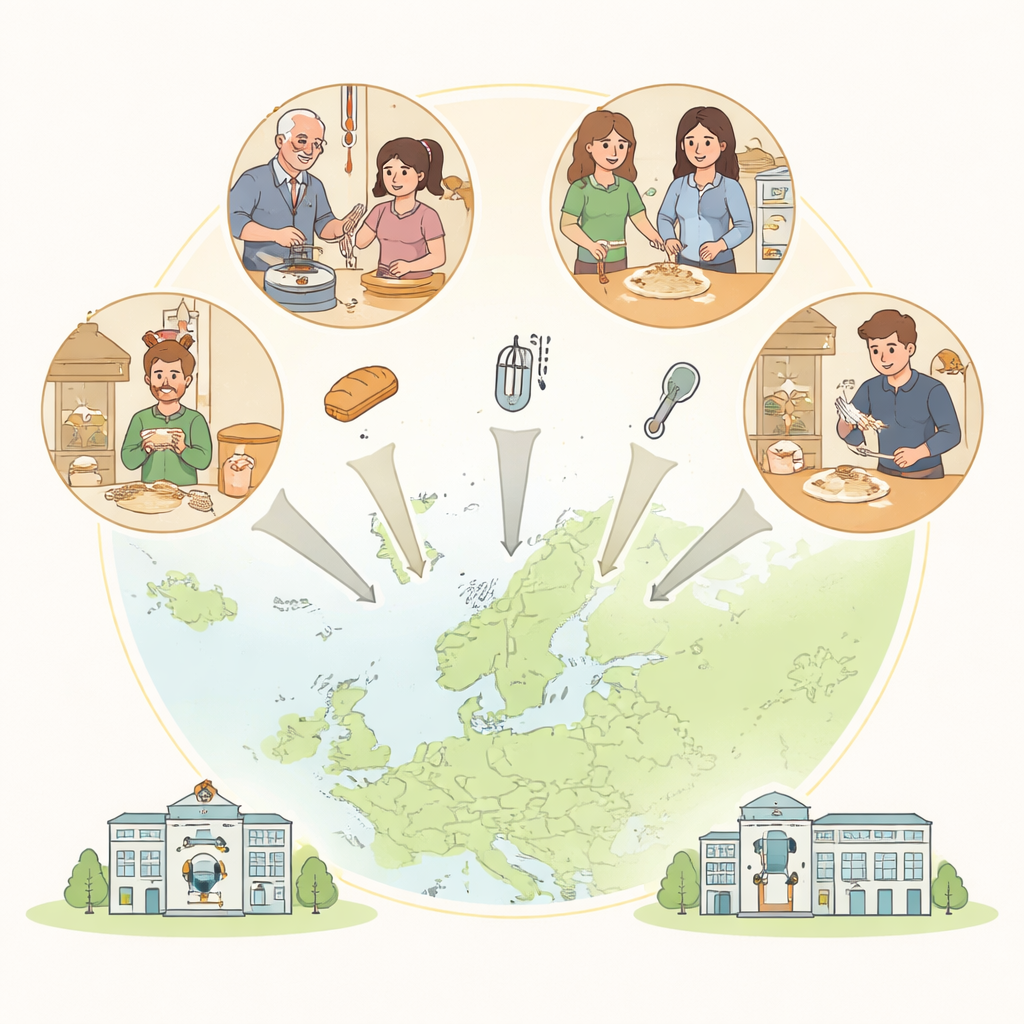
Home kitchens versus busy bakeries
One clear pattern was the difference between household bakers and professionals. Starters in bakeries tended to be older, refreshed more often and fermented slightly warmer and faster, reflecting the pressure of daily bread production. Home bakers, by contrast, refreshed their starters less frequently and often used cooler kitchens and glass jars. Despite these differences, both groups favored similar basic ingredients, especially wheat and rye flours, with a strong preference for organic options. The way starters were kept between feedings—cool storage at or below fridge temperature—was surprisingly similar, showing that even casual bakers have adopted careful long-term “pet starter” care.
How beliefs and ingredients shape the loaf
Motivation turned out to matter almost as much as method. Most participants said they chose sourdough for taste and enjoyment, but many also believed it was healthier than bread made with commercial yeast. They often mentioned better digestion and gut health. These beliefs lined up well with current scientific evidence that sourdough can make minerals more available and may blunt spikes in blood sugar. Health-conscious bakers more often chose rye, wholegrain and organic flours, while those less focused on health tended to stick with white wheat flour. Simple home tests showed that more acidic starters generally produced more acidic breads, but acidity alone did not determine how airy or dense the loaves became. 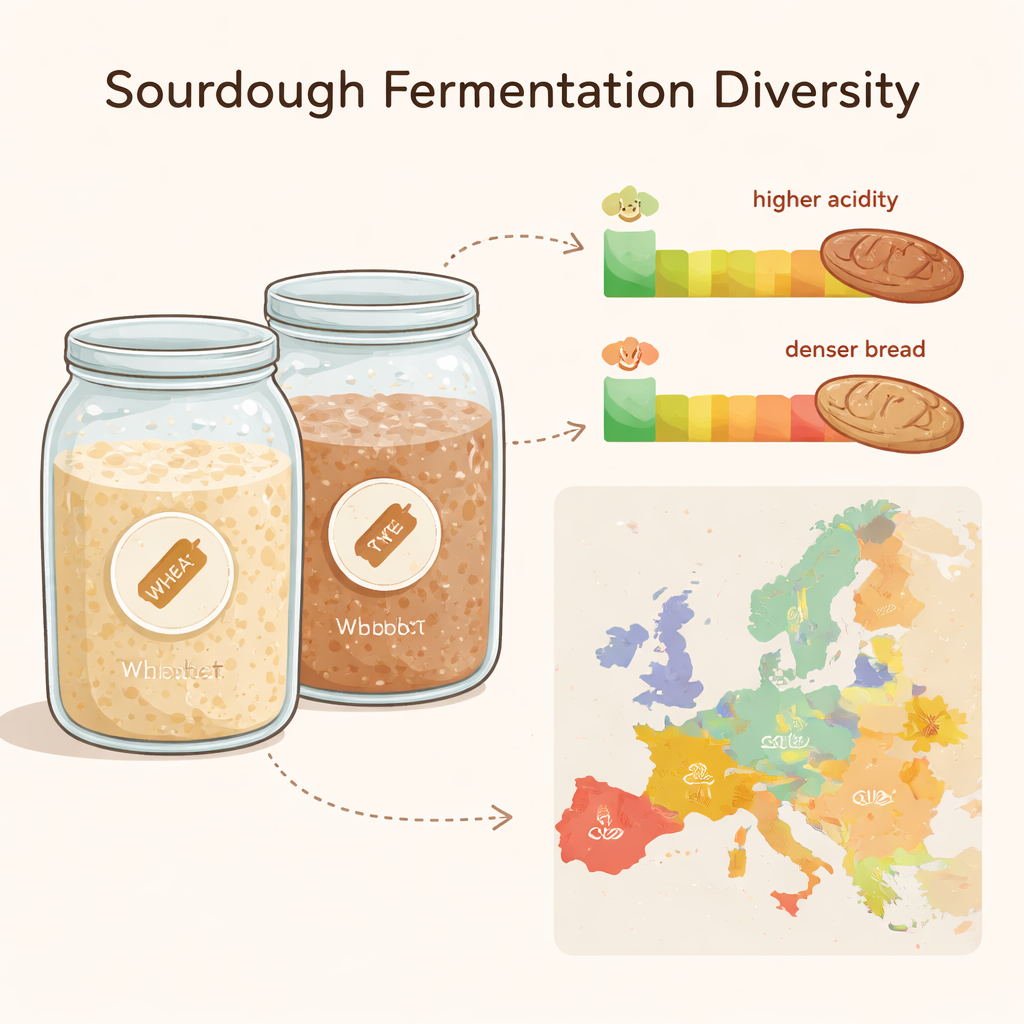
Grains, regions and the flavor of place
The type of grain had a strong influence on sourdough behavior. Rye-based starters absorbed more water, led to higher acidity and produced denser breads than wheat-based ones, likely because rye flour binds more water and has different natural enzymes. Participants’ aroma descriptions echoed this: rye starters were more often tagged as “sour” and “wholegrain,” while wheat starters were perceived as milder and sometimes slightly “chemical.” Regional patterns also emerged. German-speaking countries favored organic wholemeal rye and spelt, mirroring their traditional bread culture, whereas Italian, Finnish and Romanian bakers leaned more toward non-organic wheat. Yet when all fermentation details were analyzed together, there was no neat clustering by country—individual practice and whether someone baked at home or professionally explained more than national borders.
Lessons from a continent of bubbling jars
Beyond sourdough itself, the project demonstrated how co-designed citizen science can tackle questions that would be nearly impossible to answer with lab staff alone. Volunteers helped refine instructions, highlighted postal and language challenges, and exposed the limits of at-home measurements and untrained sensory descriptions. Despite noisy data and uneven participation across regions, the study produced a public sourdough “biobank” stored at deep-freeze temperatures, ready for future microbiome and flavor research. For lay readers, the take-home message is that your sourdough routine—choice of flour, feeding schedule, kitchen climate and personal goals—really does shape the living community in your jar, and therefore the bread on your table. By pooling thousands of such routines, this work shows how everyday food traditions can power serious science, and how a simple starter connects culture, health and the invisible world of microbes.
Citation: Meyer, A.R., Gettemans, T., Tan, J.P. et al. Rising together: exploring sourdough fermentation diversity through co-design in the HealthFerm citizen science initiative. npj Sci Food 10, 76 (2026). https://doi.org/10.1038/s41538-026-00725-7
Keywords: sourdough, fermented foods, citizen science, food microbiome, bread baking