Clear Sky Science · en
From rosemary and coffee to bioactive nanovesicles: exploring new frontiers in food functional ingredients
Why rosemary and coffee matter for your body
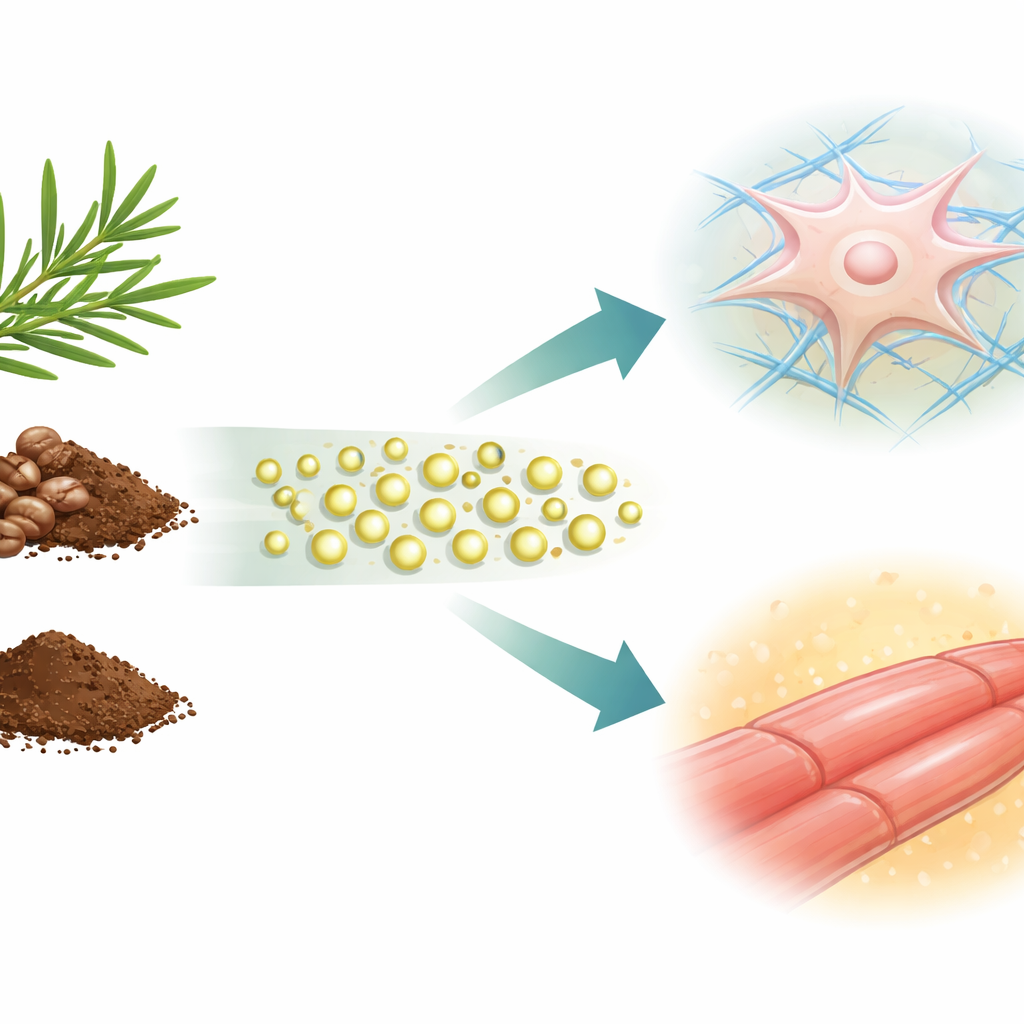
Many people already turn to rosemary and coffee for a morning boost or as natural remedies, but scientists are now looking at these familiar ingredients in a new way. Instead of focusing only on their well-known antioxidants, this study explores tiny bubbles naturally formed by plants—called plant-derived vesicles—that may deliver protective compounds directly to our cells. By isolating these nano-sized carriers from rosemary leaves and coffee powder, the researchers asked whether they could help defend muscle and skin-like cells from the kind of oxidative stress linked to aging, fatigue, and tissue damage.
Tiny bubbles from everyday plants
Plant-derived vesicles are microscopic, fat-coated spheres that carry a mixture of lipids, proteins, genetic material, and small plant molecules. Using a newly patented method, the team extracted vesicles from dried rosemary leaves (RVs) and coffee powder (CVs) and then carefully examined their size, shape, and composition. High-resolution imaging showed that rosemary vesicles were clean, round, and uniform, while coffee vesicles tended to form looser aggregates. Counting and sizing techniques revealed that rosemary produced far more vesicles per milliliter and with a narrower size range, suggesting this plant is especially efficient for generating stable nano-carriers.
What these vesicles are made of
Beyond simple packaging, the vesicles turned out to be loaded with distinct mixtures of bioactive molecules that mirror their plant of origin. Coffee vesicles were rich in chlorogenic acids and related phenolic compounds known for strong antioxidant and anti-inflammatory effects, along with a wide variety of neutral lipids such as diacylglycerols and triacylglycerols. Rosemary vesicles carried a broader chemical toolkit, including powerful antioxidant diterpenes like carnosic acid and carnosol, rosmarinic acid, diverse flavonoids, triterpenoids, amino acids, and nucleosides. Their fats were dominated by free fatty acids, including some with profiles similar to omega-3–like molecules, plus minor but meaningful bioactive lipids such as N-acylethanolamines and ceramides.
Helping stressed muscle and skin-like cells
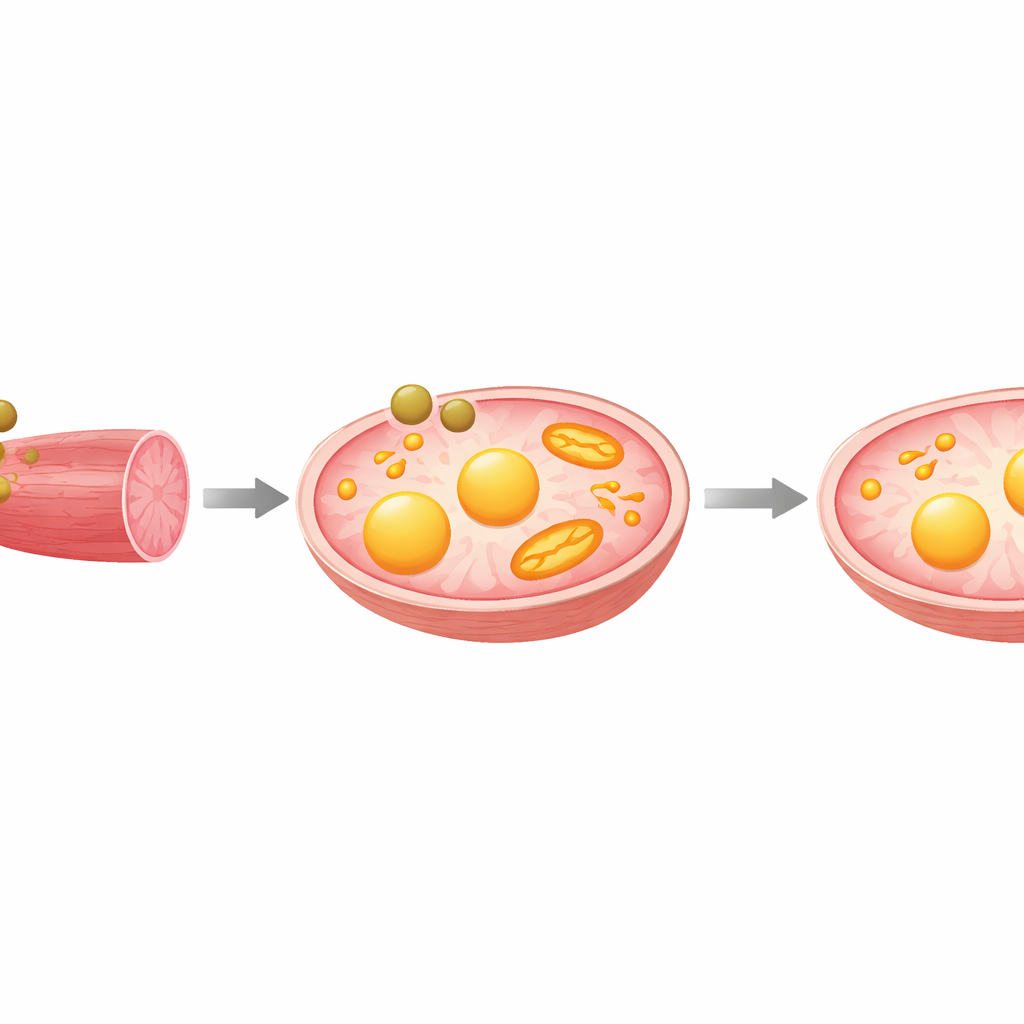
To see whether these plant vesicles actually help living cells, the researchers exposed human skin fibroblasts and mouse muscle cells to hydrogen peroxide, a chemical that sharply increases reactive oxygen species and mimics oxidative stress. Both rosemary and coffee vesicles significantly lowered the buildup of these harmful molecules and reduced lipid peroxidation, a process that damages cell membranes. In muscle cells, the vesicles restored levels of Nrf2, a master switch for the body’s own antioxidant defenses, and dampened COX-2, a key inflammation marker. At the same time, they boosted the active form of AMPK, an energy sensor that encourages cells to burn fats and take up more glucose, while lowering a fat-building enzyme (FASN) and reducing the accumulation of oily droplets inside the cells.
Supporting firmness and structure in connective tissue
The benefits were not limited to energy and oxidation. In fibroblasts, which build the body’s connective scaffolding, oxidative stress sharply reduced the production and release of collagen and elastin—proteins that keep skin and other tissues firm yet flexible. Pretreatment with rosemary or coffee vesicles reversed these losses: cells made more collagen and secreted more collagen and elastin into their surroundings, helping maintain a healthier extracellular matrix. The authors suggest that a combination of antioxidant plant molecules and signaling lipids within the vesicles works together to protect fibroblasts and support tissue maintenance, pointing to possible applications in skin health, wound repair, and anti-aging formulations.
What this could mean for future foods and supplements
Overall, the study shows that nano-sized vesicles naturally formed in rosemary and coffee can act as safe, non-toxic carriers that deliver concentrated, synergistic plant compounds directly to muscle and skin-like cells. By lowering oxidative stress and inflammation, improving cellular energy balance, and helping preserve collagen and elastin, these tiny bubbles may offer a new way to turn familiar foods into advanced functional ingredients. While more work is needed to test their stability, behavior in the body, and real-world effectiveness, plant-derived vesicles from common herbs and beverages could become an important platform for next-generation nutraceuticals and cosmetics aimed at supporting muscle function and tissue resilience.
Citation: d’Adduzio, L., Aiello, G., Musazzi, U. et al. From rosemary and coffee to bioactive nanovesicles: exploring new frontiers in food functional ingredients. npj Sci Food 10, 77 (2026). https://doi.org/10.1038/s41538-026-00723-9
Keywords: plant-derived vesicles, rosemary, coffee, antioxidants, muscle and skin health