Clear Sky Science · en
Discretionary foods have notable environmental and expenditure relevance across meat and plant protein preferences
Why what we put in our carts matters
Every grocery trip quietly shapes both our health and the planet’s. This study followed the real-life shopping of nearly 23,000 Finnish households to ask a simple question with big consequences: if people gradually swapped meat-heavy diets for more plant-based ones, what would it mean for their wallets, nutrition, and the environment? By looking at loyalty-card data over a full year, the researchers could see how different styles of eating compare in the real world, not just in theory.
Six everyday ways of eating
The team grouped shoppers into six clusters based on the main protein sources in their baskets: from strongly red-meat-focused, through mixes including poultry and fish, to a clearly plant-based group. These clusters form a realistic “transition path” from meat-dominant habits to more plant-centered ones. The plant-based shoppers tended to be younger and somewhat lower income, while fish-focused households were older and better off. Alongside protein choices, the clusters differed in other ways: fruit and vegetable purchases rose steadily as red and processed meat went down, and plant-based households bought far less liquid dairy than the others.
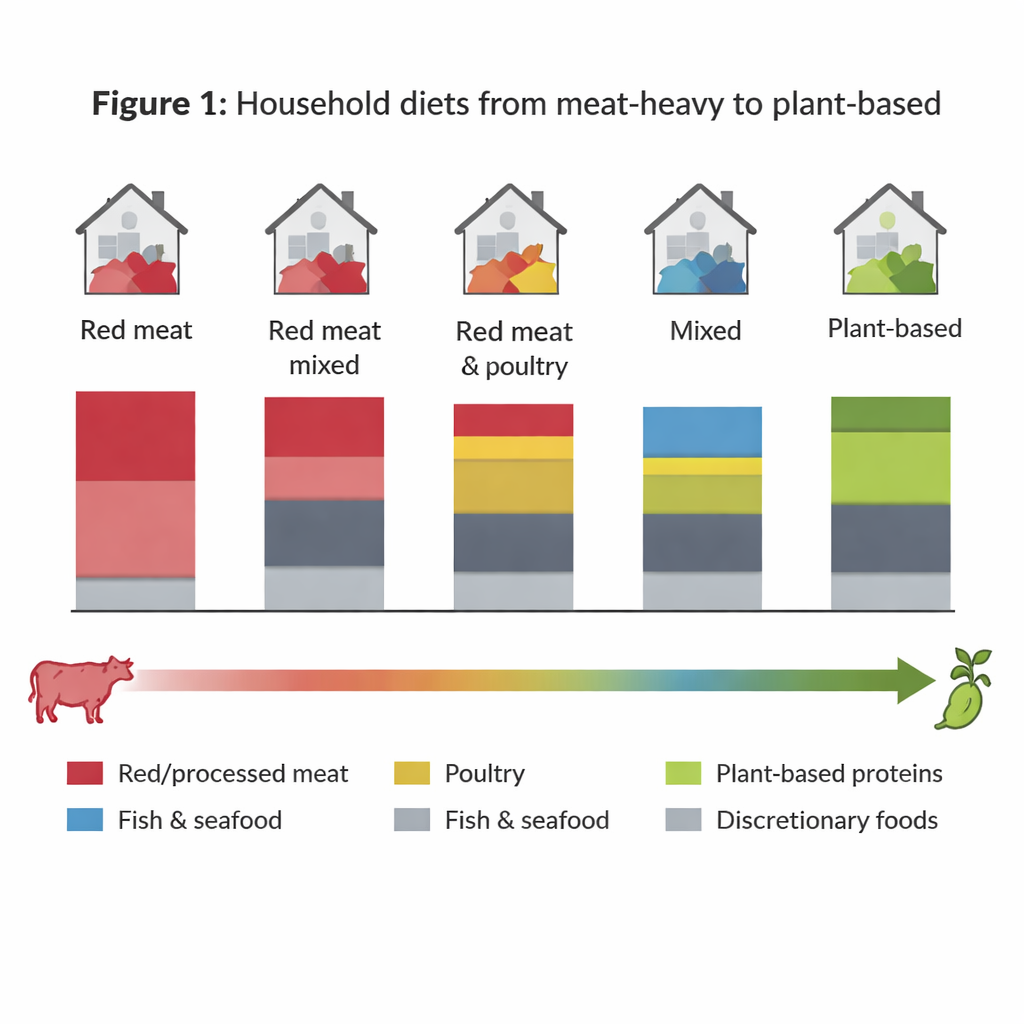
Spending more on food does not mean spending more on protein
One concern about eating less meat is cost. The data offer a surprising reassurance: spending on protein foods per calorie was very similar across all six groups. Households centered on red meat spent about as much on their main protein sources as those centered on plant-based options, even though the plant-based baskets ended up with slightly less total protein. Instead, overall food spending differences came from other choices. Fish- and plant-focused households spent more per 2,500 calories mainly because they bought more fruits and vegetables, not because fish or plant proteins were dramatically pricier. Across all groups, a striking 18–24% of food budgets went to “discretionary foods” such as sweets, baked goods, sugary drinks, alcohol, coffee, and snacks.
Hidden environmental costs of dinner and treats
When the researchers added up greenhouse gas emissions, land use, water use, and nutrient pollution for each shopping pattern, clear trends emerged. Climate impact and land use were highest in the meat-heavy clusters and declined stepwise as diets shifted toward fish and especially plant-based proteins; plant-based shoppers’ baskets produced roughly a quarter less climate-warming gases per calorie than those of meat-and-poultry buyers. Fish-heavy diets, while better for climate and land, were notable for higher freshwater pollution linked to fish production. Yet protein choices were only part of the story. Discretionary foods—often thought of as minor indulgences—accounted for 17–32% of total environmental impacts, with beverages such as coffee, soft drinks, and alcohol playing an outsized role.
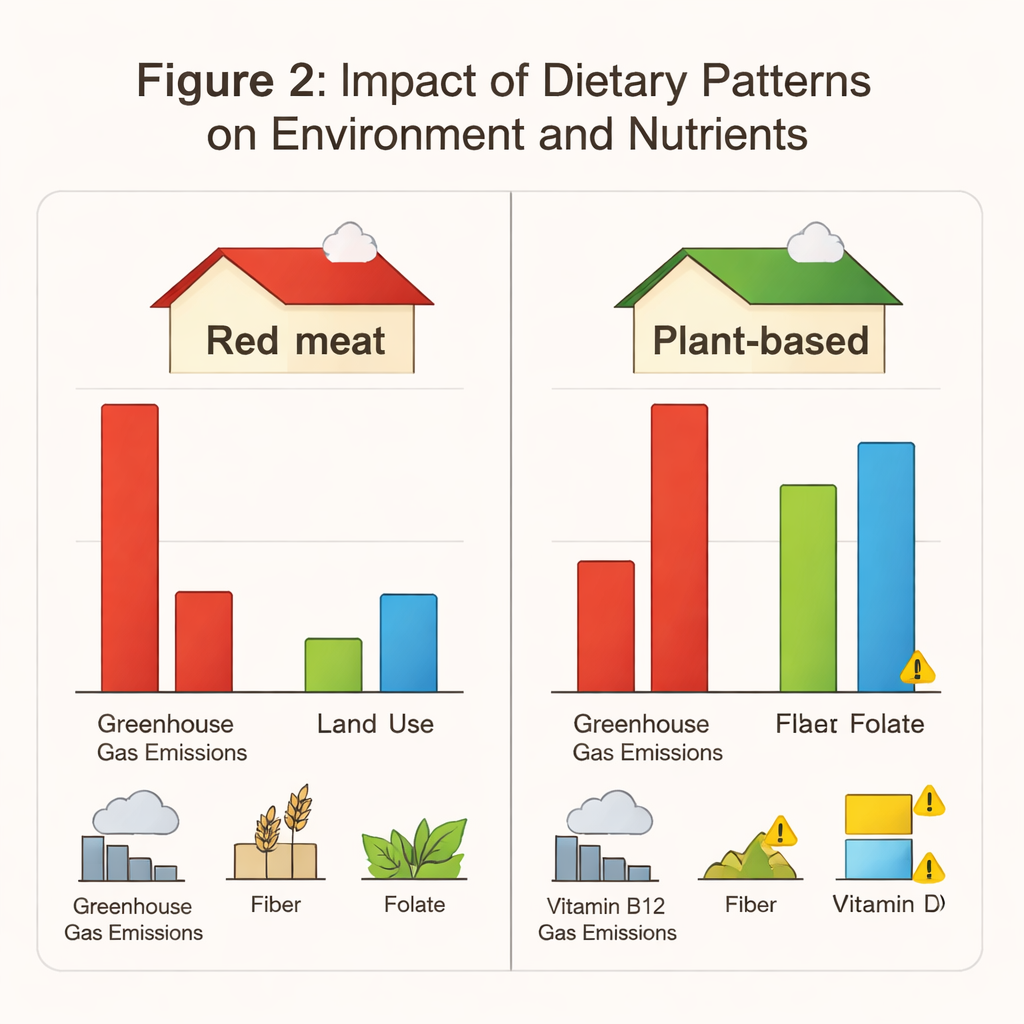
Nutrients gained, nutrients lost
Nutritionally, the shift away from red meat brought several advantages. As meat purchases dropped and fruit, vegetables, and whole grains rose, baskets became richer in fiber, folate, and iron, and lower in salt and saturated fat. These changes point toward better heart and gut health. However, plant-based shoppers bought less vitamin B12- and vitamin D-rich foods, reflecting the loss of meat, dairy, and especially fish. While their protein intake stayed comfortably within recommended ranges, they were more likely to need vitamin D supplements or fortified foods, in line with national nutrition advice for people who rarely eat fish or dairy.
What this means for everyday choices
For households in wealthy countries, this study suggests that moving from meat-heavy toward plant-based eating is less a question of affordability and more one of habits, culture, and convenience. Swapping red meat for poultry alone brought little environmental benefit, but shifting further toward plant proteins and sustainable fish did. At the same time, cutting back on non-essential discretionary foods could significantly reduce environmental harm and free up money for healthier options without raising overall food spending. In simple terms: a more sustainable diet—more beans, grains, fruits, vegetables, and carefully chosen fish, and fewer meats and treats—is both realistic and nutritionally sound, provided that key vitamins like B12 and D are covered.
Citation: Meinilä, J., Mazac, R., Vepsäläinen, H. et al. Discretionary foods have notable environmental and expenditure relevance across meat and plant protein preferences. npj Sci Food 10, 72 (2026). https://doi.org/10.1038/s41538-026-00721-x
Keywords: plant-based diets, red meat, discretionary foods, environmental impact, food expenditure