Clear Sky Science · en
Metal element drivers of rice sensory variation revealed by ICP-MS and electronic tongue predictive modeling
Why the taste of rice is more than just cooking
For many households, rice is on the table every day, yet few people realize that tiny amounts of metals inside each grain can quietly shape how that rice smells, tastes, and feels in the mouth. This study explores how natural and pollutant metals—from helpful nutrients like iron and zinc to potentially harmful elements like aluminum and barium—combine to influence rice’s eating quality, and whether smart sensors can quickly judge that quality without relying only on human tasters.
Hidden metals in everyday rice
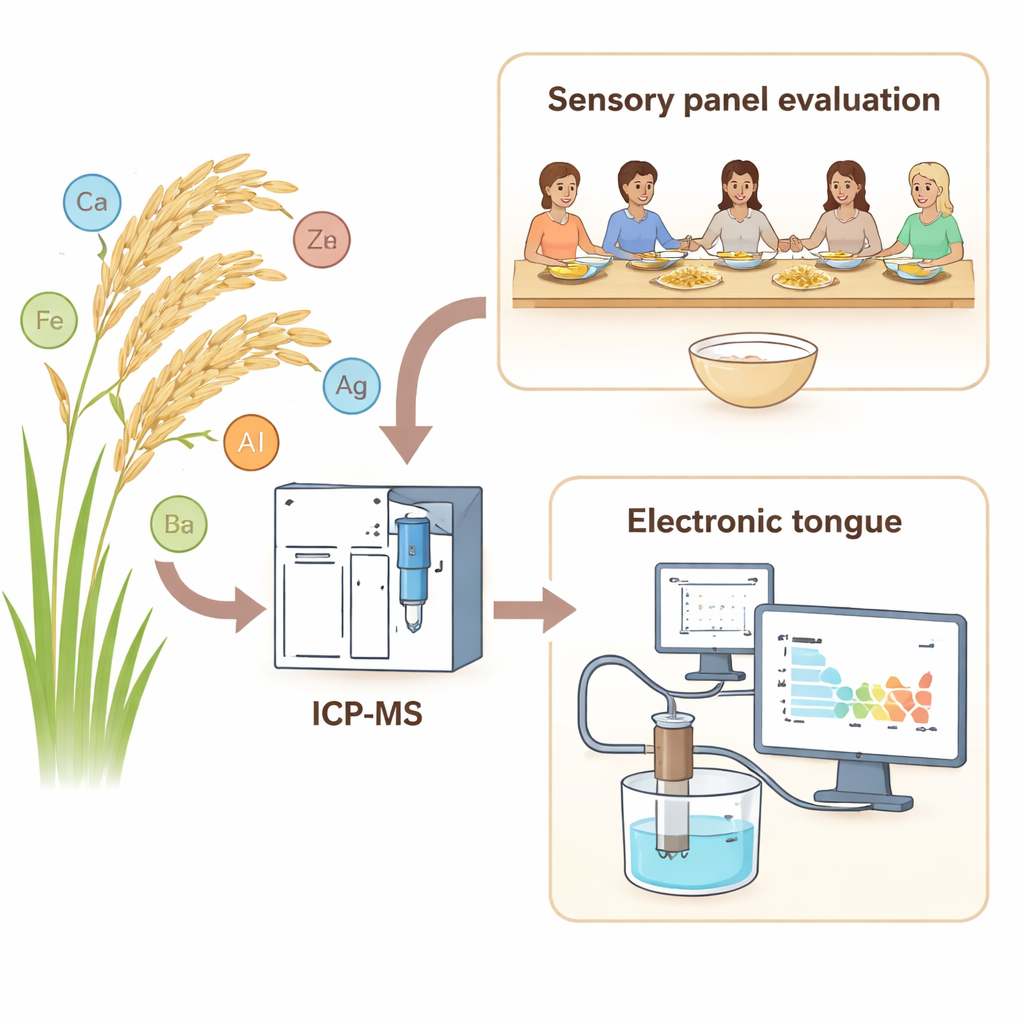
Rice plants draw minerals from soil and water, and these metals accumulate in the grain. Some, such as calcium, magnesium, iron, and zinc, are important for human health. Others, including cadmium, lead, aluminum, and barium, can raise safety concerns or subtly alter texture and flavor. The researchers analyzed 36 rice samples from major growing regions in China, measuring the levels of 26 different metals using a sensitive laboratory technique called ICP-MS, which can detect metals at extremely low concentrations. Using statistical clustering, they found that the rice could be sorted into three clear groups with distinct metal “fingerprints,” reflecting differences in growing conditions such as soil makeup and irrigation water.
From lab numbers to real-world taste
To understand what these metal fingerprints mean for everyday eating, the team selected ten representative samples—covering all three metal groups—and had a trained panel of 30 people score them. Panelists rated odor, appearance, palatability (how pleasant it feels to chew), taste, the texture of cooled rice, and overall eating quality using standardized scales. The results showed striking differences: some samples had weak aroma, dull appearance, and poor mouthfeel, while others were consistently judged as more fragrant, visually appealing, and enjoyable to eat. When the scientists compared these scores with the metal data, they found that higher levels of several metals—especially silver (Ag), aluminum (Al), boron (B), barium (Ba), cobalt (Co), strontium (Sr), and vanadium (V)—tended to go hand in hand with lower ratings for taste, palatability, texture, and overall quality.
Good metals, bad metals, and subtle trade‑offs
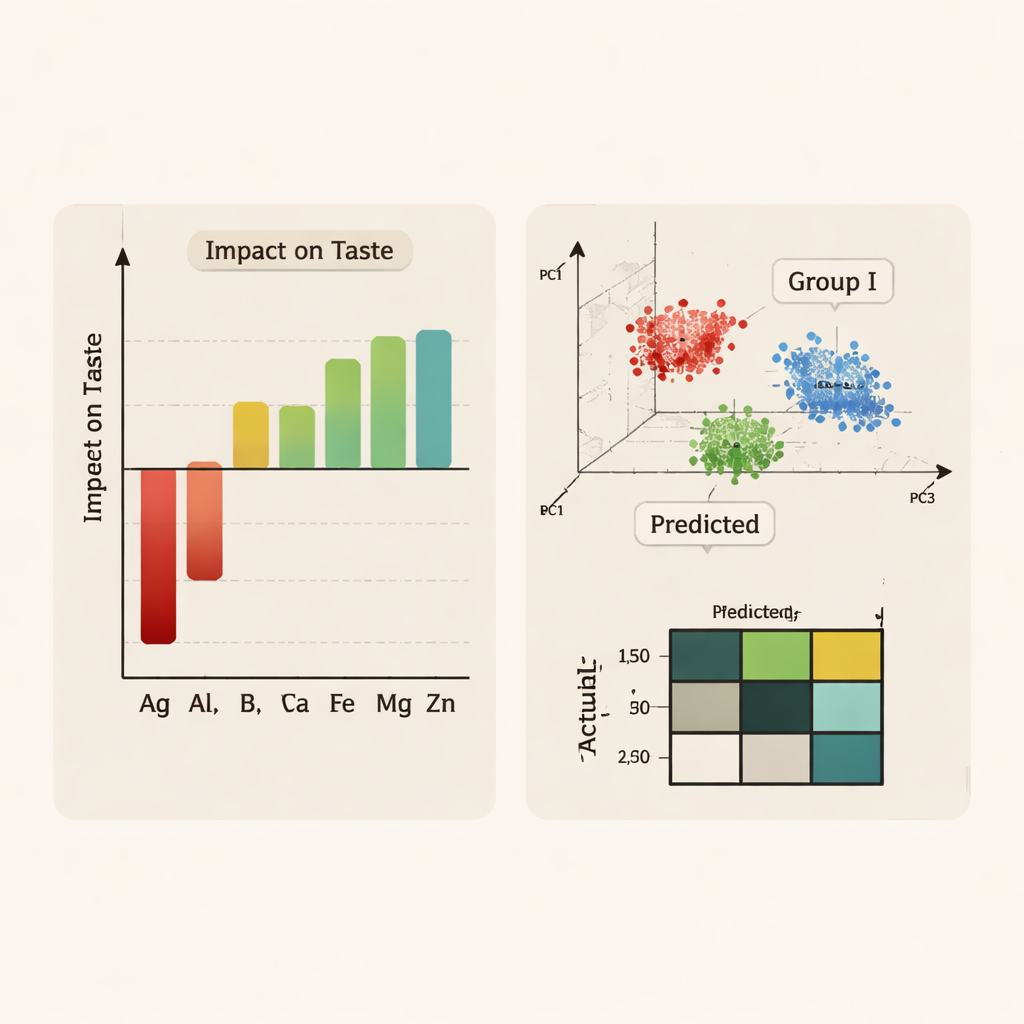
The story was not simply that “more minerals are better.” While some essential nutrients are needed in small amounts, too much can work against good eating quality. Calcium, for example, was linked to a firmer, less pleasant texture once the rice cooled, in line with earlier work showing that hard water can make rice tougher. Zinc, often added to foods for nutritional reasons, was associated with lower palatability when present at higher levels, likely because it changes how starch and proteins behave during cooking. With advanced modeling, the team highlighted a handful of especially influential elements. Silver and magnesium emerged as powerful drivers of differences between samples, while calcium, iron, and aluminum also played key roles in shaping how the rice ultimately smelled, tasted, and felt.
Letting an “electronic tongue” do the tasting
Because human tasting panels are slow, costly, and can be influenced by personal preference, the researchers tested whether an “electronic tongue” could stand in as an objective taster. This device uses an array of taste-sensitive electrodes to capture complex signals from rice extracts. The team fed these electronic patterns into common machine-learning tools that look for structure in data. A principal component analysis clearly separated the same three groups that were defined by metal content. A support vector machine classifier then used the sensor signals to assign samples to groups, correctly identifying their category about 93 percent of the time. Some samples with similar profiles were occasionally confused, but overall the system showed that taste electronics can track metal-driven quality differences remarkably well.
What this means for your bowl of rice
For consumers, the study underscores that rice quality and safety are intertwined with invisible metal content shaped by where and how the crop is grown. Certain metals that may not exceed safety limits can still dull aroma, harden texture, or reduce overall enjoyment. For farmers, breeders, and food companies, the work offers a new toolkit: combine precise metal measurements with electronic tongue sensing to rapidly screen rice batches, guide breeding for better flavor, and monitor fields where metal buildup is a concern. In practical terms, this approach could help keep more rice both safe and delicious, ensuring that what ends up in the pot satisfies not only nutritional needs but also the demanding standards of everyday eaters.
Citation: Tan, G., Liu, C., Tong, Y. et al. Metal element drivers of rice sensory variation revealed by ICP-MS and electronic tongue predictive modeling. npj Sci Food 10, 69 (2026). https://doi.org/10.1038/s41538-026-00719-5
Keywords: rice eating quality, metal contamination, electronic tongue, food sensory analysis, grain safety