Clear Sky Science · en
Exploring new applications of toasted chestnut shells as an oak alternative in distilled spirit aging
A New Use for an Overlooked Shell
Every autumn, tons of chestnuts are processed for food, and their thick brown shells usually end up burned or discarded. This study explores a surprising new use for that waste: turning toasted chestnut shells into a sustainable alternative to oak for aging whiskey. For anyone interested in food waste, flavor, or spirits, the work shows how an agricultural by‑product can reshape the taste and aroma of a classic drink while easing pressure on oak forests.
From Farm Waste to Flavor Ingredient
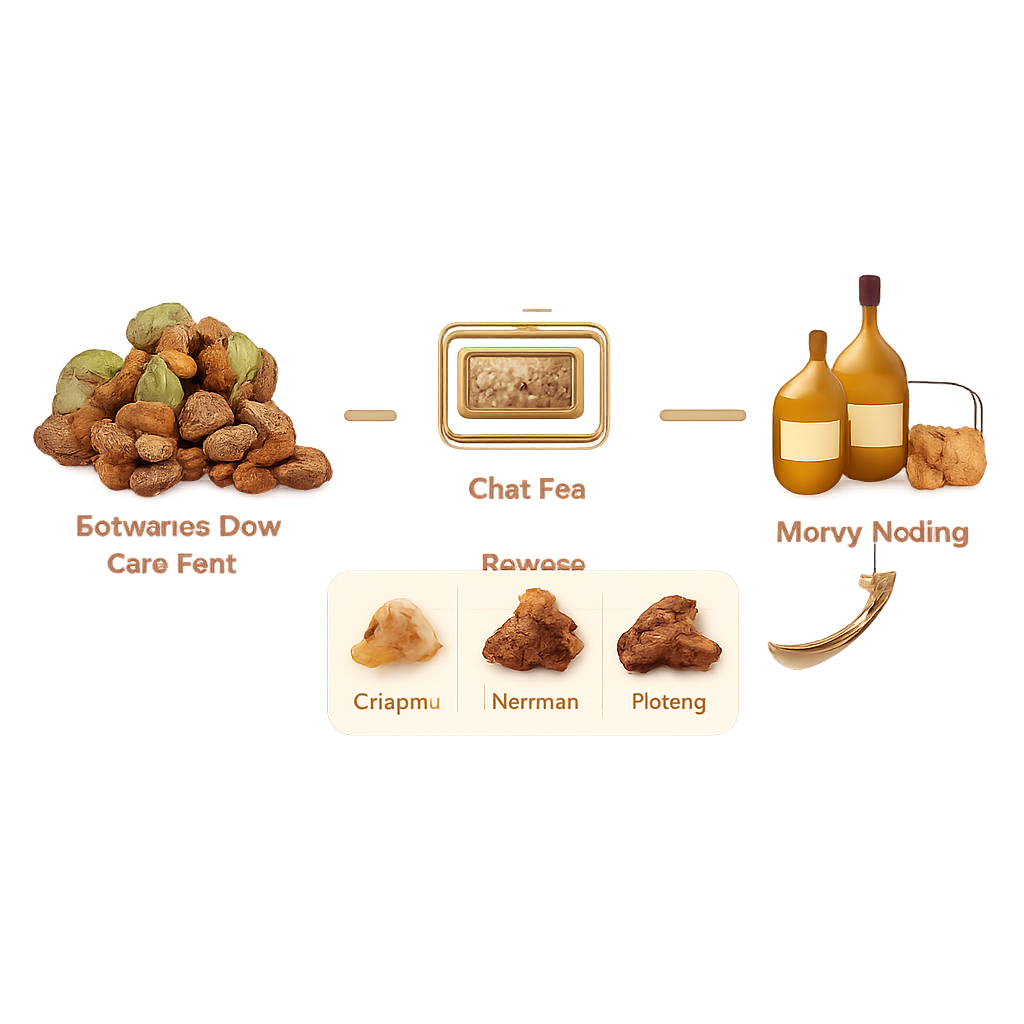
Chestnut shells make up about a fifth of the whole nut by weight, and worldwide production, especially in China, generates mountains of shells with few high‑value uses. Yet previous research has shown that these shells are rich in plant fibers and phenolic compounds, which can act as antioxidants and also influence color and taste. Oak wood, traditionally used to age whiskey and other spirits, releases similar types of compounds when toasted. The authors reasoned that, if chestnut shells were cut into chips and toasted at different temperatures, they might release their own mix of flavor molecules into young whiskey, transforming a lowly waste product into a tool for crafting new styles of spirits.
Comparing Chestnut Shells and Oak in the Glass
To test this idea, the team produced a standard batch of barley‑based whiskey and then aged it for 30 days with either toasted chestnut shell chips or commercial toasted oak chips. Both materials were used at the same dose and in three toasting levels: light, medium, and heavy. Basic measurements showed that adding either type of chip slightly increased the whiskey’s total acidity and greatly boosted its phenolic content compared with an untreated control. Color shifted from nearly colorless to hues ranging from yellowish to amber, with oak chips generally producing deeper tones than chestnut shells. These differences likely reflect how the distinct chemistry of shell versus wood breaks down and recombines during toasting and aging.
Sniffing Out New Aromas
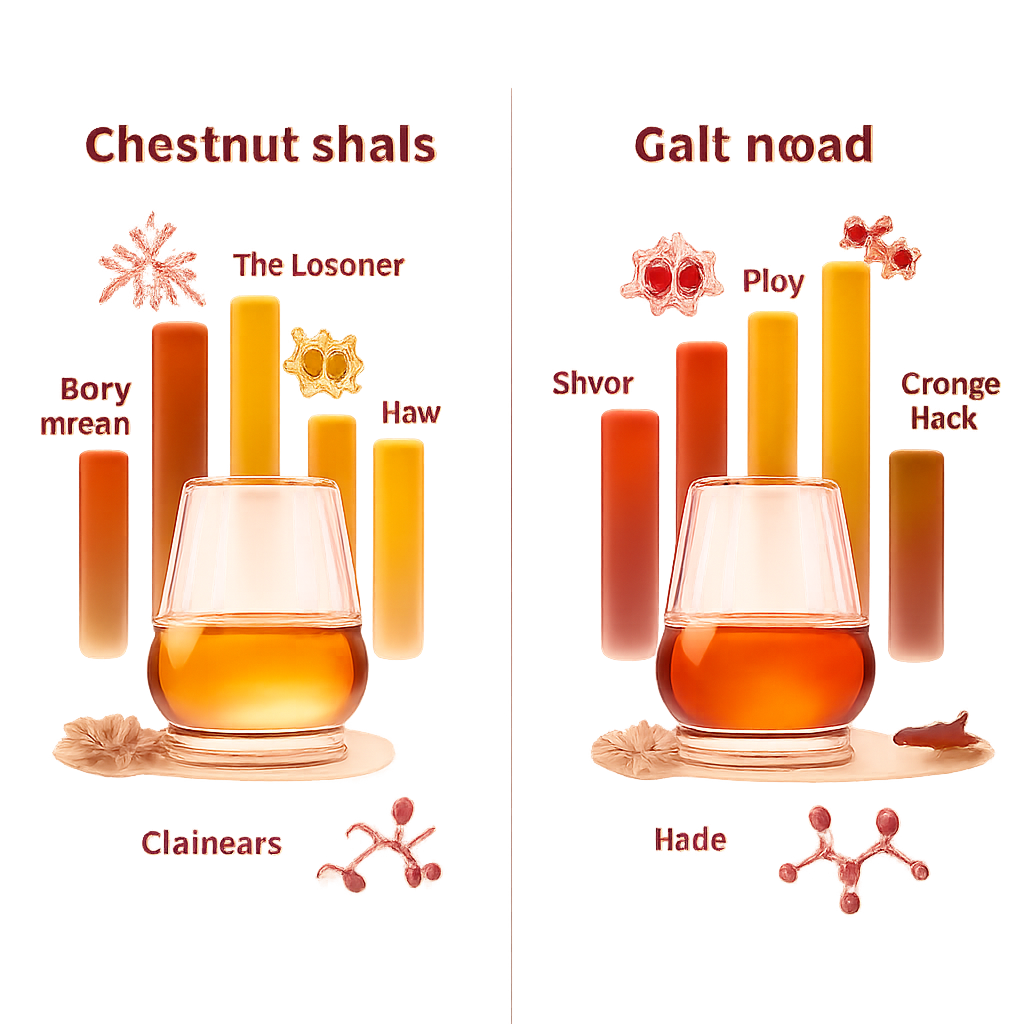
Aroma, however, is where chestnut shells truly set themselves apart. The researchers used a suite of tools to profile the whiskeys’ smells: an electronic nose that mimics human sniffing with sensor arrays, two advanced chromatographic methods that separate and quantify volatile compounds, and a trained tasting panel. Together, these methods revealed that chestnut shell–aged whiskeys carried a markedly different scent signature from oak‑aged ones. While oak chips enriched the spirit in fruity ethyl esters, reinforcing classic fruity and floral notes, chestnut shells raised levels of certain aldehydes and related compounds. One compound in particular, 2‑methyl butanal, along with guaiacol and some grassy aldehydes, was pinpointed as a key contributor to an intensified roasted, smoky, and green/plant aroma.
How the Chemistry Changes the Experience
By combining instrumental data with calculations of each compound’s odor impact, the authors showed that chestnut shells tend to lower some fruity components and terpenes while elevating aldehydes, acids, and smoky molecules. As a result, tasters described chestnut shell–aged whiskeys as more roasted/smoky and herbaceous, with noticeable fatty or waxy nuances, but with less of the solvent‑like or harsh notes that can detract from drinkability. Oak‑aged samples, in contrast, leaned strongly fruity and floral. Interestingly, chestnut shells also appeared to absorb or moderate some unwanted aromas, suggesting a natural “purifying” effect in addition to adding their own character.
What This Means for Drinkers and the Planet
For lay readers, the takeaway is straightforward: toasted chestnut shells can successfully stand in for oak chips during whiskey aging, yielding spirits that are slightly more acidic, lightly amber in color, and rich in smoky, roasted, and green aromas rather than predominantly fruity ones. This opens the door to new flavor styles for distilled spirits and offers a promising way to upgrade a problematic waste stream into a valuable resource. If such approaches are adopted more widely, they could help reduce reliance on slow‑growing oak, cut down on waste from the chestnut industry, and give producers and drinkers alike a broader palette of sustainable flavor options.
Citation: Zhao, Y., Lu, X., Sun, Q. et al. Exploring new applications of toasted chestnut shells as an oak alternative in distilled spirit aging. npj Sci Food 10, 65 (2026). https://doi.org/10.1038/s41538-026-00715-9
Keywords: whiskey aging, chestnut shells, oak alternatives, food waste valorization, aroma compounds