Clear Sky Science · en
Tailored effects of coarse grain substitution on blood pressure via gut microbiota-metabolite networks and host gene variants: a randomized controlled trial
Why Your Daily Grains Might Matter More Than You Think
Many people are told to “eat more whole grains” to protect their hearts, but what does that really do inside the body? This study followed Chinese adults with slightly elevated blood pressure to see what happens when some of their usual white rice and wheat are swapped for coarse grains like oats, buckwheat, and beans. Beyond simply asking whether blood pressure drops, the researchers peered into the gut to see how trillions of microbes, their chemical products, and even human genes might shape who benefits most from this dietary change.
A Closer Look at Coarse versus Refined Grains
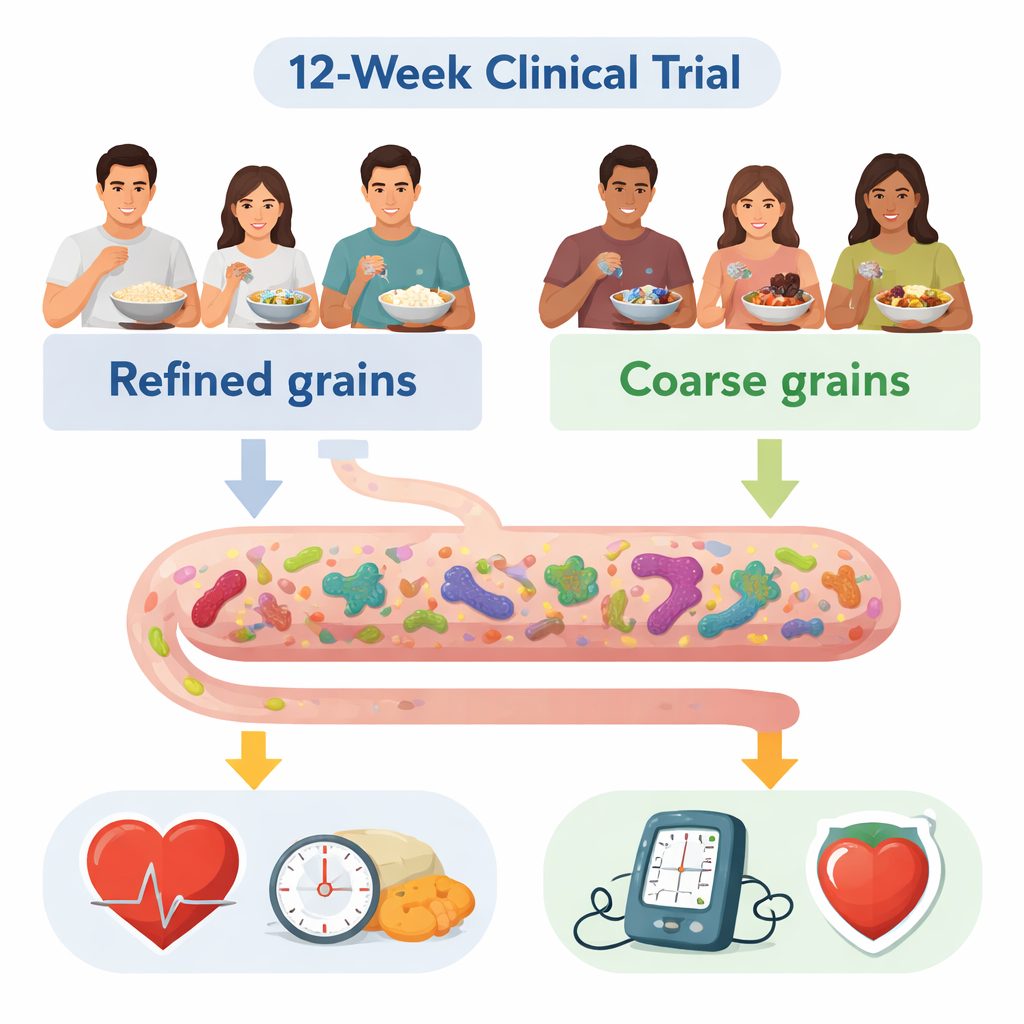
In China, “coarse grains” refers to all grains other than rice and wheat, as well as dried beans. These foods are less processed and richer in fiber, vitamins, and minerals than polished white rice or refined flour. Earlier large-scale surveys in China suggested that people who frequently eat coarse grains tend to have lower blood pressure and a lower risk of hypertension. However, those studies could not prove cause and effect. To test this more directly, the researchers designed a 12-week randomized trial in which 172 adults with prehypertension were assigned either to replace 100 grams per day of refined grains with coarse grains, or to continue with refined grains while receiving similar lifestyle advice.
What Happened to Blood Pressure and Metabolism
After three months, both groups saw very similar drops in blood pressure: systolic pressure fell by about 5–7 mmHg and diastolic pressure by about 2–3 mmHg. This size of reduction is meaningful for long-term heart and stroke risk, but crucially, it occurred in both the coarse grain and refined grain groups. The researchers also tracked other health markers such as blood fats, blood sugar, insulin, waist size, and inflammation. Changes were small overall. There was a hint that coarse grains might slightly improve total cholesterol compared with refined grains, but this effect was modest and participants started with generally healthy cholesterol levels. Because both groups also received guidance on healthy habits, and the study ran through warmer months when blood pressure naturally tends to fall, the authors caution that lifestyle changes and seasons likely contributed to the improvements.
Gut Microbes and Their Chemical Messages
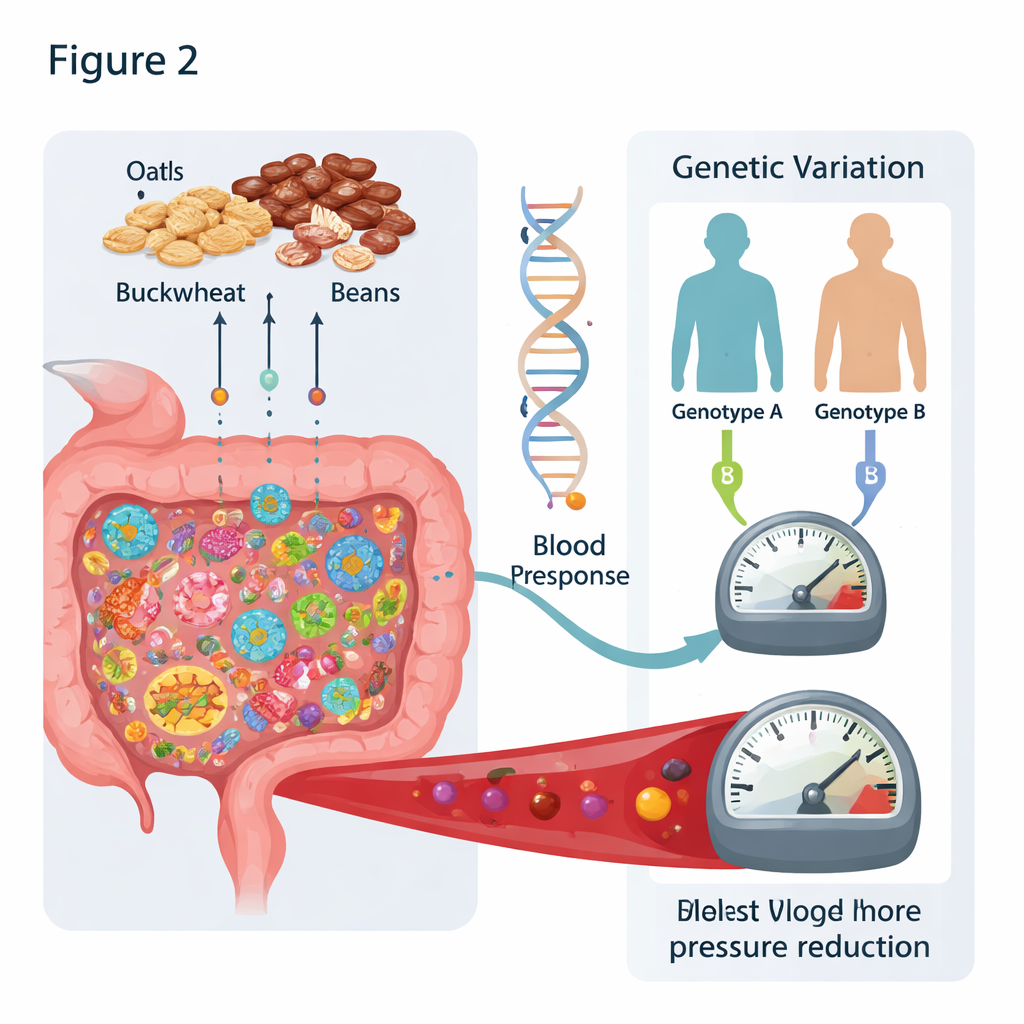
Although blood pressure improvements were similar, the coarse grain group showed noticeably different changes in their gut microbiota and stool metabolites. Certain bacteria, such as Lactococcus and Faecalibacterium, increased with coarse grains, while others decreased. Hundreds of small chemical compounds in stool shifted, and 23 of these were linked to how much an individual’s blood pressure changed. By mapping connections among microbes, these chemicals, and blood pressure, the team found network patterns suggesting that coarse grains reshape the gut ecosystem. A key functional theme was the enrichment of “ABC transporters” in microbes—protein systems that help bacteria import complex sugars and lipids from fiber-rich foods. Some specific compounds, including one related to carnitine metabolism and another called equol (formed from plant isoflavones), were tied both to particular bacteria and to blood pressure changes, hinting at possible biological pathways.
Who Benefits Most? Clues from Microbes and Genes
Not everyone responded to the coarse grain swap in the same way. Using machine learning models based on baseline gut microbiota data, the researchers could predict which individuals would experience a larger blood pressure drop with reasonably good accuracy. People whose starting gut communities had lower levels of certain bacteria, such as Bifidobacterium and Streptococcus, seemed more likely to benefit. This suggests that those with “suboptimal” gut profiles might gain more from fiber-rich grains. The team also examined human genes known to influence both gut microbes and heart risk. One variant in the ABO blood group gene (rs514659) interacted with the intervention: carriers of different versions of this gene showed different patterns of blood pressure change and shifts in key gut bacteria. In contrast, a gene related to lactose digestion did not show such interactions.
What This Means for Everyday Eating
For people with mildly elevated blood pressure, this trial suggests that simply swapping some white rice or wheat for coarse grains, over 12 weeks, does not automatically produce stronger blood pressure benefits than general healthy living advice alone. However, it does show that coarse grains clearly reshape gut microbes and their chemistry, and that those invisible changes are tied to blood pressure in ways that depend on both gut composition and human genes. In the long run, this kind of work moves us toward “tailored nutrition,” where doctors and dietitians might one day use a stool sample and simple genetic tests to recommend the types of grains most likely to help a given person control blood pressure and protect their heart.
Citation: Li, J., He, Y., He, J. et al. Tailored effects of coarse grain substitution on blood pressure via gut microbiota-metabolite networks and host gene variants: a randomized controlled trial. npj Sci Food 10, 58 (2026). https://doi.org/10.1038/s41538-026-00708-8
Keywords: coarse grains, gut microbiota, blood pressure, personalized nutrition, whole grains