Clear Sky Science · en
Bacillus velezensis mitigates deoxynivalenol-induced intestinal inflammation and liver injury via modulating the gut microbiota
Why a Tiny Gut Helper Matters
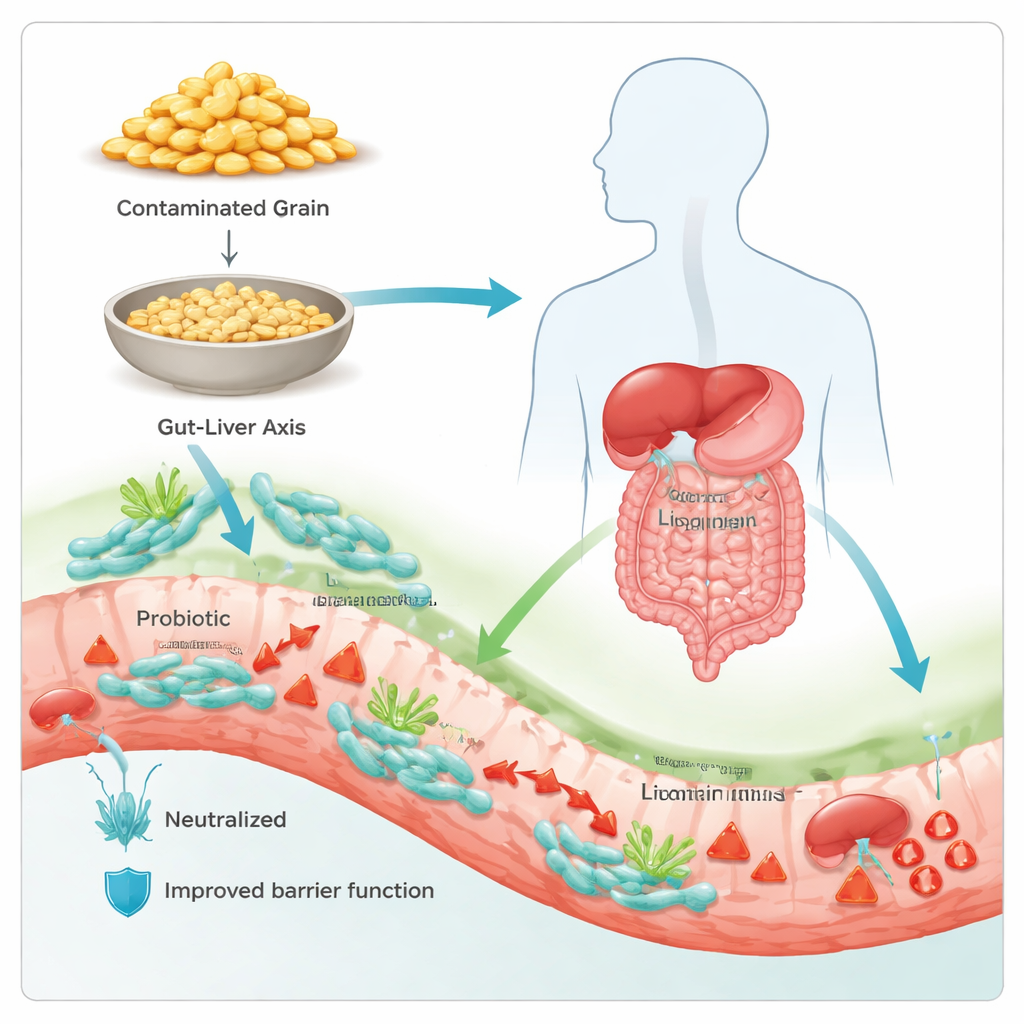
Many of the breads, cereals, and animal feeds we rely on can quietly accumulate deoxynivalenol (DON), a toxin made by fungi that grow on grains. Even at low levels, DON can upset the gut, strain the liver, and weaken immunity in both people and livestock. This study explores whether a naturally occurring bacterium, Bacillus velezensis WMCC10514, can act as a living safeguard in the intestine—breaking down DON, calming inflammation, and protecting the gut–liver connection that underpins whole‑body health.
A Hidden Threat in Everyday Grains
DON is remarkably tough: it survives harvesting, storage, and food processing, so it regularly shows up in grain-based foods and feeds. Inside the body, it primarily attacks the intestine and liver, two organs that work together to absorb nutrients and detoxify harmful compounds. Previous attempts to remove DON using chemicals or physical treatments have had limited success and risk altering food quality. Researchers have therefore turned to beneficial microbes—probiotics—that might bind, transform, or otherwise neutralize the toxin while also supporting gut health.
A Probiotic Candidate Put to the Test
The team focused on a strain called B. velezensis WMCC10514, originally isolated from a traditional fermentation starter. They first tested how well it could survive conditions similar to the stomach and small intestine, where strong acid and bile salts usually kill many microbes. WMCC10514 retained high survival at moderate acid and bile levels and formed sticky biofilms that help it cling to the gut lining. Importantly, it degraded a substantial portion of DON in laboratory solutions, even under harsh simulated digestive conditions. Using a fluorescent tag, the researchers confirmed that the strain could colonize the mouse intestine and persist there, suggesting it can act directly where the toxin first enters the body.
Protecting Growth, Gut Lining, and Liver
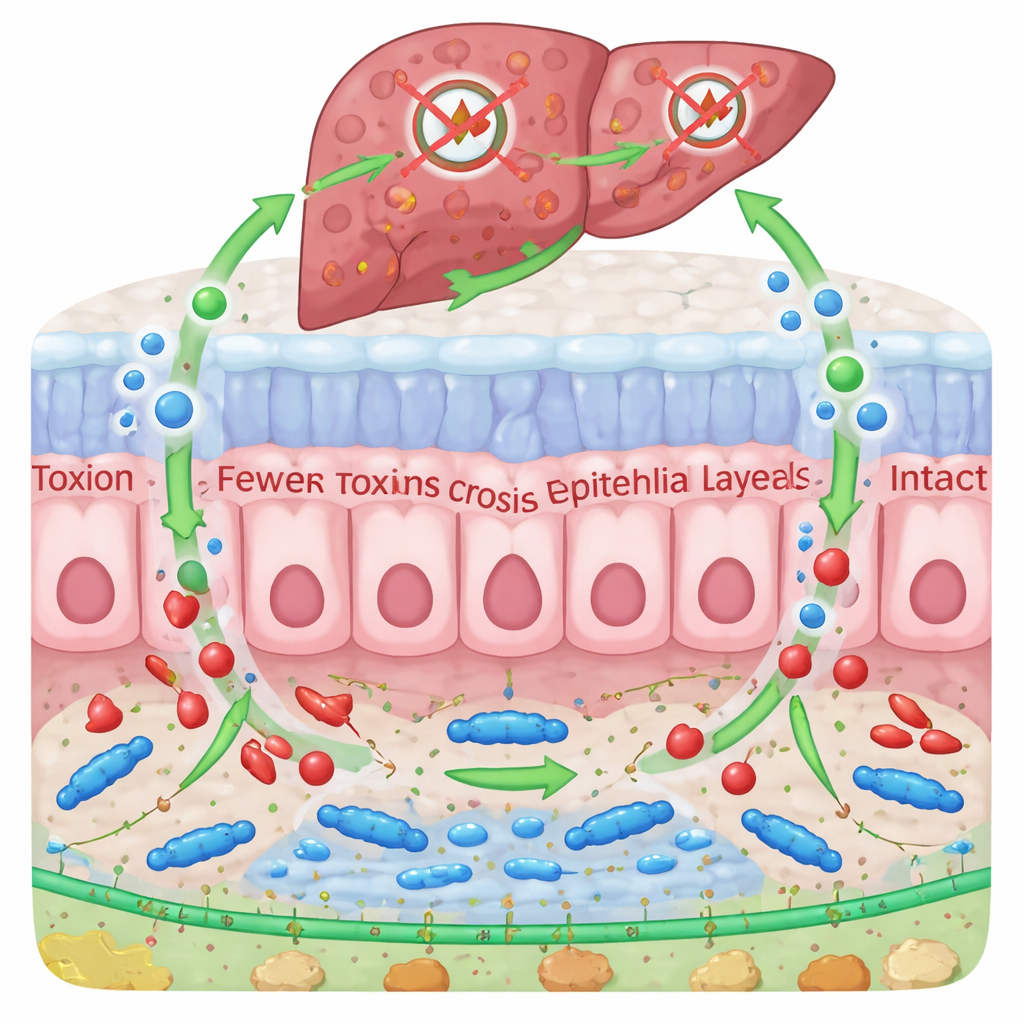
To see how this played out in a living animal, mice were fed DON with or without daily doses of WMCC10514 for four weeks. Mice exposed only to the toxin ate less, gained less weight, and showed clear signs of liver stress: swollen and damaged liver cells filled with inflammatory immune cells. Their small intestines had stunted finger-like villi, deeper crypts, and a weakened barrier, reflected in lower levels of key sealing proteins known as ZO‑1 and Occludin. When mice received the probiotic alongside DON, food intake and weight gain rebounded, liver and intestinal tissues looked far healthier, and the tight junction proteins returned toward normal levels. Measurements showed less DON accumulating in liver and fecal material, and blood tests revealed that the probiotic sharply lowered pro‑inflammatory signals while restoring an anti‑inflammatory molecule called IL‑10.
Rebalancing the Microbial and Chemical Dialogue
Deep genetic analyses of liver and intestinal tissues showed that DON strongly activated genes and pathways linked to inflammation and disease, especially the TLR4/NF‑κB system, a central alarm line of the immune response. WMCC10514 reversed many of these changes, dialing down inflammation-related gene activity. At the same time, the toxin disrupted the normal mix of gut bacteria, reducing beneficial groups such as Lactobacillus and Bacteroides and favoring less desirable species. The probiotic colonized the intestine, restored helpful microbes, and stabilized the complex network of interactions among them. This healthier community produced more short-chain fatty acids—small molecules like acetate, butyrate, and valerate—which support the intestinal barrier and feed the liver. Higher levels of these molecules were linked to lower expression of inflammatory genes in both gut and liver, pointing to a chemical bridge between microbiome recovery and organ protection.
What This Means for Food Safety
Put simply, the study shows that B. velezensis WMCC10514 can both weaken the toxin itself and help the body fend off its effects. By surviving passage through the digestive tract, settling in the gut, degrading DON, rebuilding a friendly microbiome, boosting protective fatty acids, and calming overactive immune pathways, this probiotic strain shields the intestine and liver from damage in mice. While more work is needed before it can be used widely in people or farm animals, the findings suggest that carefully chosen live bacteria could one day be added to feeds or foods as an extra line of defense against stubborn grain toxins like DON.
Citation: Huang, X., Xu, B., Lei, Y. et al. Bacillus velezensis mitigates deoxynivalenol-induced intestinal inflammation and liver injury via modulating the gut microbiota. npj Sci Food 10, 57 (2026). https://doi.org/10.1038/s41538-026-00707-9
Keywords: mycotoxin detoxification, gut microbiota, probiotics, gut-liver axis, deoxynivalenol