Clear Sky Science · en
The role of spermidine in plants and humans: a pathway from climate change adaptation to health benefits
From fields to healthy aging
Imagine a single natural molecule that can help crops withstand heat and drought while also supporting a longer, healthier life in humans. This review article explores spermidine, a small compound found in plants and people, and follows its journey “From Farm to Pharm” – from how it helps crops cope with climate change to how it may protect our hearts, brains, and other organs as we age.
A tiny helper inside every living cell
Spermidine is a member of a family of natural substances called polyamines that live inside virtually all cells. Because it carries positive electric charges, it can stick to DNA, proteins, and cell membranes, helping to stabilize these fragile structures. In both plants and humans, spermidine is involved in cell growth, tissue formation, stress responses, and a vital cellular cleanup process known as autophagy. In plants, it supports every stage of development, from embryo formation and pollen growth to fruit ripening and grain filling. In humans and other animals, it is linked to heart protection, brain health, cancer defenses, and slower functional decline in many organs.
Helping crops face a changing climate
Modern agriculture is challenged by heat waves, drought, flooding, salty soils, and other consequences of climate change. The authors show that spermidine can act as a kind of “stress primer” for plants. When applied to seeds, roots, or leaves, it helps crops such as wheat, rice, soybean, citrus, and tomato better tolerate drought, salt, waterlogging, and disease. It does this by boosting the plant’s own antioxidant systems, supporting photosynthesis, maintaining cell membranes, and fine‑tuning plant hormones. In cereals, short sprays of spermidine after flowering can improve the filling of grains, preserve yield under heat or drought, and even tweak the amounts of starch and protein in the harvested seeds. However, extremely high doses can push cells toward programmed death, so timing and amount matter. 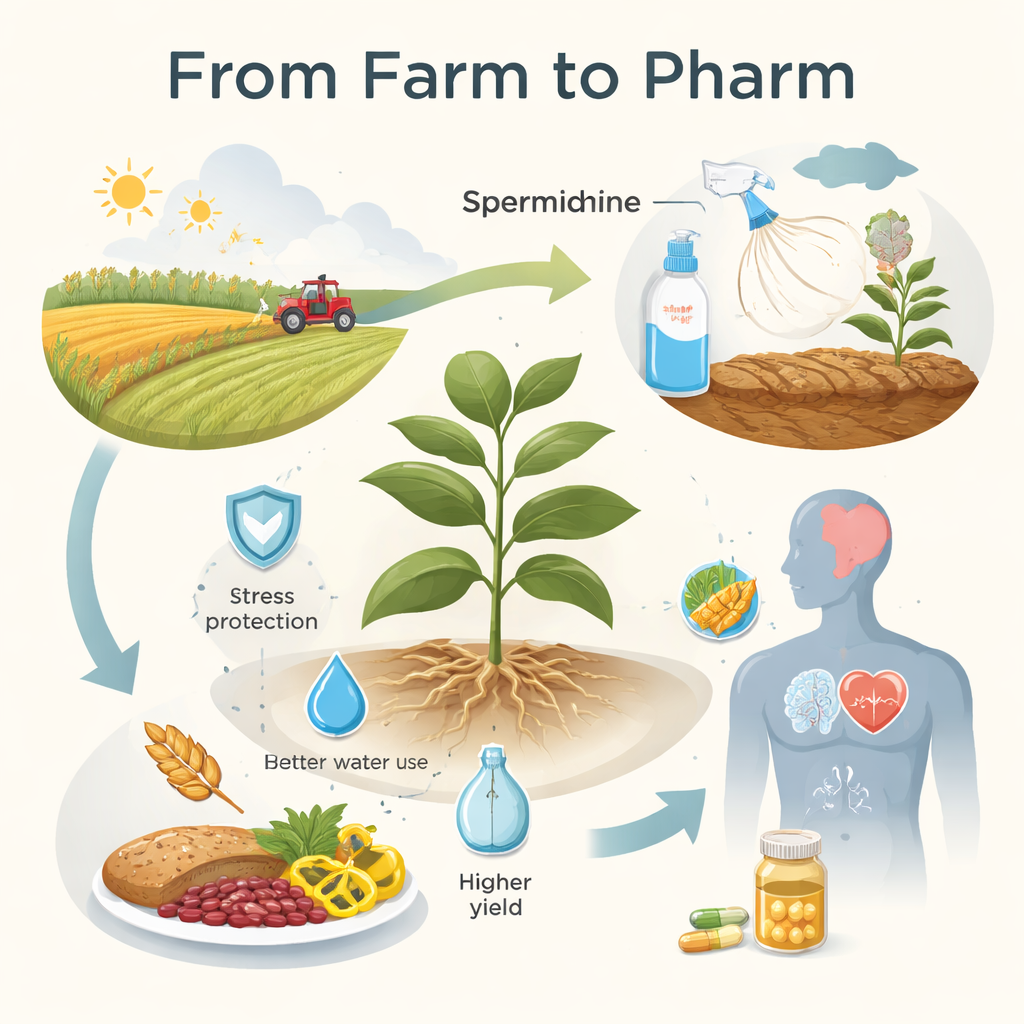
Engineering plants and delivering spermidine smartly
Beyond simple spraying, scientists are exploring ways to breed or engineer crops with naturally higher spermidine levels. Overexpressing key enzymes that make spermidine has already produced plants that are more tolerant to cold, salt, drought, and disease, although overdoing it can interfere with flower and seed development. New genetic tools and tissue‑specific control of these enzymes could raise spermidine where it is most useful, such as in grains or fruits, without harming the plant. At the same time, researchers are testing advanced delivery systems, including nanomaterials that slowly release spermidine or related molecules. These “smart carriers” could reduce the need for repeated spraying, making spermidine‑based treatments more practical and environmentally friendly.
From everyday foods to potential longevity aid
People obtain spermidine from three sources: their own cells, gut microbes, and especially food. Plant foods are key suppliers, with high levels in soybeans and other beans, mushrooms, wheat germ, and certain vegetables, nuts, and seeds. The article emphasizes that the spermidine content in a given food can vary widely depending on variety and processing: wheat germ is rich, but white flour, bread, and pasta made from it contain far less; rice bran has more than polished rice; mixing in whole grains or wheat germ can greatly increase intake. Population studies suggest that diets naturally rich in spermidine, such as traditional Mediterranean or Japanese patterns, are associated with lower blood pressure, reduced risk of fatal heart failure, fewer cardiovascular events, and lower overall mortality. Experimental work in animals shows that lifelong or even late‑life spermidine supplementation can extend lifespan by around 10–15 percent, mainly by enhancing autophagy and cellular stress resistance. 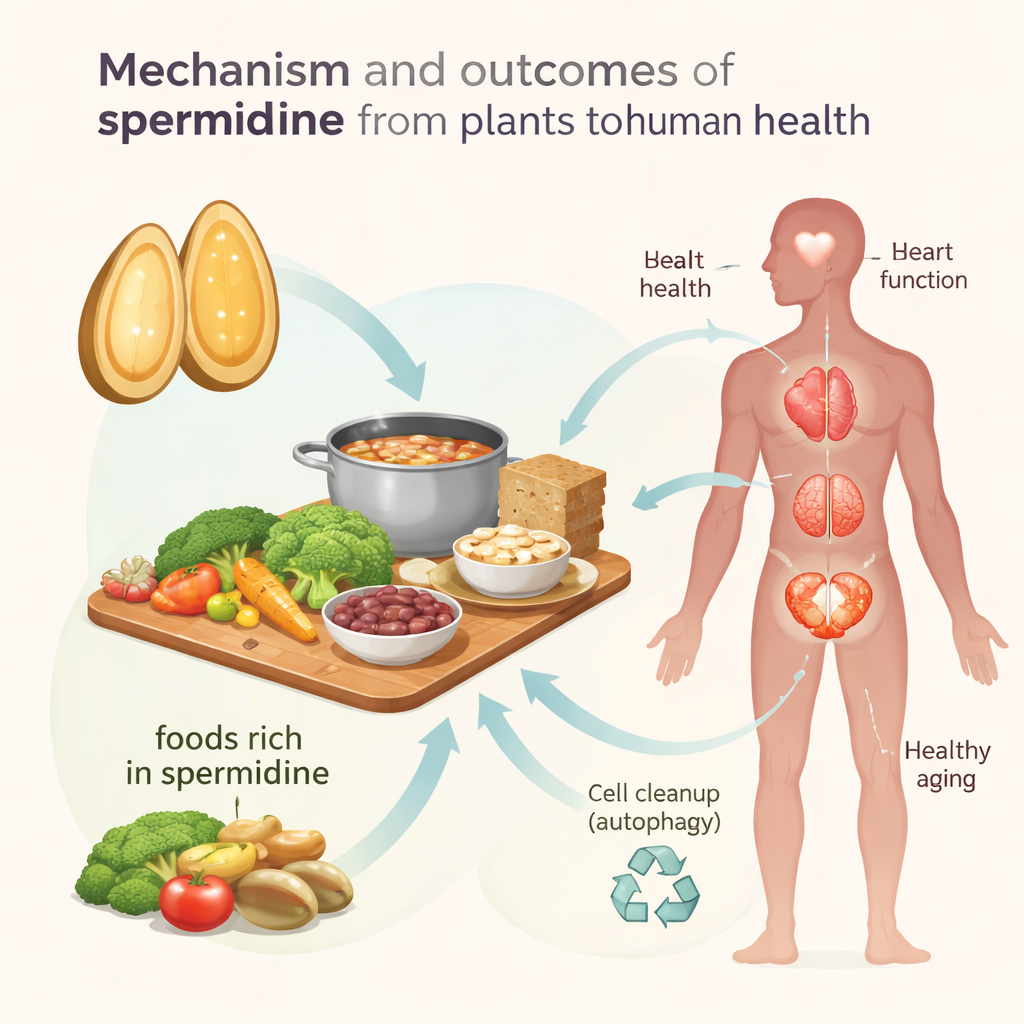
Health benefits, medical uses, and open questions
Human and animal studies together paint spermidine as a broad protector. It appears to support heart flexibility and blood vessel function, dampen inflammation, shield kidneys and liver from long‑term damage, and help maintain bone strength and muscle structure in aging. Early clinical trials report that adding a few milligrams of spermidine per day through wheat‑germ‑enriched bread or other foods may improve cognitive performance in older adults with mild dementia and reduce inflammatory markers. Because spermidine is already present in the diet and the body, toxicity tests and observational data so far suggest it is safe at typical dietary levels. Still, caution is advised for people with existing cancers, since polyamines can also fuel cell growth in some contexts, and more research is needed before making firm recommendations for patients.
Bringing it all together for people and the planet
To a non‑specialist, the main takeaway is that spermidine is a natural bridge between healthier crops and healthier aging. Using it wisely in agriculture could produce plants that better withstand climate stress while also carrying more of this beneficial compound into our food supply. At the same time, diets emphasizing spermidine‑rich plant foods might help protect the heart, brain, and other organs as we get older. The article concludes that unlocking the full promise of spermidine will require careful work on safe doses, target groups, and green production and delivery methods, but it offers a compelling example of how solutions for climate‑resilient farming and human health can be aligned rather than opposed.
Citation: Blagojević, B.D., Brunel-Muguet, S., Šućur, R. et al. The role of spermidine in plants and humans: a pathway from climate change adaptation to health benefits. npj Sci Food 10, 68 (2026). https://doi.org/10.1038/s41538-025-00695-2
Keywords: spermidine, healthy aging, climate-resilient crops, polyamines, plant-based nutrition