Clear Sky Science · en
Differential DNA-methylation of synaptic genes in CSF and blood in schizophrenia
Why this research matters to everyday life
Schizophrenia is best known for its disturbing symptoms—hearing voices, disorganized thinking, and emotional withdrawal—but underneath lies a delicate problem of how brain cells talk to each other. This study looks at tiny chemical tags on DNA, called methylation marks, in genes that help brain cells communicate at synapses. By examining these marks not only in blood but also in the fluid that bathes the brain and spinal cord, the researchers ask whether subtle changes in gene regulation might help explain, or even someday help diagnose, schizophrenia.
Two hits and the brain’s wiring
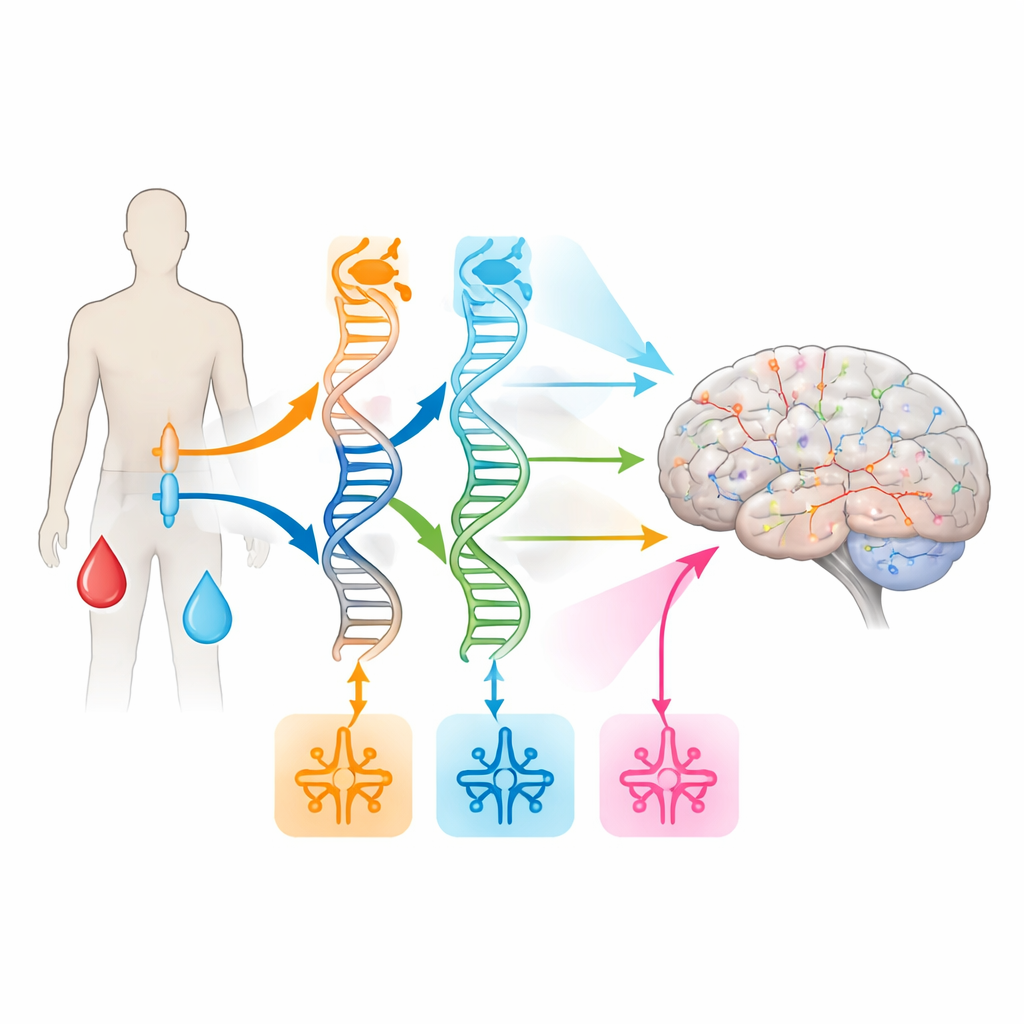
Modern theories suggest schizophrenia often arises from a “two-hit” process. The first hit is a built-in vulnerability—small, silent differences in how the brain develops early in life. The second hit comes later, from stressors such as trauma, drug use, or other environmental pressures. One way these experiences may leave a biological footprint is by changing DNA methylation, which can dial gene activity up or down without altering the genetic code itself. Because adolescence is a period when the brain naturally prunes about a third of its synapses—but far more are lost in schizophrenia—genes that shape synapses are prime suspects.
Looking for signals in blood and brain fluid
To explore this, the team studied 36 people with schizophrenia and 23 control participants. They focused on four key genes: two involved in the dopamine system (the dopamine transporter DAT and the D2 receptor), one that helps organize glutamate receptors at synapses (PSD95), and one best known from dementia research but also linked to psychosis (tau, or MAPT). Instead of brain tissue, which cannot be taken from living patients, they used cell-free DNA fragments found in cerebrospinal fluid (CSF) as a window into the brain, alongside standard blood samples. Recovering enough DNA from CSF is technically challenging, so the researchers optimized a multi-step extraction procedure to concentrate and gently process these fragile fragments.
What the chemical tags revealed
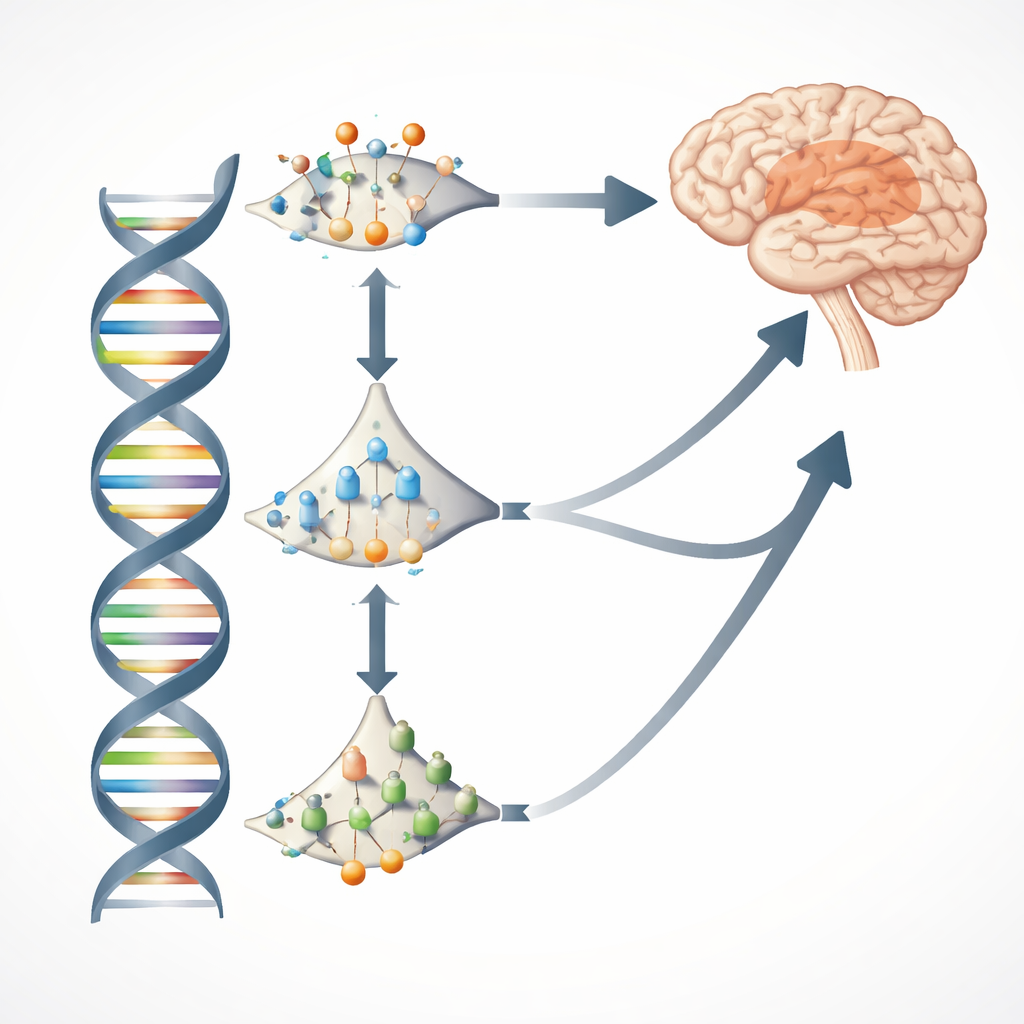
Once they could reliably read methylation patterns, a striking picture emerged. For the dopamine transporter gene DAT, people with schizophrenia consistently showed lower methylation in blood than controls, and similar low levels in their CSF. Because lower methylation is usually associated with higher gene activity, this pattern hints that the dopamine transporter might be more active in schizophrenia, potentially clearing dopamine more rapidly from synapses. In contrast, the D2 receptor gene did not show meaningful methylation differences between groups. For PSD95, which helps cluster glutamate receptors at the receiving side of synapses, patients with schizophrenia had noticeably higher methylation in their CSF than in their own blood, suggesting reduced activity of this crucial synaptic organizer within the central nervous system. Tau (MAPT) showed only subtle, non-significant differences between patients and controls.
Interpreting dopamine and glutamate changes
These patterns fit intriguingly with long-standing ideas about brain chemistry in schizophrenia. One influential view holds that parts of the brain are overly driven by dopamine signals. If dopamine levels are elevated, a boost in dopamine transporter activity—suggested by lower methylation of DAT—could represent the brain’s attempt to compensate by vacuuming excess dopamine from synapses more efficiently. On the glutamate side, the higher methylation of PSD95 in CSF points toward reduced support for glutamate receptors at synapses. That aligns with the “glutamate hypothesis,” which proposes that weakened glutamate signaling, particularly at NMDA-type receptors, contributes to cognitive and negative symptoms. Together, the findings hint at a coordinated imbalance: dopamine handling may be turned up while glutamate signaling strength is turned down.
What this means and what comes next
In simple terms, this study suggests that in schizophrenia some of the brain’s communication hardware may be subtly reprogrammed at the level of gene regulation. Chemical tags on DNA in key synaptic genes differ between patients and healthy people, and patterns in brain fluid do not always match those in blood. Although technical hurdles and small sample sizes—especially in control CSF—mean these results are exploratory, they show that cell-free DNA from cerebrospinal fluid can capture central epigenetic changes. With better low-input sequencing tools and larger cohorts, such methylation signatures might eventually help doctors track how schizophrenia develops, gauge how the brain responds to treatment, or even refine diagnosis by revealing the molecular fingerprints of disturbed brain communication.
Citation: Jahn, K., Groh, A., Riemer, O. et al. Differential DNA-methylation of synaptic genes in CSF and blood in schizophrenia. Schizophr 12, 30 (2026). https://doi.org/10.1038/s41537-026-00738-x
Keywords: schizophrenia, DNA methylation, cerebrospinal fluid, dopamine, synapse