Clear Sky Science · en
Cognitive and emotional effects of bilateral prefrontal anodal tDCS and high-frequency tRNS in schizophrenia: a randomized sham-controlled study
Boosting Thinking and Mood in a Tough-to-Treat Illness
Schizophrenia often brings not only hallucinations and delusions, but also serious problems with memory, planning, and mood that medicines rarely fix. This study tested whether gently stimulating the front of the brain with weak electrical currents could temporarily sharpen thinking and lift mood in people with long-standing schizophrenia. By comparing two types of stimulation with a placebo-like session, the researchers explored whether this safe, noninvasive approach might become a useful add-on to standard care.
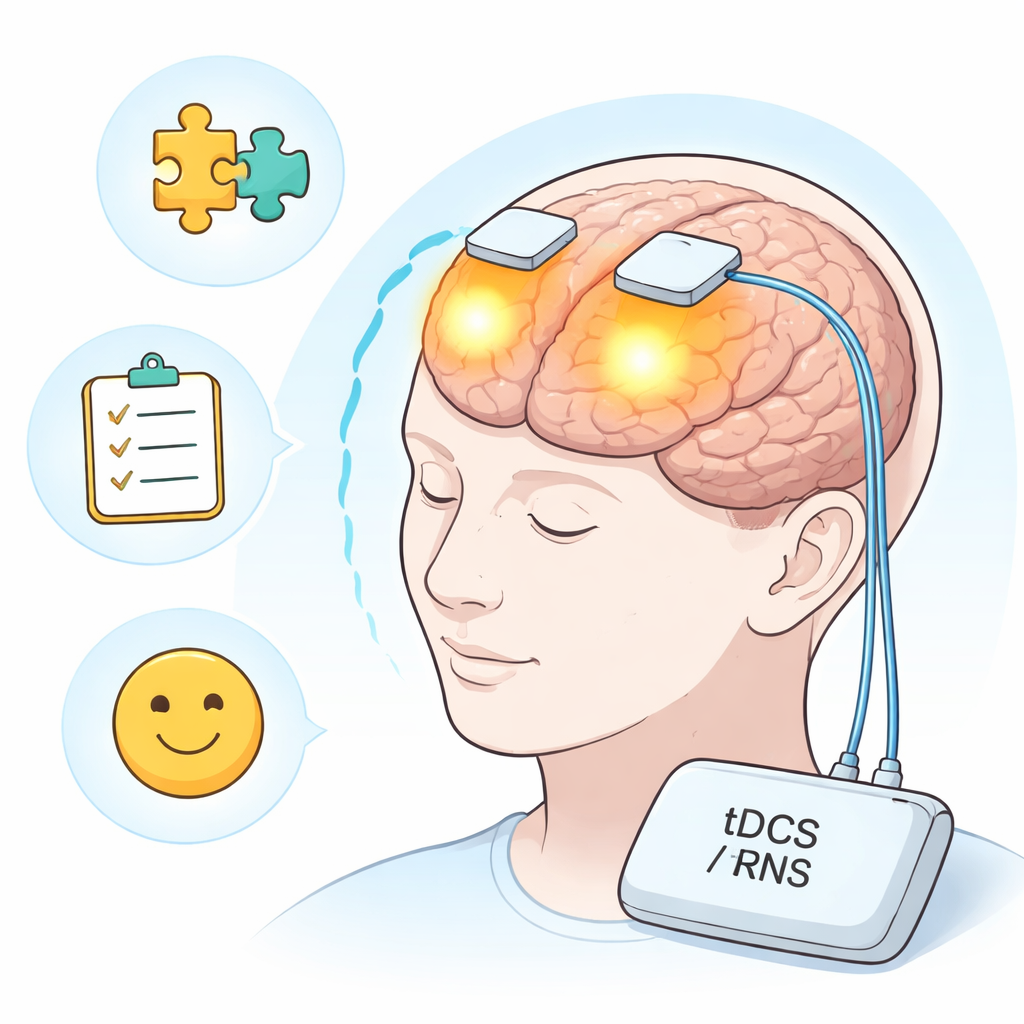
A Gentle Push to the Brain’s Control Center
The team focused on a brain area behind the forehead called the dorsolateral prefrontal cortex, a key hub for planning, working memory, and emotion control. Brain scans in schizophrenia often show this region working abnormally, which may help explain everyday problems such as organizing tasks or managing negative feelings. The researchers used two related techniques: transcranial direct current stimulation (tDCS), which passes a steady, low current, and transcranial random noise stimulation (tRNS), which delivers rapidly changing, faint electrical signals. Both were applied with two small sponge electrodes placed over the left and right sides of the forehead, with return electrodes on the shoulders to keep the current focused on the frontal areas.
Three Visits, Different Currents
Thirty-six men with schizophrenia living in a psychiatric hospital each took part in three separate sessions one week apart. In random order, every participant received tDCS, tRNS, or a sham (placebo) session that mimicked the feeling of stimulation but quickly switched off. During each 20-minute session, after the first five minutes of stimulation, patients performed computerized tasks that measured two core abilities: holding locations in mind while searching for tokens (a working memory test) and planning the fewest moves to match patterns of colored balls (a planning test). Before and after each session, they also rated their positive and negative emotions, such as feeling inspired versus irritable, using a standard mood questionnaire.
Sharper Planning and Clearer Working Memory
Both active stimulation methods made a clear difference in planning. Compared with sham, people solved more of the planning problems in the ideal minimum number of moves and used fewer extra moves on more difficult trials when they received either tDCS or tRNS. tRNS went a step further: it reduced mistakes and improved strategy on the working memory task, suggesting that this “noisy” current helped patients search more efficiently and remember locations better. These gains appeared without any meaningful increase in side effects. Participants mainly reported very mild sensations, such as itching or tingling under the electrodes, and no one stopped the study because of discomfort.
Brighter Feelings, Fewer Lows
The stimulation did not just affect thinking. After both tDCS and tRNS sessions, patients reported feeling fewer negative emotions, such as distress or nervousness, compared with sham. Only tRNS also produced a reliable rise in positive emotions, such as enthusiasm or inspiration. Notably, the more a person’s negative mood dropped after tRNS, the better they tended to do on the planning task—solving more problems with fewer moves. This link hints that easing emotional strain and sharpening thinking may go hand in hand when the frontal brain regions are nudged into a more balanced pattern of activity.
What This Could Mean for Future Care
For people with schizophrenia, difficulties with planning, memory, and mood can be as disabling as hallucinations and delusions, yet are stubbornly hard to treat. This study suggests that brief, low-intensity electrical stimulation over both sides of the frontal brain—especially using random noise stimulation—can safely produce short-term improvements in problem solving, working memory, and emotional state. While the effects were measured over a single session and only in men, the results point to a promising add-on approach that future, larger studies could refine into multi-session treatments aimed at improving everyday thinking skills and overall quality of life.
Citation: Jafari, E., Moghadamzadeh, A., Vaziri, Z. et al. Cognitive and emotional effects of bilateral prefrontal anodal tDCS and high-frequency tRNS in schizophrenia: a randomized sham-controlled study. Schizophr 12, 28 (2026). https://doi.org/10.1038/s41537-025-00720-z
Keywords: schizophrenia, brain stimulation, tDCS, tRNS, cognitive function