Clear Sky Science · en
Engraftment of wild-type alveolar type II epithelial cells in surfactant protein C deficient mice
Why repairing tiny air sacs matters
Breathing may feel effortless, but it depends on a delicate film called surfactant that coats the millions of tiny air sacs in our lungs. When surfactant is missing or faulty, as in some rare childhood lung diseases, children can suffer from relentless breathing problems and scarring of the lungs. Today, the only true cure is a lung transplant, an option limited by donor shortages and serious risks. This study explores a different idea: repairing damaged lungs by transplanting healthy surfactant-making cells, potentially opening the door to gentler, more targeted treatments.
When the lung’s caretakers go wrong
Inside each air sac (alveolus) live specialized “caretaker” cells called alveolar type II cells. They produce and recycle surfactant, which keeps the air sacs from collapsing and makes breathing easier. In some children, mutations in genes needed for surfactant production, including the surfactant protein C (SFTPC) gene, disrupt these cells. The result is childhood interstitial lung disease (chILD), marked by inflamed, thickened lung tissue, scarring, and sometimes respiratory failure. Doctors can offer only supportive medications and oxygen; for the most severely affected, lung transplantation is the last resort. The authors set out to test whether replacing some of the faulty caretaker cells with healthy ones could slow or reverse lung damage.
A mouse stand-in for a child’s lung disease
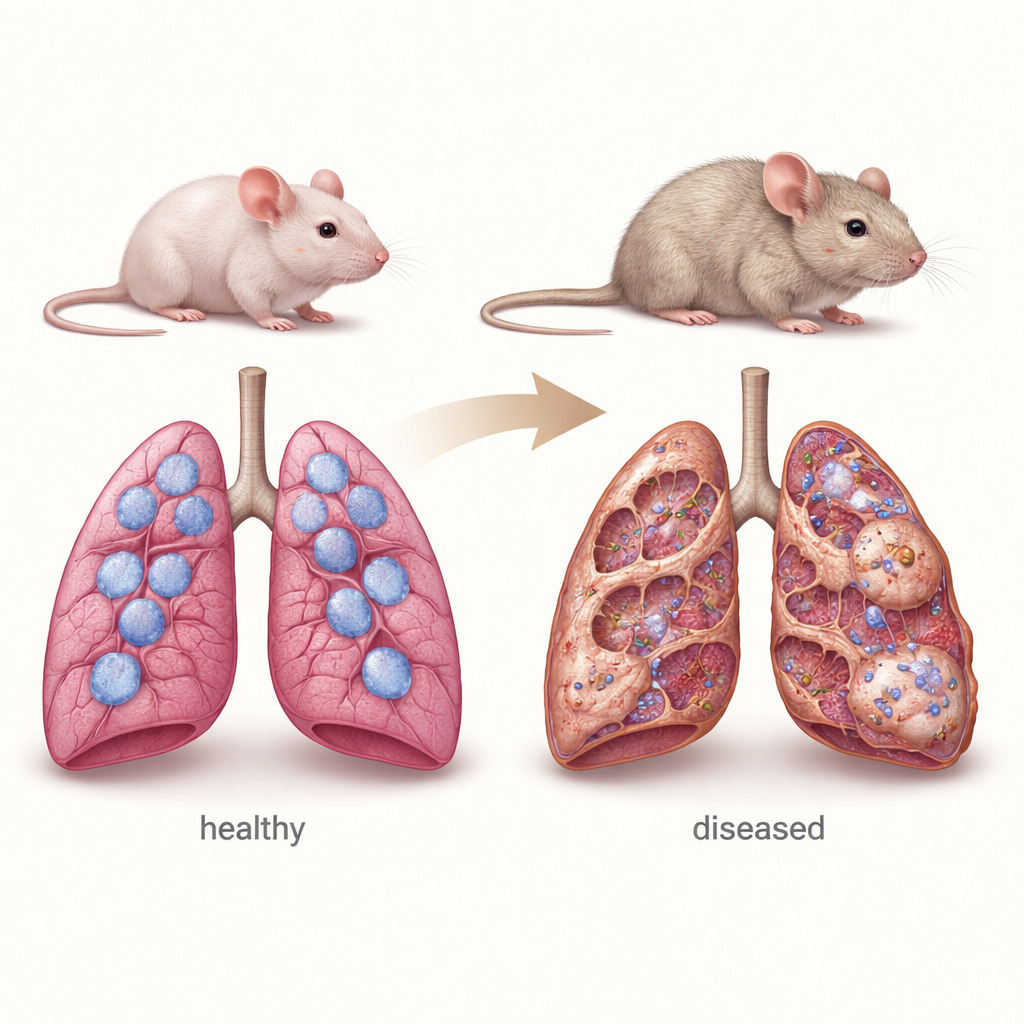
To mimic key features of chILD, the researchers used mice completely lacking the Sftpc gene. These animals are born with apparently normal lungs, but as they age they develop hallmarks of chronic lung disease: thickened walls between air sacs, extra scar tissue rich in collagen, overgrown type II cells, and immune cell buildup. Detailed measurements showed that their lung architecture steadily worsens between 4 and 12 months of age, resembling the slow progression seen in many human patients. The team also found that these mice are unusually sensitive to the chemotherapy drug bleomycin, which is commonly used in labs to trigger lung injury and fibrosis, further highlighting how vulnerable their surfactant-deficient lungs are.
Preparing damaged lungs to accept new cells
Successfully transplanting new cells into an already crowded organ is not trivial. The authors tested whether a carefully chosen, low dose of bleomycin could act as a kind of “conditioning” treatment—damaging some of the defective resident cells and making space for newcomers without destroying the lung. In Sftpc-deficient mice, even small amounts of bleomycin worsened scarring and lowered levels of several key type II cell markers, confirming injury. Yet at the lowest dose, the damage was limited and the lung’s own repair response remained active. This balance suggested a window in which transplanted cells might have the best chance to attach, survive, and contribute to healing.
Healthy surfactant cells move in and get to work
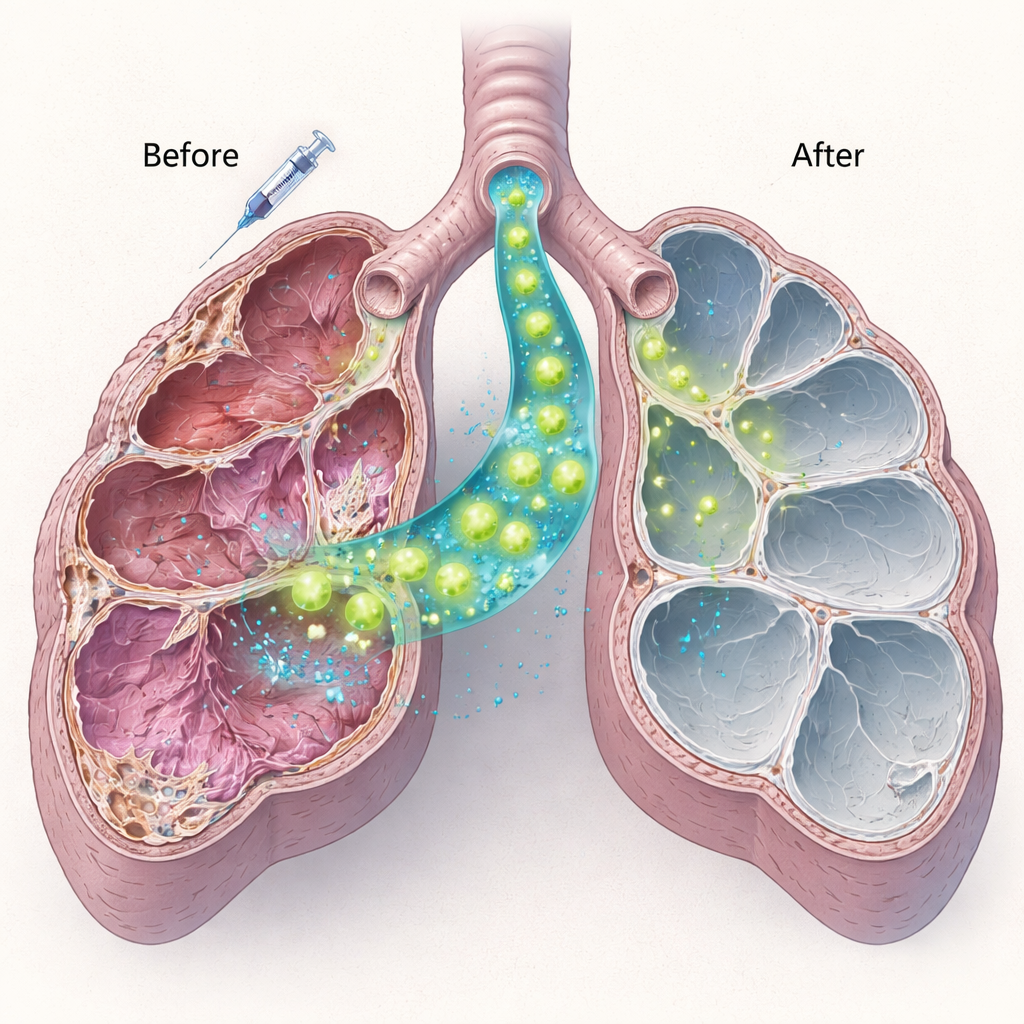
The team then isolated healthy type II cells from normal mice and delivered one million of these cells directly into the airways of Sftpc-deficient mice ten days after low-dose bleomycin. Using a combination of protein staining and genetic tests, they showed that donor cells efficiently engrafted, especially in younger animals. These transplanted cells produced mature surfactant protein C—completely absent in the host—indicating that they were not just present but functionally active. The new cells persisted for at least two months. Importantly, mice that received cell transplants had less lung injury and fewer severely damaged regions compared with mice given bleomycin alone, suggesting that even partial replacement of diseased cells can blunt ongoing damage.
From proof-of-concept to future therapies
For non-specialists, the key message is that this study demonstrates a realistic path toward repairing, rather than replacing, lungs in certain genetic childhood diseases. By showing that a modest number of healthy surfactant-making cells can take root in a chronically diseased lung, make the missing protein, and ease injury, the work offers a foundation for future therapies based on gene-corrected or stem cell–derived lung cells. Many hurdles remain, including finding safer ways to prepare human lungs for such treatment and ensuring long-lasting benefit. Still, this research shifts the conversation from managing symptoms to potentially rebuilding the lung’s own machinery for healthy breathing.
Citation: Predella, C., Lapsley, L., Ni, K. et al. Engraftment of wild-type alveolar type II epithelial cells in surfactant protein C deficient mice. npj Regen Med 11, 11 (2026). https://doi.org/10.1038/s41536-026-00455-0
Keywords: childhood interstitial lung disease, surfactant protein C, alveolar type II cells, cell therapy, pulmonary fibrosis