Clear Sky Science · en
Climate change and respiratory health: implications for respiratory clinicians in primary and specialist care
Why the Air We Breathe Is Changing
For millions of people living with asthma or chronic obstructive pulmonary disease (COPD), simply taking a breath can already be a daily challenge. This article explains how our changing climate is making that challenge harder—and what doctors, nurses, and patients can do about it. It also turns the spotlight back on healthcare itself, asking how the way we treat breathing problems can either add to or help reduce the planet’s warming. Understanding these links can help patients protect both their lungs and the environment.
How Shifting Weather Hurts Our Lungs
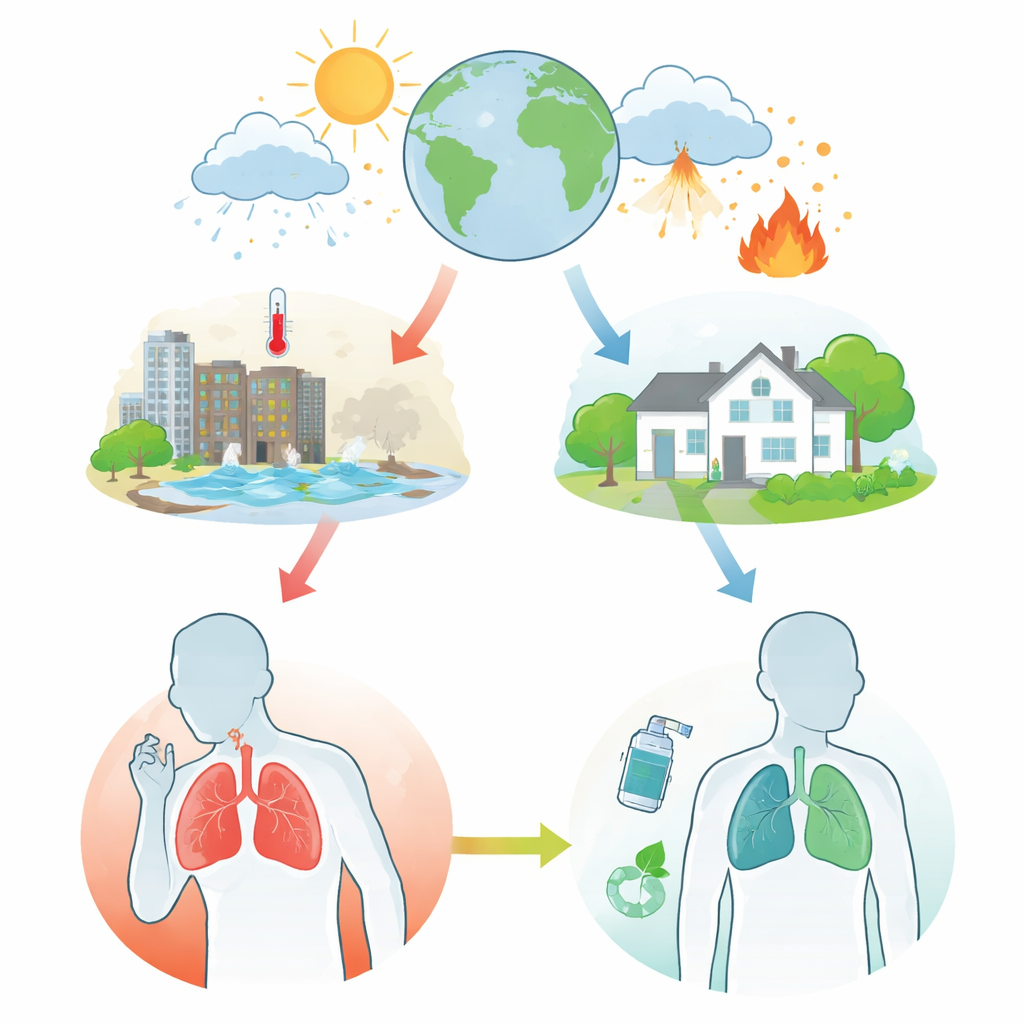
The authors describe how rising temperatures, cold snaps, humidity swings, and severe storms all strain the lungs of people with asthma and COPD. Hot days and heatwaves are linked to more breathing attacks, emergency visits, and deaths, especially in cities. Very cold spells and wide swings between daytime and nighttime temperatures also drive up symptoms and hospital visits. Heat and humidity can cause airways to tighten in asthma, while cold, damp air can worsen COPD. Wildfires, floods, hurricanes, and other disasters leave behind smoke and polluted air and can damage clinics and hospitals, making it harder for vulnerable patients to get care when they need it most.
Changing Seasons of Pollen, Mould, and Germs
Climate change does not just shift temperatures; it reshapes the invisible mix of particles and microbes we breathe. Warmer conditions and changing rainfall patterns are lengthening pollen seasons and increasing the amount of pollen in the air, including from trees and weeds that already bother many people. Floods and damp conditions encourage mould to grow indoors and outdoors, aggravating symptoms in children with asthma and in people with COPD who are sensitive to fungi. Thunderstorms can suddenly break up pollen grains and spores, creating bursts of tiny allergenic particles that trigger “thunderstorm asthma” outbreaks. Warmer, shorter winters may also alter how respiratory viruses circulate, though this area still needs more research.
Everyday Advice for Staying Safe
Because the climate is changing, the article emphasizes practical steps for patients and the professionals who care for them. People with chronic lung disease are advised to keep their homes at a safe minimum temperature in winter, stay hydrated during heatwaves, and maintain as much physical activity as they can. Weather and health forecasts can help warn patients about high‑risk periods for flare‑ups, offering time to adjust medicines or seek early help. Doctors are encouraged to update allergy testing to reflect new local pollens and moulds, to take travel histories when infections are suspected, and to give patients clear action plans that include what to do during extreme weather or poor air quality days.
How Treatments Themselves Affect the Climate
The review then turns to the climate impact of respiratory care. Inhalers, especially pressurized metered‑dose inhalers that use certain propellant gases, contribute to greenhouse emissions. One proposed solution has been to switch patients to dry‑powder inhalers, which generally have lower emissions at the point of use. But the authors explain that this choice is not simple. The total environmental footprint of an inhaler includes raw materials, manufacturing, transport, and disposal, not just the gas released. Some patients—such as young children, older adults, or those with weak inhalation—depend on pressurized devices to breathe properly. Sudden, large‑scale switching can disrupt good disease control, increase hospital visits, and even raise overall emissions. A safer path is to personalize device choice and to support industry efforts to reformulate inhalers with new, low‑impact propellants while keeping dose and handling familiar.
Why Good Control Is Good for the Planet
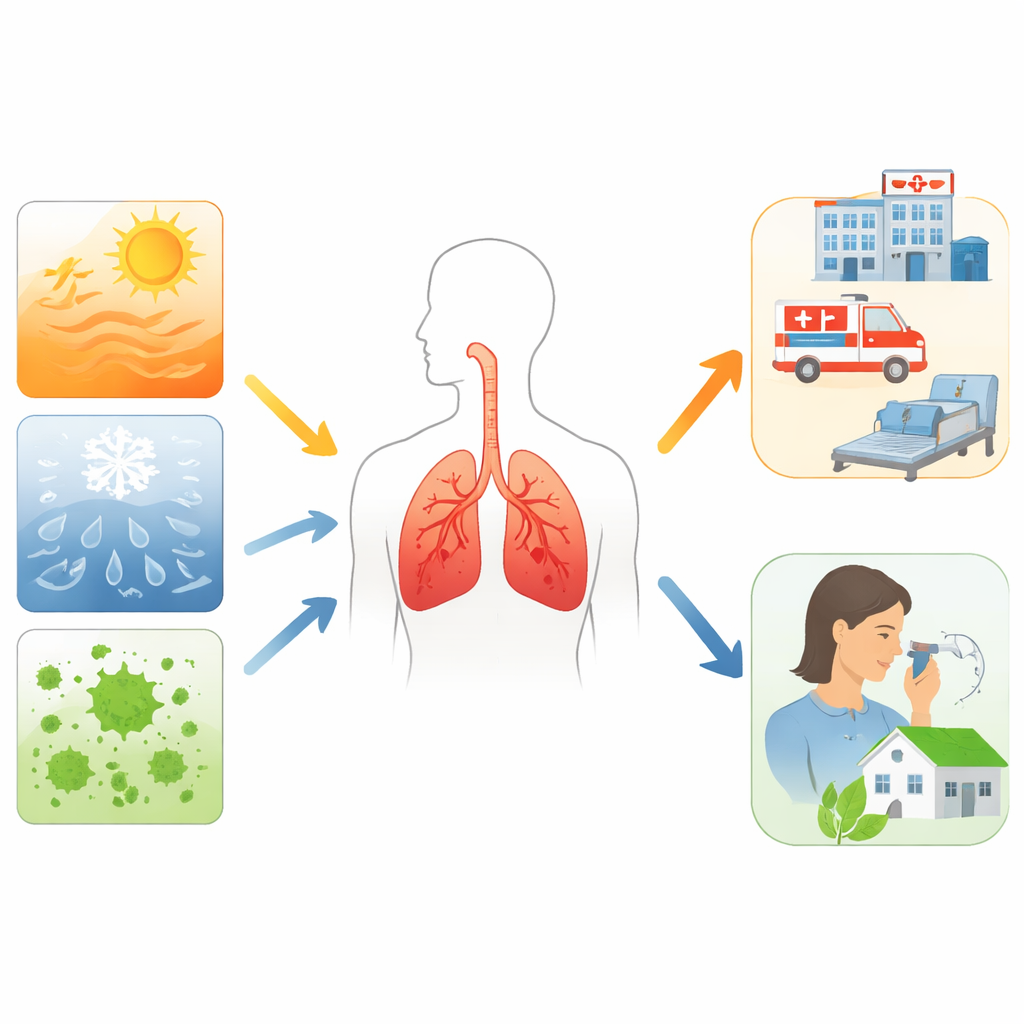
An important message is that poorly controlled asthma or COPD produces a much larger carbon footprint than well‑controlled disease. Frequent flare‑ups, emergency room visits, and hospital stays require energy‑intensive care and generate waste, especially in intensive care units. Over‑reliance on quick‑relief sprays, instead of regular preventer medicines, both worsens patients’ health and increases emissions from inhaler use. The authors argue that the greenest strategy is to get the basics right: accurate diagnosis, evidence‑based treatment plans, correct inhaler technique, and strong adherence. Modern approaches such as smart inhalers, telehealth check‑ins, and recycling schemes can further trim emissions without sacrificing safety.
Breathing Easier in a Warming World
In closing, the article stresses that climate change and respiratory health are now tightly linked, but patients should not be made to feel guilty for needing treatment. Instead, doctors and patients should focus on choosing the inhaler and care plan that best keeps symptoms in check and prevents attacks. At the same time, it is up to governments and pharmaceutical companies to make low‑carbon inhalers the default option, so that protecting the planet does not mean compromising care. In essence, helping people with asthma and COPD live well—by preventing flare‑ups and avoiding unnecessary hospital stays—is also one of the most powerful ways respiratory medicine can help the climate.
Citation: Agusti, A., Kirk, A., Panigone, S. et al. Climate change and respiratory health: implications for respiratory clinicians in primary and specialist care. npj Prim. Care Respir. Med. 36, 20 (2026). https://doi.org/10.1038/s41533-026-00494-6
Keywords: climate change, asthma, COPD, inhalers, air pollution