Clear Sky Science · en
Cost-effectiveness of lung cancer screening: insights from risk stratification, guidelines, and emerging technologies—a systematic review
Why catching lung cancer early matters for everyone
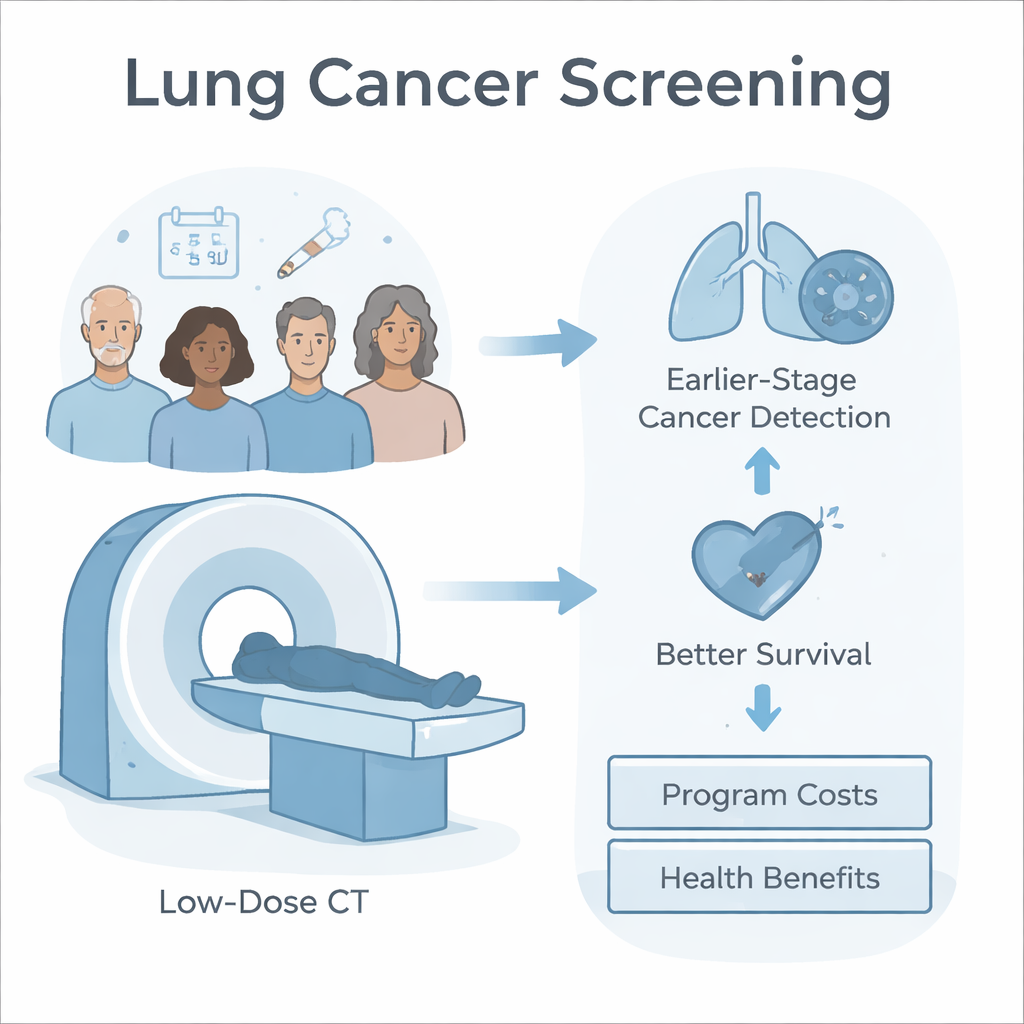
Lung cancer remains the world’s deadliest cancer, largely because most people are diagnosed only after symptoms appear—when treatment is harder and less likely to succeed. This article reviews dozens of economic studies from around the globe to answer a practical question that affects patients, taxpayers, and health systems alike: if we invest in screening to find lung cancer earlier, do the health gains justify the costs?
Looking across the world’s evidence
The authors systematically searched major medical databases and identified 79 economic studies from 21 countries that examined lung cancer screening programs. Most of these analyses were based on computer models that simulate what happens to large groups of people over many years, with and without screening. The review included both “full” economic evaluations, which weigh costs against health outcomes, and simpler cost studies. Nearly 90 percent of the model-based work met high quality standards, giving policymakers some confidence that the results are robust, even though methods and settings varied.
The central role of low-dose CT scans
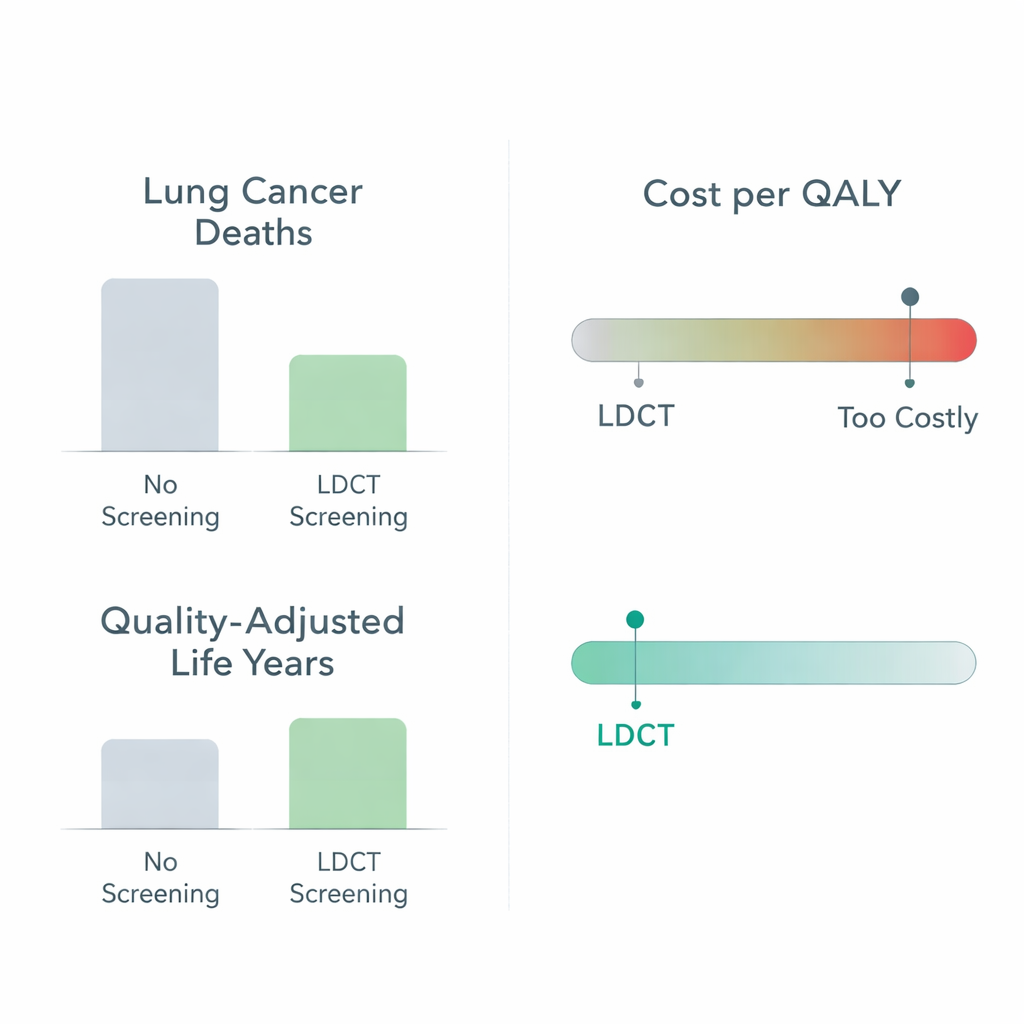
Across the studies, low-dose computed tomography (LDCT) was by far the dominant screening tool. Large clinical trials have already shown that LDCT can cut lung cancer deaths by about a fifth compared with chest X-rays or no screening. This review extends those findings by looking at money as well as lives. In 14 studies that directly compared LDCT to no screening and reported results in cost per quality-adjusted life-year (QALY)—a standard measure that combines quantity and quality of life—the extra cost per QALY ranged from about $8,000 to $200,000 (in 2022 U.S. dollars). Using each country’s own threshold for what counts as “good value,” roughly 9 out of 10 LDCT strategies were considered cost-effective, especially in older adults and people with long or heavy smoking histories.
Who benefits most and how often to screen
A clear pattern emerged: screening is economically most attractive in people at higher risk—typically older adults, current or former heavy smokers, and in some analyses, men. In these groups, screening prevents more deaths per person screened, so each dollar spent goes further. Studies also tested different starting and stopping ages and how often scans should be done. Beginning screening a bit later, when lung cancer risk has risen, tended to improve value for money. Extending programs beyond about age 75, however, usually delivered smaller health gains at higher cost. Comparing annual to every-two-year (biennial) screening produced mixed results: for some high-risk smokers, yearly scans looked more cost-effective, but in many other scenarios, biennial programs gave better economic value because they reduced costs while retaining most of the health benefit.
Guidelines, risk tools, and new technologies
The review also compared different national and trial-based guidelines that define who should be screened. Strategies modeled on the NELSON trial and recent Chinese guidelines often delivered better value than U.S. Preventive Services Task Force criteria, largely because they more efficiently target people at highest risk and use more refined rules for following up lung nodules. Only a small fraction of studies used detailed risk prediction calculators to pick candidates for screening, but those that did generally found improved cost-effectiveness. Newer approaches are beginning to appear in the economic literature: early analyses of artificial intelligence (AI) tools that assist with LDCT reading suggest they might even save money by cutting false alarms and focusing attention on the most concerning scans, though only two such studies exist so far. Blood tests and genetic risk scores show promise as add-ons to LDCT in some settings, but their economic value is still uncertain and highly dependent on test cost and performance.
What this means for public health decisions
For a general reader, the main message is straightforward: using low-dose CT scans to screen people at high risk for lung cancer generally offers good health value for the money in many countries, especially when programs follow carefully designed guidelines and focus on the right age and risk groups. At the same time, the review shows that “one-size-fits-all” policies are unlikely to be optimal. Choices about who to screen, how often, and whether to add new tools such as AI or blood tests can tilt the balance between costs and benefits. Evidence from low- and middle-income countries remains sparse, so more locally grounded studies are needed before widescale programs are rolled out there. Overall, the article concludes that smartly targeted lung cancer screening can save lives in a cost-conscious way, while future research on emerging technologies and risk-based approaches may further sharpen that balance.
Citation: Fan, Z., Zheng, M., Guan, Z. et al. Cost-effectiveness of lung cancer screening: insights from risk stratification, guidelines, and emerging technologies—a systematic review. npj Prim. Care Respir. Med. 36, 15 (2026). https://doi.org/10.1038/s41533-026-00482-w
Keywords: lung cancer screening, low-dose CT, cost-effectiveness, risk stratification, artificial intelligence