Clear Sky Science · en
Environmental Drivers of Respiratory Emergency Admissions: The Role of Tropospheric Ozone and Humidity in Lleida, Spain (2010–2019)
Why the Air We Breathe Can Send Us to the ER
Most of us think of bad air as a big-city problem tied to traffic and smokestacks. This study shows that even in a medium-sized inland city like Lleida, in Spain’s Ebro Valley, invisible ingredients in the air—especially ozone and moisture—can quietly raise the risk of serious breathing problems. By tracking hospital emergencies over ten years, the researchers reveal how certain weather and pollution patterns make it more likely that people will end up in the emergency room with asthma attacks, lung infections, or flare-ups of chronic lung disease.
A Valley City with Tricky Weather
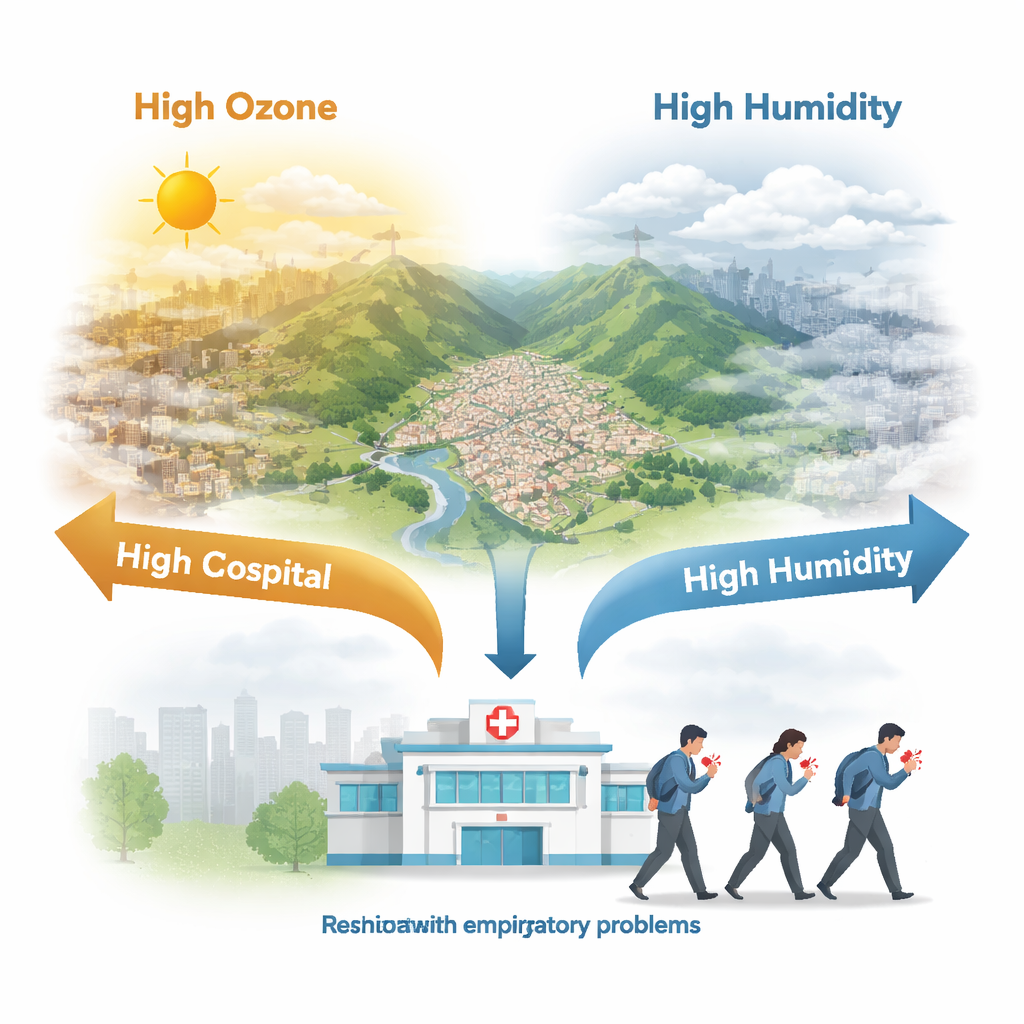
Lleida sits in a basin surrounded by mountains, a geography that tends to trap whatever is in the air. Winters there are cold, foggy, and often windless, leading to “thermal inversions” that act like a lid, keeping polluted air close to the ground. Summers are hot and dry with strong sunlight, which helps form ozone, a gas created when pollutants from traffic and agriculture react in the presence of sunlight. The region’s farms add smoke and gases from burning crop residues and using machinery, while vehicles and industry contribute additional pollutants. Together, these features create a distinctive mix of high humidity in winter and strong ozone episodes in summer—an ideal laboratory for studying how the environment affects our lungs.
Following Breathing Crises Day by Day
The researchers examined all emergency hospital admissions for acute breathing problems in Lleida province from 2010 to 2019—almost 19,500 cases, about 2 percent of all emergency visits. These included conditions such as pneumonia, bronchitis, asthma attacks, and flare-ups of chronic obstructive pulmonary disease (COPD). They combined these daily counts with detailed records of air pollution (including ozone, nitrogen dioxide, sulfur dioxide, and particles) and weather (temperature, humidity, solar radiation, rainfall, pressure, and wind). Using a statistical approach designed to capture delayed effects, they looked not only at conditions on the day of admission but also at the prior three weeks, asking how past ozone levels and humidity might build up to trigger hospital visits.
Ozone and Humidity Stand Out
When each pollutant was tested on its own, ozone emerged as the only gas clearly linked to higher respiratory emergencies; traffic-related pollutants like nitrogen dioxide and particles did not show a strong independent effect in this setting. High ozone concentrations—measured as the maximum eight-hour average each day—were associated with a substantial increase in breathing-related admissions, and this effect often appeared with a delay of several days up to three weeks. Importantly, the link between ozone and emergency visits remained even after adjusting for temperature, sunlight, and other pollutants, suggesting ozone itself plays a central role rather than simply tracking with hot weather. Relative humidity, especially high humidity typical of the colder months, was also tied to more hospital visits, indicating that moist, stagnant air can worsen or prolong breathing problems.
How Moisture and Ozone Team Up on Our Lungs
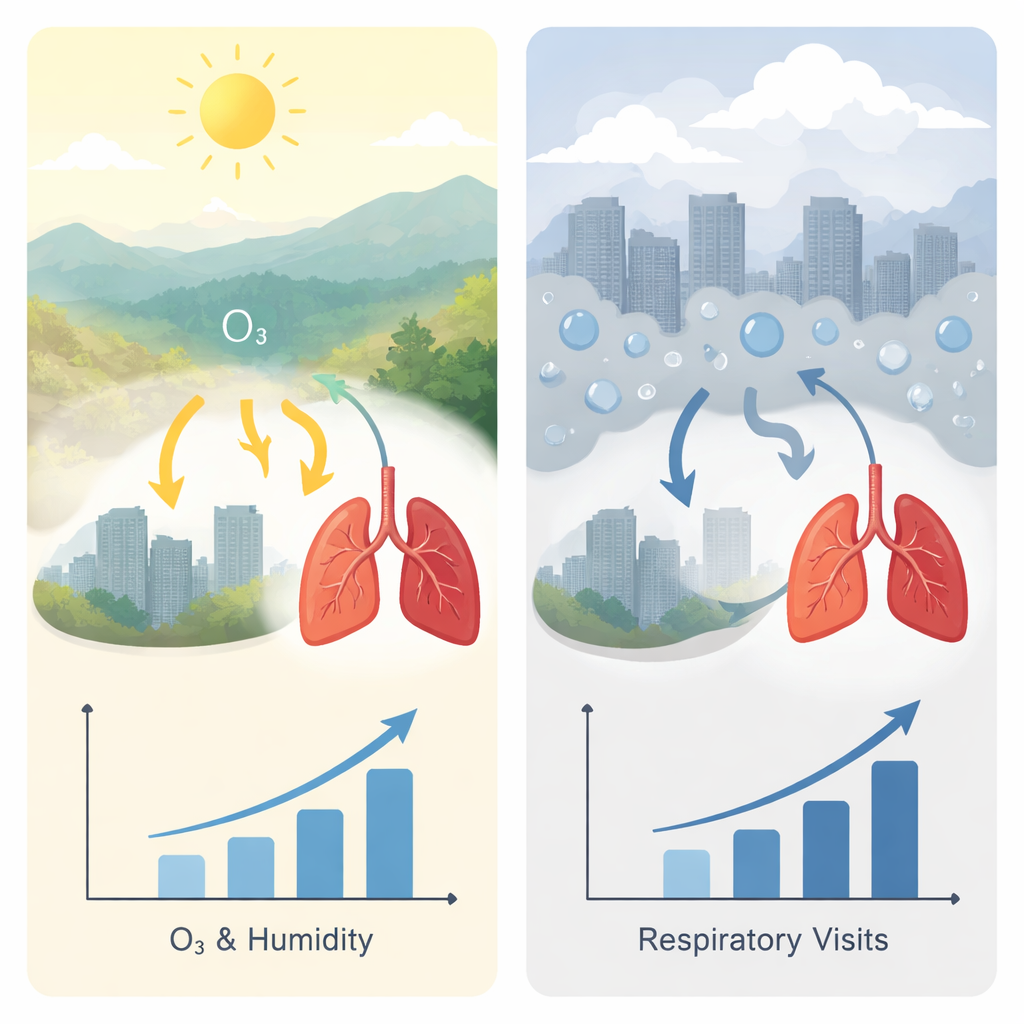
The authors point to a double hit on the respiratory system. Ozone is a powerful oxidant that irritates the lining of the airways, increases their permeability, and sparks inflammation. High humidity, in turn, can interfere with the lungs’ natural cleaning system by slowing the movement of tiny hairs that sweep mucus and particles out of the airways. In people with asthma or chronic lung disease, this combination may allow pollutants and germs to penetrate more deeply and linger longer, setting the stage for infections and acute flare-ups. The study also found that both very high ozone and certain very low ozone days were linked to more admissions, likely reflecting different weather and pollution mixes at those extremes, and highlighting the complexity of real-world air environments.
What This Means for Everyday Health
For the general public, the message is that clear blue skies in summer or misty winter days can hide invisible threats. In Lleida and similar inland regions, days with unusually high ozone or high humidity are periods when people with asthma, COPD, or fragile lungs may be at greater risk of needing emergency care. The authors argue that health services and local authorities should use real-time air and weather data to create alert systems, so doctors and patients know when to step up prevention—such as adjusting medications or limiting outdoor activity. In simple terms, this study shows that looking at ozone and humidity together, not just at city smog in general, can help communities better prepare for spikes in breathing problems and protect those most vulnerable.
Citation: Llobet, C., Martinez-Alonso, M., Justribó, E. et al. Environmental Drivers of Respiratory Emergency Admissions: The Role of Tropospheric Ozone and Humidity in Lleida, Spain (2010–2019). npj Prim. Care Respir. Med. 36, 13 (2026). https://doi.org/10.1038/s41533-026-00479-5
Keywords: air pollution, ozone, humidity, respiratory health, climate and health