Clear Sky Science · en
Machine learning integration of serial blood biomarkers enhances cognitive decline prediction in early Parkinson’s disease
Why this research matters
Many people think of Parkinson’s disease as a movement disorder, but changes in memory and thinking are among its most disabling effects. Up to four in five people with Parkinson’s eventually develop serious cognitive problems, which double healthcare costs and place heavy strain on families. Yet doctors still struggle to tell, early on, who is most at risk. This study explores whether simple, repeat blood tests combined with modern computer models can better forecast who will experience cognitive decline in the first years after diagnosis.
Following patients over time
The researchers drew on the Early Parkinson’s Disease Longitudinal Singapore (PALS) cohort, a carefully followed group of 193 people recently diagnosed with Parkinson’s. Participants were about 64 years old on average, with mostly mild to moderate motor symptoms at the start. They were tracked for five years, with yearly thinking tests using the Montreal Cognitive Assessment and blood samples taken at the beginning, year three, and year five. Cognitive decline was defined as a steady drop in test scores over time, large enough to matter in daily life but still early enough to offer a chance for intervention.
Blood signals from the brain
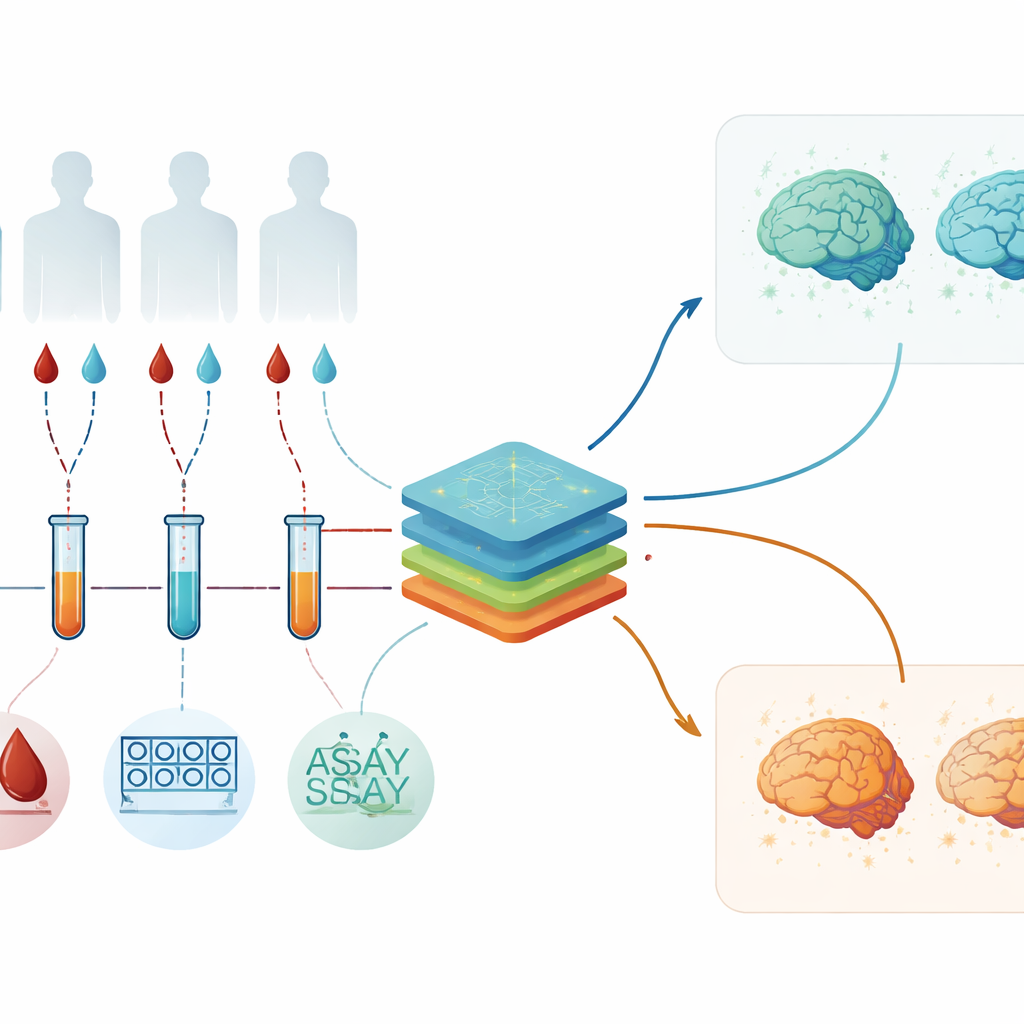
The team focused on two proteins in blood that reflect damage in the brain: neurofilament light chain (NfL), a marker of nerve fiber injury, and total tau (t-tau), linked to degeneration of nerve cells and often discussed in the context of Alzheimer’s disease. Instead of looking at one snapshot, they summarized each person’s three measurements using simple descriptors: the lowest, highest, average, and how much the values fluctuated. They also recorded other health information such as age, education, blood pressure, cholesterol problems, and baseline thinking scores. Over five years, nearly one in four participants showed cognitive decline, allowing the scientists to compare those who declined with those who remained stable.
Teaching computers to spot patterns
To make sense of this complex mix of factors, the researchers used several machine-learning methods—computer algorithms that learn patterns from data. They first used three different techniques to pick out the most informative variables from about 30 candidates. Across methods, the same features repeatedly rose to the top: the dynamic summaries of t-tau and NfL, and diastolic blood pressure (the “bottom number”) measured both lying down and standing. They then trained five types of predictive models on combinations of these features and tested how well each model could separate patients who would later decline from those who would not, using the area under the receiver operating characteristic curve (AUC) as a measure of accuracy.
Better forecasts from changing biomarkers
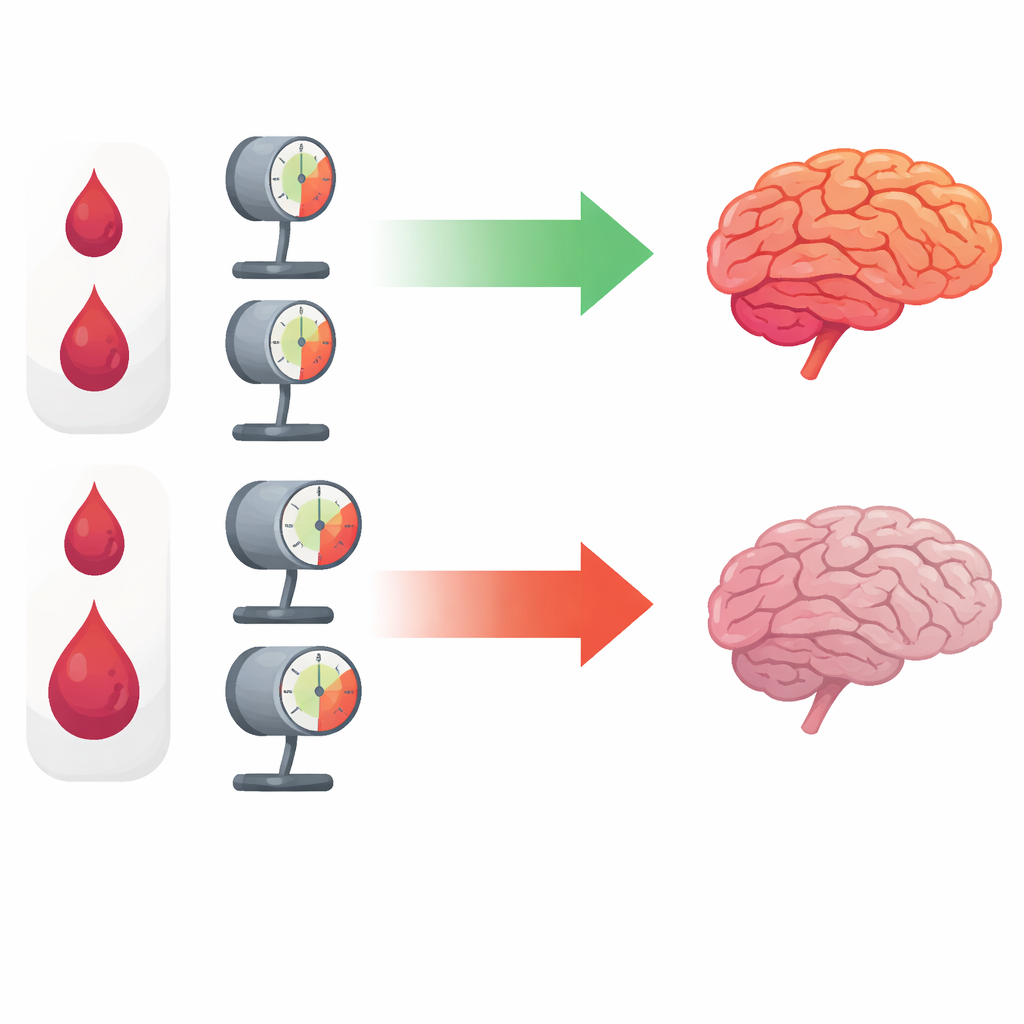
The central result was that models using time-varying blood measures clearly outperformed models based only on baseline data. When the algorithms were fed only the initial clinical and laboratory values, performance was modest (best AUC about 0.56, barely better than chance). When summaries of how t-tau and NfL changed over three time points were added, accuracy rose substantially, with AUC values between about 0.64 and 0.76 across methods. The single best model, an approach called XGBoost using just a dozen carefully selected features, reached an AUC of 0.81. In this model, high and unstable t-tau levels and elevated diastolic blood pressure were especially strong warning signs, while NfL changes also contributed but were slightly less dominant. Years of education showed a protective effect, consistent with the idea that greater “cognitive reserve” can buffer the brain against damage.
Implications for care and trials
These findings point toward practical ways to move Parkinson’s care from reactive to preventive. Because blood tests for t-tau and NfL are minimally invasive and becoming more widely available, clinics could in principle monitor patients’ levels every few years and combine them with blood pressure readings in a computerized risk calculator. People flagged as high risk might receive closer cognitive monitoring, targeted control of blood pressure, and earlier access to rehabilitation or clinical trials of disease-modifying drugs, particularly those aiming at tau or related pathways. The models also suggest a way to “enrich” clinical trials by focusing on the roughly quarter of patients most likely to decline, making it easier to detect treatment effects with fewer participants.
What this means for patients
For individuals living with Parkinson’s and their families, the study offers cautious optimism. It does not yet deliver a clinic-ready test, and the work needs to be confirmed in larger and more diverse groups. But it shows that simple, repeated blood tests—combined with blood pressure and basic background information—can help computers meaningfully forecast who is on a riskier path for cognitive problems. In plain language, watching how certain brain-related proteins and blood pressure behave over time seems more telling than a single reading. If validated, such tools could help doctors personalize follow-up, focus on modifiable risks like blood pressure, and plan earlier support, ultimately aiming to preserve thinking and independence for as long as possible.
Citation: Mohammadi, R., Ng, S.Y.E., Tan, J.Y. et al. Machine learning integration of serial blood biomarkers enhances cognitive decline prediction in early Parkinson’s disease. npj Parkinsons Dis. 12, 87 (2026). https://doi.org/10.1038/s41531-026-01298-8
Keywords: Parkinson’s disease, cognitive decline, blood biomarkers, machine learning, tau protein