Clear Sky Science · en
Serotonergic cortico-limbic and executive network dysfunction in Parkinson’s disease impulse control disorders: a PET-fMRI study
Why self-control can falter in Parkinson’s
For many people with Parkinson’s disease, the biggest worry is losing the ability to move smoothly. Yet a large share of patients also develop powerful urges to gamble, shop, binge eat, or seek sex—problems known as impulse control disorders. These behaviors can devastate finances, relationships, and quality of life, and they are notoriously hard to treat. This study looks inside the living brain to ask why some people with Parkinson’s become vulnerable to such urges while others, taking similar medications, do not.
Everyday urges meet a changing brain
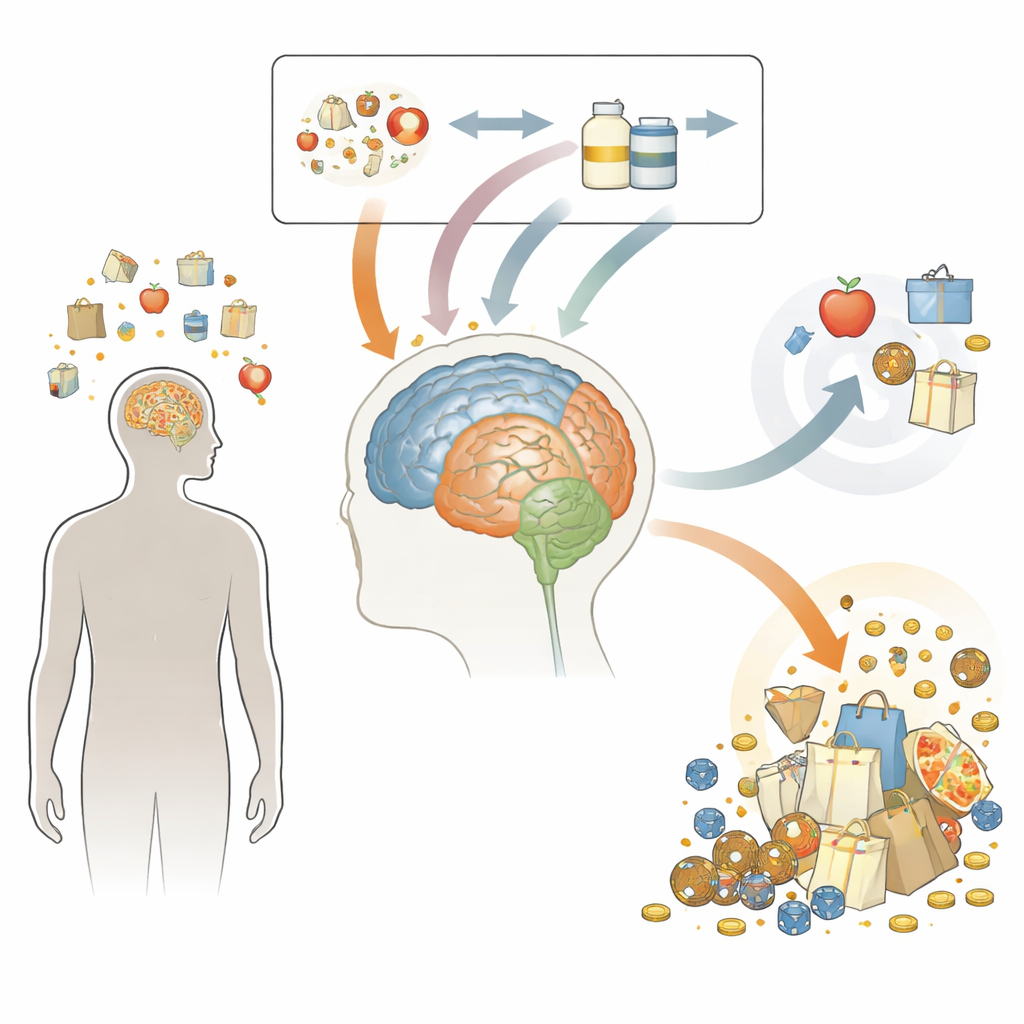
Impulse control disorders arise when the normal brakes on behavior fail to keep powerful desires in check. In Parkinson’s disease, drugs that boost dopamine, a chemical crucial for movement, can also overstimulate brain circuits that respond to reward. Doctors can try lowering these medications, but that often worsens motor symptoms or causes withdrawal-like distress. Because there is no dedicated treatment, understanding the brain systems behind these behaviors is essential for developing safer, more targeted therapies that protect both movement and self-control.
Peering at brain chemistry and networks
The researchers combined two advanced imaging methods in a small but carefully characterized group: 23 people with Parkinson’s (about half with impulse control disorders and half without) and 14 healthy volunteers. One scan, PET, measured availability of a specific serotonin receptor (5-HT2A), which reflects aspects of the brain’s serotonin system—a chemical messenger linked to mood and impulse control. The second scan, resting-state fMRI, tracked how strongly different regions’ activity rose and fell together while participants lay quietly in the scanner, revealing the brain’s communication networks. The team focused on networks involved in attention, emotional significance, and executive control, and related these patterns to performance on tests of impulsive decision-making and traits such as urgency.
Decisions now versus later
Behaviorally, people with Parkinson’s and impulse problems tended to favor smaller immediate rewards over larger delayed ones, especially for medium and large sums of money. This pattern, called steeper delay discounting, points to a form of “decisional impulsivity”: difficulty waiting for a better outcome. In contrast, measures of stopping an action quickly or withholding premature responses did not differ between groups. This suggests that in this context, impulsivity is less about clumsy motor control and more about how the brain values rewards over time and resists temptation.
When control and emotion circuits miscommunicate
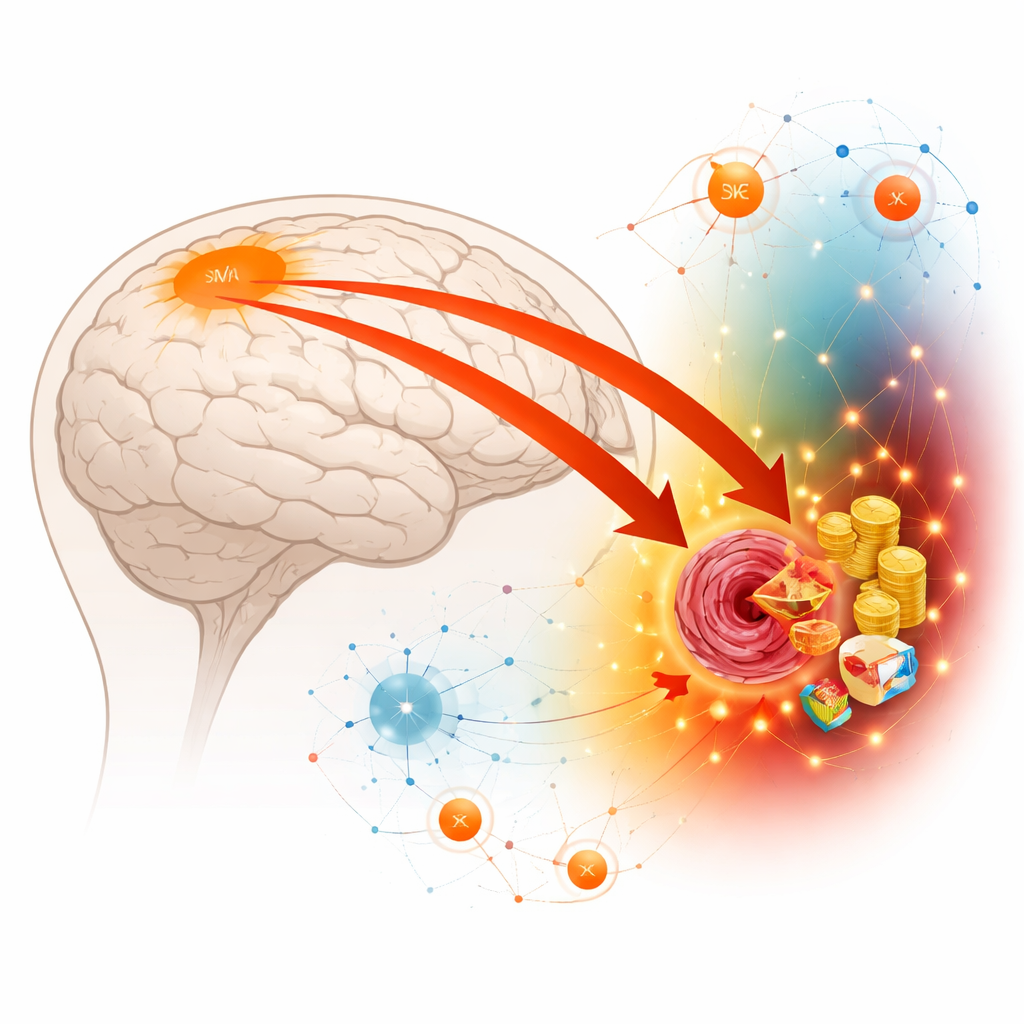
In the brain scans, patients with impulse problems showed distinct connectivity changes. Within a key executive network that supports planning and self-control, a region at the back of the brain called the posterior parietal cortex was more tightly coupled across the two hemispheres. Stronger connectivity here was actually linked to fewer impulse symptoms, hinting that this pattern may represent a compensatory effort to shore up control. At the same time, communication between a salience-detection region in the parietal lobe and reward hubs in the striatum was heightened, a pattern that may cause reward-related cues to grab too much attention. The most striking finding was a stronger link between the supplementary motor area, involved in planning actions, and the amygdala, a hub for emotional and reward significance. This “motor–emotion” pathway was directly associated with both more severe impulse symptoms and stronger preference for immediate rewards.
Serotonin’s role in tipping the balance
PET imaging showed that people with Parkinson’s and impulse control disorders had higher availability of serotonin 5-HT2A receptors in the supplementary motor area. Individuals with more of these receptors also showed stronger functional coupling between this motor region and the amygdala. Statistical modeling suggested a chain of influence: altered serotonin signaling in the supplementary motor area was linked to stronger motor–emotion connectivity, which in turn related to both steeper delay discounting and more severe impulse symptoms. Interestingly, these functional changes appeared without obvious structural brain damage, and trait measures of impulsive personality added further risk on top of the neural patterns.
What this means for patients and care
Taken together, the study paints impulse control disorders in Parkinson’s not as a simple side effect of too much dopamine, but as the product of a disrupted conversation between brain regions that plan actions, weigh rewards, and regulate emotions, shaped in part by serotonin. The findings point to specific circuits—especially the link between the supplementary motor area and amygdala—that may be promising targets for future treatments, whether through drugs that tune serotonin signaling or brain-stimulation approaches that rebalance network activity. While more and larger studies are needed, this work helps explain why some patients struggle with overwhelming urges and offers a roadmap toward interventions that could protect both movement and self-control.
Citation: Terenzi, D., Metereau, E., Lamberton, F. et al. Serotonergic cortico-limbic and executive network dysfunction in Parkinson’s disease impulse control disorders: a PET-fMRI study. npj Parkinsons Dis. 12, 88 (2026). https://doi.org/10.1038/s41531-026-01294-y
Keywords: Parkinson’s disease, impulse control disorders, serotonin, brain connectivity, decision-making